
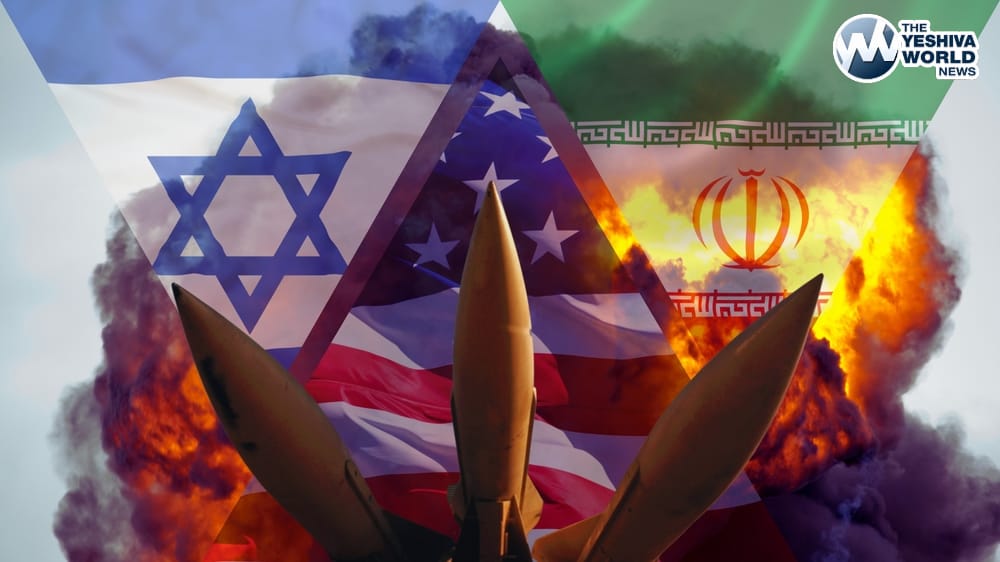
Iran’s military said Thursday that it is prepared for war if the United States chooses confrontation, raising the stakes ahead of high-level talks in Oman on Friday.
Speaking to Iran’s Student News Network, Brig. Gen. Mohammad Akraminia, the army’s spokesperson, said Tehran is ready for any military scenario, citing the recent addition of 1,000 drones to its arsenal.
“We have always announced that we are ready to confront any option,” Akraminia said. “If the enemy chooses the option of war, we are ready for any option in war conditions.”
His comments come as President Donald Trump has warned that “bad things” are likely if negotiations fail, intensifying a standoff marked by mutual threats, military deployments, and growing fears of escalation.
“He must choose between compromise or war,” Akraminia said of Trump, warning that any conflict would engulf U.S. bases across the region, from Israel to the Persian Gulf and the Sea of Oman. “Our access to U.S. bases is easy, and this has increased their vulnerability.”
Adding to the volatility, Iran’s Revolutionary Guards on Thursday seized two foreign oil tankers in Gulf waters on accusations of fuel smuggling, according to Tasnim news agency. Officials did not immediately disclose the vessels’ flags or the nationalities of their crews.
The move is likely to further strain relations with Washington and its allies, who have accused Tehran of using maritime pressure as a political tool.
Meanwhile, Israel signaled that it is preparing for potential fallout.
Maj. Gen. Tomer Bar, chief of the Israel Air Force, said Thursday that Israeli forces are strengthening both defensive and offensive capabilities.
“Every day, we continue to strengthen preparedness,” Bar told reservists at an Iron Dome battery in northern Israel. “You are required to maintain a high level of readiness.”
Tehran has repeatedly warned that it would unleash its ballistic missiles if its security is threatened, targeting Israel and U.S. bases alike.
Iranian and American officials are scheduled to meet Friday in Oman for mediated talks, seen as a last-ditch effort to contain the crisis.
Turkish President Recep Tayyip Erdogan said Thursday that Ankara is working to prevent the dispute from dragging the region into chaos.
U.S. Secretary of State Marco Rubio said Wednesday that any agreement must address Iran’s nuclear and missile programs, its support for terrorist groups, and its domestic human rights record.
Iran, however, has indicated that it is only willing to discuss its nuclear program — and not on Washington’s terms. Despite insisting its program is peaceful, Tehran has enriched uranium to levels close to weapons-grade and maintains sensitive facilities such as the Natanz Uranium Enrichment Facility.
In June, the United States joined Israel in striking Iranian nuclear targets at the tail end of a 12-day war, with Israeli officials citing an “existential threat.”
Since then, Iran says it has rebuilt its missile stockpiles and fortified key sites.
Washington has responded with a major military buildup, dispatching thousands of troops, warships, and aircraft to the region, including the aircraft carrier USS Abraham Lincoln.
On Thursday, U.S Central Command released footage showing fighter jets launching from the carrier’s deck in the Arabian Sea, underscoring American readiness.
“The flight deck may look chaotic,” CENTCOM said, “but it is a well-orchestrated routine.”
The carrier was repositioned after Trump threatened military action in response to Iran’s violent crackdown on anti-government protests last month, the deadliest since the 1979 revolution.
(YWN World Headquarters – NYC)
 Join the official YWN WhatsApp status


