

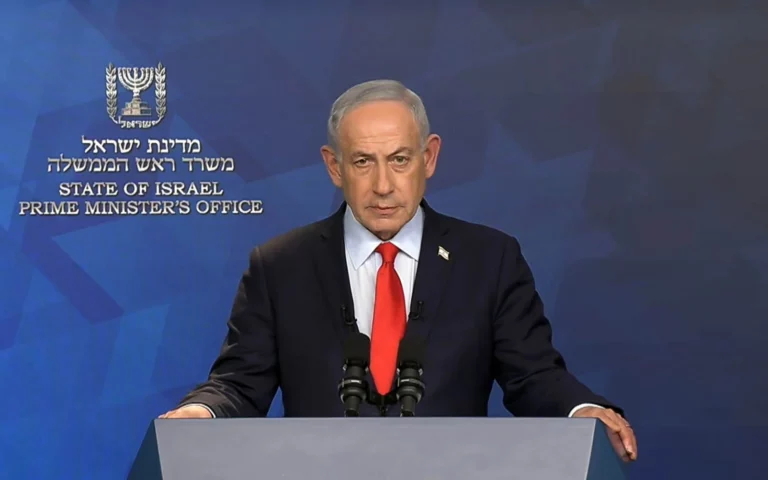
In a dramatic political and legal escalation, the Israeli government on Sunday unanimously approved a proposal declaring that it will not recognize the High Court’s ruling reinstating the Second Authority Council appointed by the previous government.
The resolution states that a judicial ruling that directly contradicts the law is null and void and will not be recognized, and that any decisions or appointments made by the council would not be recognized—including approval of the sale of Channel 13 to a group of high-tech entrepreneurs.
The Second Authority for Television and Radio is an Israeli commercial television and radio authority, established by a Knesset law in 1990. The Second Authority issues licenses for commercial television and regional radio stations, handles citizen complaints, ensures that commercial advertisements are run within the allotted time, and ensures that the operators maintain a certain mix of program genres as stipulated in their licenses.
The cabinet approved a joint proposal by Communications Minister Shlomo Karhi and Justice Minister Yariv Levin, announcing that it will not recognize any decision, approval, appointment, or action taken by the Second Authority Council as long as it does not meet the explicit statutory quorum requirements.
“The decision follows the Supreme Court’s June 17 ruling, which reinstated the Second Authority Council appointed by the previous government, even though the number of serving members had fallen below the statutory minimum,” the government said.
“The government determined that the rule of law binds all branches of government, including the judiciary. A judicial ruling that directly contradicts the clear language of the law cannot confer authority that does not exist under the law, and therefore the government will not recognize actions taken pursuant to that ruling.”
The government further declared that it “will not recognize any claims of reliance or fait accompli by parties in the communications market regarding actions taken by a council that does not meet the statutory quorum established by the legislature.”
Karhi accused the High Court of overstepping its authority. “The High Court justices are not the Knesset, and an intoxication with power does not grant them the authority to erase an explicit statutory requirement simply because it is inconvenient,” he said. “The rule of law is not the rule of judges. Today the government made it clear: when the Supreme Court tramples the law, the state will not cooperate.”
“A two-thirds quorum is a legal requirement, not a recommendation. A council that does not meet the statutory threshold established by the legislature simply does not legally exist, and its decisions are worthless as garlic peel. The same will apply to any future attempt by the Court to trample laws enacted by the Knesset.”
Justice Minister Yariv Levin said: “The rule of law means that the law binds everyone, including the courts. In a democracy, the Knesset enacts the law, and the courts are obligated to apply it. When a judicial ruling stands in direct contradiction to the plain language of the law, it is no longer judicial review but a violation of the separation of powers. The government has a duty to ensure that the law—and only the law—remains the source of governmental authority. We will continue to use every lawful means to restore the rule of law.”
The resolution follows a High Court ruling issued in mid-June freezing the government’s decision to replace the membership of the Second Authority Council and ordering that the existing council remain in office until the Court rules on the petitions challenging the government’s move. The ruling was issued despite the fact that the number of serving council members had fallen below the statutory minimum of two-thirds of its full membership.
The ruling was issued by a panel consisting of High Court “President” Yitzchak Amit, Justice Alex Stein, and Justice Ruth Ronen in response to five separate petitions filed by various left-wing organizations, including the Journalists’ Association, the News Company, the Movement for Quality Government, the Israeli Press Council, and the Association for the Preservation of the Rule of Law.
The government’s decision is expected to trigger what some are calling “the beginning of an open constitutional crisis.”
The decision drew sharp criticism from the Israeli Journalists’ Association, which accused the government of undermining both the media and democracy.
“The Israeli government is dismantling the media—and democracy itself,” the organization said. “Today’s decision not to comply with a Supreme Court ruling is transparently intended to block the sale of Channel 13 to the high-tech entrepreneurs while trampling the Supreme Court in an unprecedented manner. The government is announcing that it will not obey the rule of law for political reasons. This is a state of emergency. Those who do not speak out now may no longer be able to do so later.”
(YWN Israel Desk—Jerusalem)






2 Responses
GREAT, this should be extended to the relentless persecution of the chareidim by the s.court!
The question of course is the same today as always. By what principle does the supreme court, or any government authority, have the right to act? In a democracy power comes from the consent of the governed. In USA we live under the constitution, which was come to be from ratification from all the states in a democratic process. That is to say, our USA constitution represents the consent of the governed which is the only authority – consent of the governed – in a democracy. Our supreme court has power only to the extent it is granted power by the constitution, and of course the same for the executive and legislative branches.
The knesset clearly exerts power based on the consent of the governed. They were each voted in. The supreme court however does not. In the founding of the State of Israel, Ben Gurion chose not to create a constitution specifically because it would limit how the government could shape the nation. In contrast, USA constitution exists specifically to limit the power of the government.
Unfortunately as Israel does not have a constitution (the white papers are not a constitution but merely instructions how to run the government, eg how the knesset is set up, how votes are tallied, etc.), there was no crisis as long as each branch acted reasonably. The executive acted as an executive, the legislative as legislative, and the judiciary as a judiciary. Unfortunately I think in the 1980s the judiciary seized power and decided it was within its power to decide everything that was allowed and not. Unfortunately as there is no constitution in Israel, there is no foundation as to why is this legal and that not. In that case the seed of the constitutional crisis was planted by the judiciary at that time.
In that case we have two elected branches whose power clearly derives from the consent of the governed (executive and legislative) and one that does not answer to the people and is not democratic (judiciary). In that case it seems to me the former two are legitimate and the latter not.
For those who might object that our judiciary is generally not elected directly, it is elected indirectly through the executive and legislative who are elected. Israel’s judiciary is elected by itself.