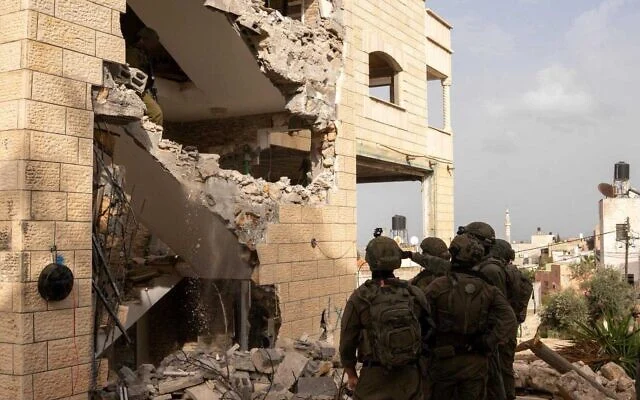
The IDF carried out strikes on Hamas terror infrastructure overnight Sunday in response to an explosive device that detonated under an IDF engineering vehicle near the Yellow Line in the northern Gaza Strip on Sunday.
The IDF spokesperson described the incident as “a blatant violation of the ceasefire agreement by the Hamas terror organization.” Baruch Hashem, no IDF soldiers were injured in the incident.
The IDF emphasized that “Southern Command forces remain deployed in the area in accordance with the ceasefire agreement and will continue operating to eliminate any immediate threats.”
The incident follows a series of IDF operations in Gaza in recent days, including the capture of the head of Hamas’s internal security services and the elimination of five Hamas company commanders and four platoon commanders.
According to security officials, Hamas feels increasingly hunted and therefore is carrying out terrorist activity while attempting to rebuild its capabilities.
Ynet recently revealed that following Prime Minister Binyamin Netanyahu’s tour of an IDF position along the Yellow Line, he and Defense Minister Yisrael Katz instructed the military to develop a plan for a regional pilot in the Gaza Strip modeled on the framework being implemented in southern Lebanon.
Under the emerging proposal, which Katz raised during the discussion and Netanyahu supported, designated areas in Gaza would be selected for the deployment of international forces. As in Lebanon, the initiative would be coordinated with the United States. The international forces would begin clearing the areas of terrorist infrastructure, establishing governance and preventing Hamas members from returning.
The plan calls for selecting areas beyond the Yellow Line where the IDF has no physical presence but maintains observation. Israeli troops would not withdraw from any area as part of the pilot. Instead, the initiative would test whether international forces can effectively clear designated territory of terrorist infrastructure.
The situation in Gaza, however, is considerably more complicated than in Lebanon, as there is currently no agreed-upon governing entity capable of assuming responsibility for civilian affairs.
(YWN Israel Desk—Jerusalem)