National Security Minister Itamar Ben Gvir launched a blistering attack Thursday morning against Israel’s Chareidi political leadership, accusing Shas and United Torah Judaism officials of abandoning their constituents, failing to resolve the yeshiva draft crisis, and orchestrating a political campaign against him to conceal their own failures.
In an unusually lengthy open letter addressed directly to the heads of the Chareidi parties, Ben Gvir claimed that senior rabbonim and Admorim have privately expressed such severe criticism of Chareidi politicians that publishing their remarks would force some of those officials to remain inside their homes out of embarrassment.
“I have astonishing things from my conversations with senior rabbonim about the Chareidi politicians, including from just the past few days,” Ben Gvir wrote. “Believe me, statements that would cause several senior Chareidi politicians to lock themselves inside their homes for a long time.”
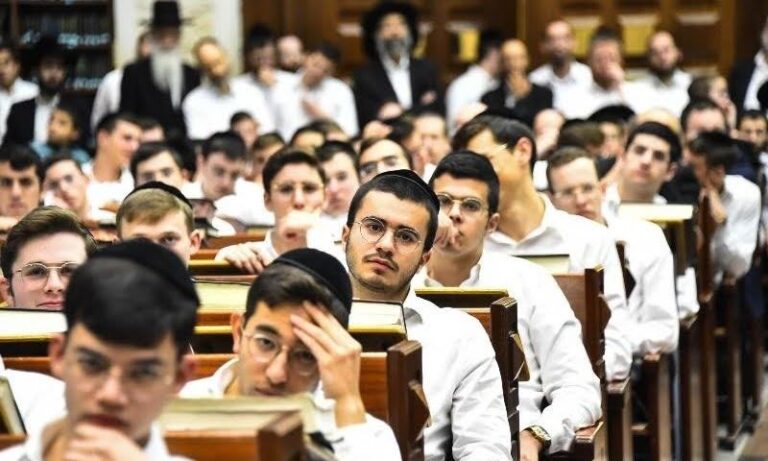
The explosive letter comes amid mounting tensions over the military police’s continued arrests of yeshiva bochurim, with Chareidi political leaders facing growing pressure from their constituents to secure legislation protecting the status of Torah learners.
Ben Gvir opened his letter by accusing Chareidi politicians of launching what he described as a staged campaign against him Wednesday.
“Yesterday, you chose to launch a staged campaign against me, supposedly out of concern for the public you were supposed to care for,” he wrote. “In reality, it was a cynical political maneuver designed to divert attention from the anger over your failure to act on behalf of your voters throughout the entire last term.”
The minister argued that Chareidi politicians were attempting to make him a scapegoat for their inability to resolve longstanding issues affecting their communities.
“For four years, you did not take care of the Chareidi community, which today finds itself facing a broken situation,” he wrote, listing the absence of a draft arrangement, funding difficulties, daycare issues, housing programs, travel restrictions and the continuing arrests of yeshiva bochurim.
“I understand everything, but Itamar Ben Gvir is not responsible for the fact that for four years you focused on positions and appointments instead of addressing the real problems of the precious public that sent you to the Knesset.”
Ben Gvir also accused the Chareidi parties of making a serious political mistake by previously opposing efforts to remove Attorney General Gali Baharav-Miara.
According to Ben Gvir, he demanded her dismissal at the beginning of the government’s term, while Chareidi representatives resisted because they believed they could work with her to secure appointments important to their parties.
He argued that their decision helped create the current situation in which the attorney general and Supreme Court are pushing enforcement of military conscription requirements.
“Your priorities were flawed, and you yourselves bear responsibility for the situation facing your public,” he charged.
In one of the letter’s most controversial passages, Ben Gvir suggested that Chareidi politicians could have substantially reduced pressure on full-time yeshiva students by publicly encouraging Chareidi men who are not learning to enlist in military frameworks specifically designed for their communities.
He claimed that when he raised the idea with Chareidi officials, they told him they feared the reaction of the Yerushalmi Faction.
“So you’re brave when it comes to Ben Gvir?!” he demanded.
The minister pointed to his own efforts to recruit Chareidim into the Israel Police and Israel Prison Service, claiming that approximately 1,400 Chareidim have joined specialized frameworks under his leadership.
He said many additional Chareidi men who are not learning full-time are seeking opportunities in those programs, including members of prominent Chassidic communities.
Ben Gvir accused Chareidi politicians of ignoring those efforts.
He also criticized the parties over their handling of legislation proposed by Otzma Yehudit MK Limor Son Har-Melech that would permit gender-separated academic programs, including advanced degrees, benefiting Chareidi students and seminaries.
According to Ben Gvir, Chareidi representatives boycotted the vote despite the legislation being intended primarily to assist their own constituents.
The minister then listed what he described as his accomplishments on behalf of the Chareidi community.
He claimed to have demanded equal treatment for Chareidi protesters and anti-government demonstrators, arguing that Chareidi lives deserve the same protection as those of other Israelis.
He also pointed to his decision to eliminate the use of foul-smelling skunk-water trucks, which he said had been disproportionately deployed against Chareidi demonstrators.
Additionally, Ben Gvir cited his expansion of civilian firearm eligibility to Chareidi neighborhoods in Yerushalayim, Beit Shemesh, Kfar Chabad and other communities.
“I am the one who cares for the Chareidi public with genuine love, throughout the years, and not someone who suddenly remembers them on the eve of elections,” he wrote.
Perhaps the most dramatic section of the letter concerned Ben Gvir’s relationships with senior Chareidi rabbonim and Admorim.
The minister claimed that he has repeatedly received private complaints from leading rabbonim regarding the conduct of Chareidi politicians.
He said he could have exploited those conversations for political gain but deliberately chose not to do so.
Ben Gvir specifically referenced the recent removal of veteran Degel HaTorah politicians Moshe Gafni and Uri Maklev from their positions, saying that angry Chareidim contacted him and asked him to intervene.
He said he declined to become involved in the internal dispute, although he privately contacted individuals to offer encouragement.
The minister further claimed that he had been approached by senior figures within the Chareidi parties in recent days who wanted to coordinate election strategy.
According to Ben Gvir, those officials asked him not to actively target voters loyal to Shas or United Torah Judaism, but instead to concentrate on Chareidi voters who were considering abstaining or supporting parties unlikely to cross the electoral threshold.
He said he agreed to the request to help preserve the right-wing bloc.
“And this is how you thank me?!” he demanded.
Ben Gvir also rejected accusations that he bears responsibility for the ongoing arrests of yeshiva bochurim.
He insisted that he has no authority over the military police operations and argued that the arrests are being carried out under directives stemming from the attorney general and Supreme Court.
“You know very well that I have absolutely no ability to influence the arrests,” he wrote.
The minister said he believes the enforcement operations are counterproductive and actually discourage Chareidi enlistment.
He contrasted the arrests with his approach to recruiting Chareidim into the police, Border Police and Prison Service, which he said was based on trust and genuine concern.
In his concluding remarks, Ben Gvir accused Chareidi politicians of insulting the intelligence of their own voters by attempting to shift responsibility for their failures onto him.
“The Chareidi public deserves more respect from you,” he wrote. “This is an intelligent, sharp and learned public. They do not deserve to be treated like fools while you continue promoting only your own political operatives.”
He urged Chareidi party leaders to focus on the issues affecting their constituents rather than attacking political rivals.
“Respect your voters, work for them, and they will appreciate you many times over,” he wrote.
Ben Gvir ended with another pointed message, claiming that his popularity on the Chareidi street stems from his genuine respect and affection for the community.
“When you see the tremendous love for me on the Chareidi street, it is only because I truly respect and love every Jew,” he wrote. “You should try it too. It works.”
(YWN Israel Desk – Jerusalem)