
At least one Houthi missile struck Riyadh’s King Khalid International Airport on Saturday, killing at least 13 people and injuring hundreds, many of them seriously, according to the report. Two terminals were directly hit, with parts of their roofs collapsing. Saudi authorities reported further attacks on the closed airport Sunday. A missile reportedly caused a fire in Terminal 4 and left additional people injured.
The attacks have also targeted airports and energy facilities, including the East-West oil pipeline and refineries. Riyadh, more than 800 kilometers from Houthi-controlled territory in Yemen, has increasingly come under threat. Residents have taken shelter as explosions were heard across the city. Debris from an intercepted ballistic missile struck a kindergarten and a medical clinic complex on Thursday, while workers in the city’s financial district, students at several international schools and diplomats were told to evacuate or shelter in place.
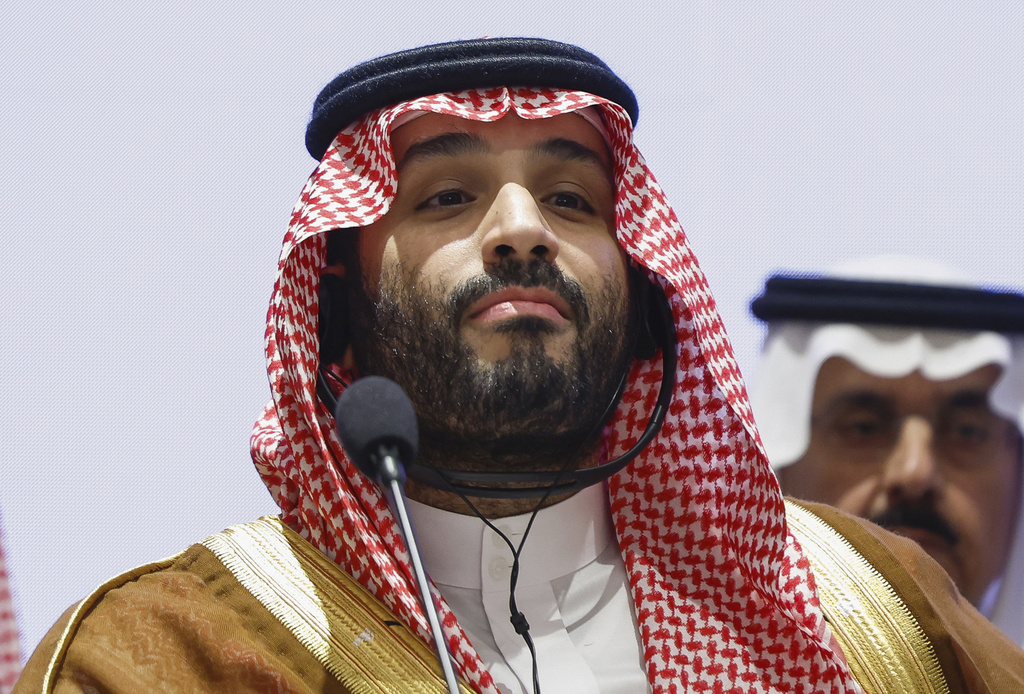
The Wall Street Journal reported that bin Salman, 41, has been moving between well-guarded palaces equipped with underground bunkers and is protected by a carefully selected elite security team, citing people familiar with his movements. His last public appearance was Tuesday, when he donated blood as part of a national campaign. Saudi officials did not respond to the newspaper’s request for comment.
The security crisis threatens Saudi Arabia’s efforts to expand tourism and travel, and has cast doubt on a major international investment conference planned for later this month. The cost of the war has widened the kingdom’s budget deficit and threatens to push the economy into contraction. The country’s finance ministry now expects GDP to shrink by 3.6% in 2026.
Bin Salman’s development agenda includes the futuristic city of NEOM, Riyadh’s massive Cube project and a desert ski resort. The projects carry a combined price tag of trillions of dollars, an ambitious target for a government with an annual budget of about $350 billion. Foreign investment fell during the first two quarters of the year, leaving it far behind the crown prince’s 2030 target. Rising security and infrastructure costs are also threatening funds earmarked for economic diversification. Saudi Arabia’s non-oil sector contracted in the second quarter compared with the first, according to Capital Economics.
The kingdom initially managed to send oil across the desert to the Red Sea, bypassing Iran’s hold on the Strait of Hormuz and benefiting from higher prices. But the Houthis announced a naval blockade against Saudi Arabia in July, threatening shipping in the Red Sea. A September strike on the East-West pipeline then damaged the kingdom’s main alternative route around Hormuz. Houthi attacks on Saudi aviation have added further pressure, with King Khalid International Airport reportedly struck at least four times.
Saudi Arabia intervened in Yemen’s civil war in 2015 in support of the internationally recognized government against the Houthis. The Saudi-led intervention included devastating airstrikes that fueled the conflict and helped drive the Houthis’ campaign against the kingdom, including attacks on oil facilities and cities such as Riyadh. The sides fought to a stalemate before reaching a ceasefire in 2022.
The renewed violence comes as bin Salman has sought to contain the confrontation with Iran. Iranian attacks at the start of the war highlighted the danger to energy facilities and airports across the Gulf. Saudi Arabia has struggled to defend its vast territory and has moved air-defense systems to protect the ruling family’s palaces and energy infrastructure.
Although bin Salman supported continued economic pressure on Iran, he instructed his advisers to keep diplomatic channels open with Tehran and to make clear that Saudi Arabia did not seek confrontation. Saudi intelligence indicated that Iran was actively pressuring the Houthis to enter the war, while some Saudi officials had previously believed the group had been significantly weakened by U.S. and Israeli strikes last year.
In August, the Houthis launched an offensive to seize territory along the coast near the Bab al-Mandab Strait at the entrance to the Red Sea. Saudi Arabia, concerned about escalation, did not provide air support as its Yemeni allies tried to repel the Houthi advance on the strategic port city of Mokha. The city and other key coastal positions fell, increasing the threat to Saudi oil shipments.
Despite bin Salman’s efforts to build ties with Trump, including a pledge to invest about $1 trillion in the United States, Washington has so far declined the crown prince’s requests for direct military assistance against the Houthi advance, though it has sent military advisers. Saudi Arabia has sought help from Pakistan, is searching globally for air-defense systems and is considering recruiting foreign fighters to support its allies in Yemen. At the same time, the kingdom is increasingly seeking a diplomatic solution to a conflict that may be difficult to contain without one.
(YWN Israel Desk—Jerusalem)


One Response
It’s noteworthy how this Riyadiculuos creature is not with his legendary smile! I guess when “his” back is to the wall, even he sees things differently. Good for him.