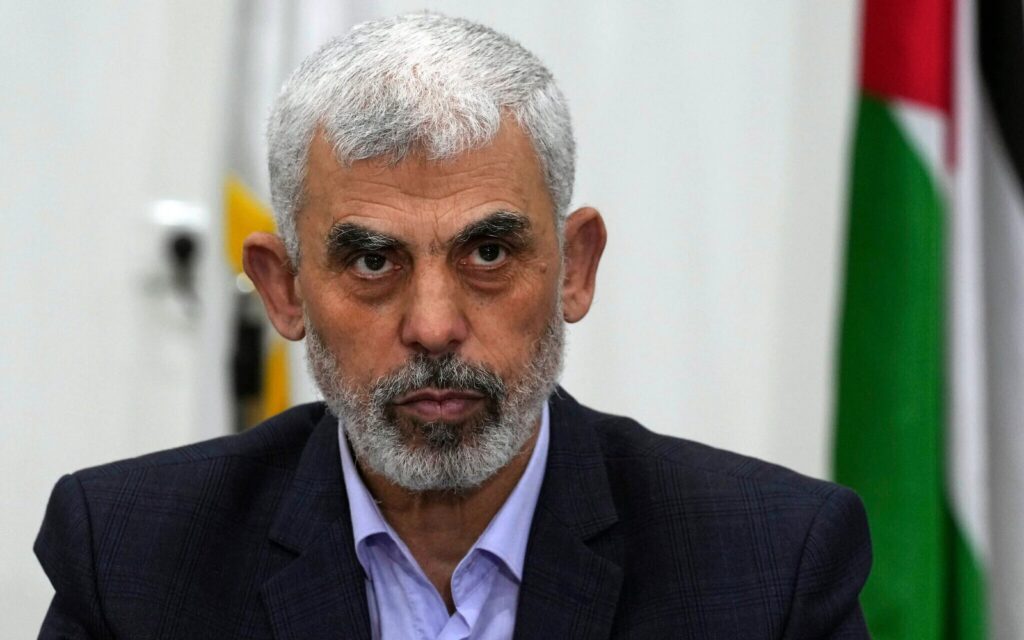
Two years after Hamas leader Yahya Sinwar was killed in Rafah, the IDF has released archival footage and new details about the operation that led to his elimination, along with handwritten documents showing his role in planning the October 7 massacre.
Sinwar was killed on October 16, 2024, during an operation in the Tel Sultan neighborhood of Rafah. In the weeks beforehand, responsibility for the area had shifted from Division 162 to the Gaza Division, whose forces included combat teams from the Nahal Brigade and Bislamach Brigade.
On the day of the operation, surveillance forces spotted three terrorists moving through a destroyed area about 300 meters from an engineering operation. Two were carrying a blanket and the third a vest. After troops began searching the area, a battalion commander opened fire and wounded one of the terrorists in the hand. He was later identified as Sinwar.
The troops surrounded the area with tanks and used drones to scan it. During the encounter, a soldier from Battalion 450 was seriously wounded and evacuated for treatment under fire. Sinwar and the two other terrorists fled into separate buildings.
Paratroopers entered the building where Sinwar had taken cover. A company commander spotted a pool of blood, indicating a terrorist was nearby. Shortly afterward, two grenades were thrown at the troops, one of which exploded. The forces fired on the building with tanks, machine guns and small arms, killing Sinwar.
A drone identified a body inside the building that evening. Due to the terrain and concerns about further danger, troops waited until morning to complete the search. Sinwar’s body was found the next day, confirming his elimination.
The documents released by the IDF include a handwritten directive from Sinwar about the October 7 attack. He instructed Hamas commanders to document and quickly publicize acts of murder and abuse to terrorize Israelis and undermine their sense of security. The document cited point-blank shootings, knife attacks, blowing up tanks and humiliating captives, and called for planning scenes of widespread destruction, fires and civilian harm to amplify the impact.
Sinwar also addressed the possibility of the war expanding, including a collapse of enemy defenses, an uprising among Palestinians in Israel, Yerushalayim and Yehuda and Shomron, or Hezbollah joining the fighting. He called for preparations to widen the attack and focus forces on key targets and positions.
Sinwar was one of the central architects of Hamas’ military strategy in Gaza. After his release from Israeli prison, he helped build up the terror group’s military capabilities. He was elected Hamas leader in Gaza in 2017 and played a central role in planning and leading the October 7, 2023, massacre.
The IDF assesses that his elimination disrupted Hamas’ decision-making and coordination in the short term. It says the group later faced leadership gaps, weakened command capabilities and difficulty maintaining organizational cohesion.
(YWN Israel Desk – Jerusalem)