President Isaac Herzog received the official results of Israel’s 26th Knesset elections on Wednesday morning, formally launching the process of determining who will be tasked with forming the country’s next government amid a political deadlock.
The results were presented to Herzog by Central Elections Committee Chairman Justice Noam Sohlberg, following the committee’s approval of the final vote count. The committee also announced that it had found no evidence that the integrity of the elections had been compromised.
Under Israeli law, the president must consult with representatives of all parties elected to the Knesset before deciding which candidate will receive the mandate to form a government.
In an unusual move, Herzog will begin consultations Wednesday with the smallest factions rather than the largest, starting with Religious Zionism–Zehut, Shas, and Yisrael Beiteinu. Consultations with the remaining parties are scheduled to continue through Thursday evening.
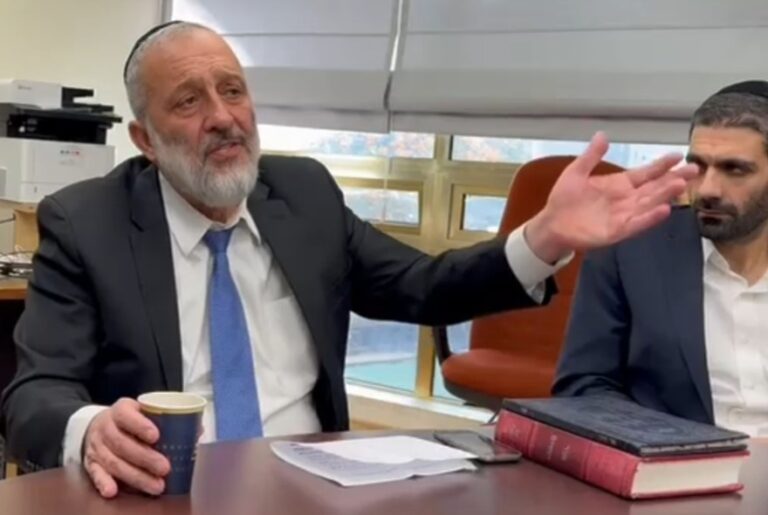
Both Shas, led by Aryeh Deri, and Religious Zionism, led by Bezalel Smotrich, have announced that they will recommend Prime Minister Benjamin Netanyahu to form the next government.
Meanwhile, Yisrael Beiteinu chairman Avigdor Lieberman has declared his support for Gadi Eisenkot, joining Naftali Bennett and Yair Golan in backing the Yashar party leader.
The official election results leave Netanyahu’s bloc with 53 seats, compared to 48 for Eisenkot’s bloc, while the Arab parties secured a combined 19 seats.
Although Netanyahu’s bloc remains larger, neither side commands the 61 seats required for a Knesset majority.
If both Arab parties recommend Eisenkot, he could receive recommendations representing as many as 67 Knesset seats, potentially placing him ahead of Netanyahu in the presidential consultations. However, such recommendations would not necessarily translate into sufficient support to establish a functioning coalition.
The political uncertainty has raised several possible scenarios, including a unity government, a minority government supported from outside the coalition, or another round of elections if negotiations fail.
Herzog has urged party leaders to demonstrate flexibility and avoid political deadlock, warning that Israel cannot afford another prolonged period of political instability.
The president’s decision on whom to grant the first mandate will mark the next major stage in negotiations to establish Israel’s next government.
(YWN Israel Desk—Jerusalem)