
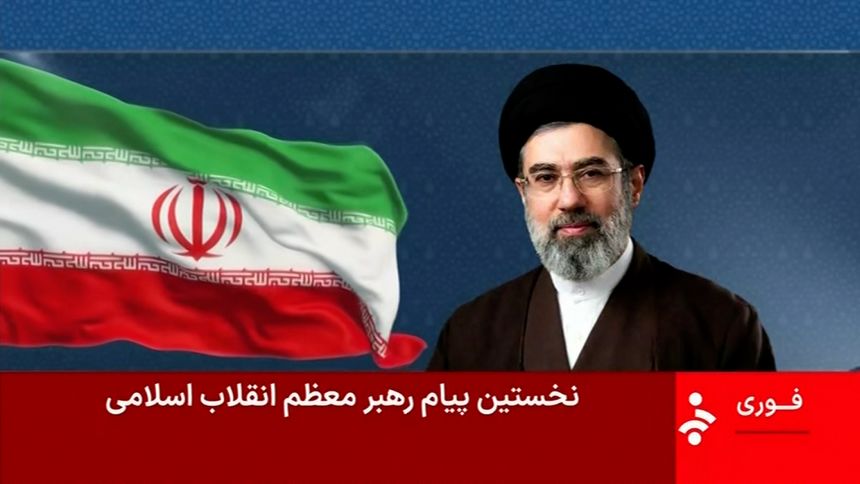
A major controversy erupted in Iran after hardline parliament member Mahmoud Nabavian read what he described as excerpts from “top secret” messages sent by Supreme Leader Mojtaba Khamenei during a live state television broadcast. Moments later, the program was abruptly interrupted and taken off the air.
Nabavian, a member of the Iranian parliament’s National Security and Foreign Policy Committee, claimed Khamenei repeatedly opposed negotiations with the United States and questioned why conditions he allegedly set for the talks were not reflected in the memorandum of understanding reached between Washington and Tehran.
According to Nabavian, Khamenei believed Iran was under no pressure to negotiate and should not rush into an agreement. He claimed the Supreme Leader viewed ending the war and obtaining compensation as the primary goals of the talks, rather than focusing on Iran’s nuclear program. Nabavian further alleged that Khamenei instructed negotiators not to discuss what he described as the “main issue,” an apparent reference to Iran’s nuclear activities.
At one point during the broadcast, Nabavian began reading what he claimed was a direct message from Khamenei regarding the negotiations. He asserted that the understandings reached during talks in Pakistan differed significantly from the conditions originally required to justify negotiations with the United States. He also claimed Khamenei had called for the talks to be halted altogether.
Nabavian went on to claim that Khamenei reiterated his position on multiple occasions in April and insisted that Iran either secure full recognition of its right to enrich uranium or permanently remove the nuclear issue from the negotiating agenda. He further alleged that Khamenei viewed the Strait of Hormuz as a critical pressure point against the United States and believed any easing of pressure on Washington should come only after compensation and other conditions were met.
According to Nabavian, none of those conditions appeared in the memorandum of understanding. He also claimed Khamenei insisted that control over the Strait of Hormuz remain exclusively in Iranian hands, without participation from Oman or any other country. Nabavian further alleged that Khamenei outlined different rules for vessels passing through the waterway, with some ships to be stopped entirely, others allowed passage after paying fees, and vessels belonging to Iranian allies permitted to transit without charge.
While continuing his remarks, Nabavian was suddenly cut off by the program’s production team and the broadcast ended unexpectedly. Iran’s state broadcasting authority later issued an unusual statement saying his comments may constitute a legal violation because they involved classified documents and communications involving senior state officials. The authority also announced that one of its managers had resigned following the incident and that disciplinary measures would be taken.
The episode drew criticism even from figures within Iran’s conservative camp. Hossein Soleimani, editor-in-chief of the Mashregh news website, accused Nabavian of selectively presenting portions of a much broader exchange of communications. Writing on X, he said the material involved roughly twenty separate communications and argued that if classified documents were going to be revealed, they should be presented accurately and in full.
The controversy comes as Iran’s negotiating delegation, led by Parliament Speaker Mohammad Bagher Ghalibaf and including Foreign Minister Abbas Araghchi, arrived in Switzerland for a new round of technical talks with the United States. The dispute has also unfolded against the backdrop of Iran’s renewed closure of the Strait of Hormuz and growing criticism from hardline factions opposed to any negotiations with Washington.
(YWN World Headquarters – NYC)
 Join the official YWN WhatsApp status





One Response
Neh, nothing of interest here. Trump already said they promised they’d never obtain a nuclear weapon, they don’t want one and won’t try getting one. Yup.