
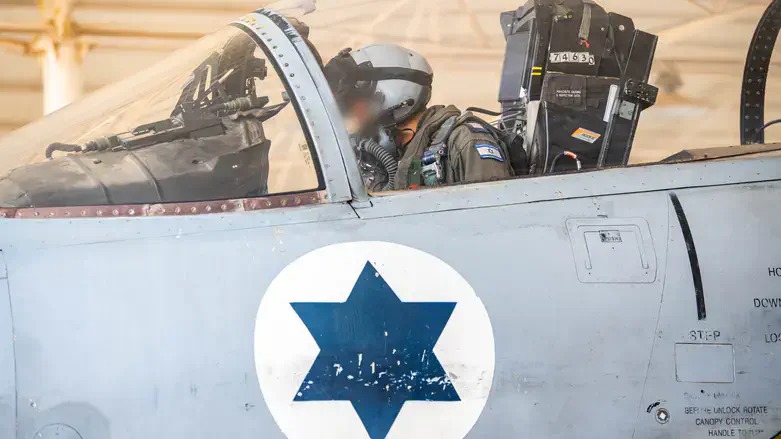
A senior investigator examining the security collapse of October 7 says the Israel Air Force (IAF) suffered �severe failures� at nearly every critical moment of the Hamas massacre�missed intelligence, rigid command structures, and hours-long delays in striking terrorists as thousands poured across the Gaza border.
Brig.-Gen. (res.) Oren Solomon, one of the top officials probing the IDF�s failures, delivered the blistering assessment on N12, saying the Air Force�s rigid operational culture and inability to process real-time intelligence contributed directly to the deadliest attack in Israel�s history.
According to Solomon, IAF officials received key intelligence alerts the night before the massacre, yet took no operational action.
�IAF receives intelligence reports at night, with no situation assessment process taking place,� Solomon said. �Everyone got a call on the red phone line and said, �yes, we understood,� before hanging up and carrying out no operational processes connected to intelligence received.�
Meanwhile, the Intelligence Directorate and Unit 8200 separately received indications that Hamas was preparing for an attack. But because of bureaucratic barriers, the Air Force itself never received those signals.
One young female officer, Solomon revealed, called military intelligence roughly 50 times seeking clearance to see the materials, but was denied authorization.
Solomon said then�Chief of Staff Lt.-Gen. Herzi Halevi held a situation assessment at 4 a.m. and �almost completely dismissed the possibility that Hamas would attack from the air.� The meeting did not include IAF Commander Maj.-Gen. Tomer Bar.
Hours later, Hamas launched its aerial component: dozens of explosive drones, followed by six terrorists on motorized gliders, who began massacring Israelis at border communities.
When the ground phase of the attack began at 6:29 a.m., Solomon said the Air Force still lacked a coherent situational picture. Even after receiving confirmation of two major infiltrations just 24 minutes later, the IAF did not launch immediate strikes.
At 6:53 a.m., Gaza Division officers reported �several simultaneous raids� and issued an expanded fire policy. But neither the Southern Command nor IAF ordered strikes on the barrier or infiltration routes.
�What did the planes do instead of taking off immediately and striking terrorists at the barrier?� Solomon asked. �They planned, sat on the ground for almost three hours, and did not attack.�
Although an order to strike was issued at 7:10 a.m., no airstrikes were conducted until 10:30.
Even pleas from Gaza Division commander Brig.-Gen. Avi Rosenfeld could not spur independent decision-making.
The result, Solomon said: �Thousands of terrorists entered Israel,� and some returned to Gaza multiple times during the massacre, using unstruck infiltration routes.
Only shortly before noon did the Air Force strike the border barrier.
Speaking a year after the attack, IAF chief Maj.-Gen. Tomer Bar admitted shortcomings: �We were not effective enough because we were not prepared for this scenario� We must admit that we failed to defend Israel�s skies.�
Bar stressed that the force did not understand the significance of the gliders and was too slow in preparing for a drone threat.
At the same Palmachim conference, active-duty IAF pilots and navigators delivered unusually harsh public criticism of their own command structure.
�We missed hundreds of targets because control is too centralized,� one pilot said.
�The central control is killing us. The orders are killing us,� a senior officer added.
�There was no initiative� Whoever took initiative was reprimanded,� said the commander of Shaldag, the Air Force�s elite commando unit.
Pilots described chaotic conditions, including reports of kidnappings they could not act on due to lack of identification and absence of authorization.
One pilot watched a convoy of pickup trucks suspected of carrying terrorists, but, after requesting confirmation and receiving none, did not fire. That convoy drove to Kibbutz Be�eri, where terrorists reinforced attackers and carried out mass murder.
According to N12, the IAF had an opportunity to learn from a West Bank incident four months before October 7. After a Jenin operation went awry and terrorists surrounded a disabled military vehicle, a pilot fired warning shots without authorization, defying direct orders. His decision was later validated.
The lesson, analysts say, should have prompted a reassessment of centralized control and greater tactical autonomy. It did not.
The IDF confirmed that the Turgeman Commission found the IAF �met all readiness requirements� and followed all commands. But Solomon�s investigation and testimony portray a force trapped by bureaucracy and unable to act decisively when every second mattered.
The October 7 failures, he said, were a devastating combination of missed intelligence, paralyzing command procedures, and delayed air power�a perfect storm that left Israel�s southern communities exposed at the moment they most needed protection.
(YWN World Headquarters – NYC)
 Join the official YWN WhatsApp status




3 Responses
Aha. And these erev rav want to force Bnei Torah to join them in this egotistical incompetence. I hear.
biggest lie still not exposed, AG Gali Baharav-Miara blocked Netanyahu orders to IAF from attacking Palestinian “civilians” until cabinet can declare a war which took until 6 pm
Yeah it’s ironic they couldn’t do any of their jobs but they want to stop the people that at least know how to learn