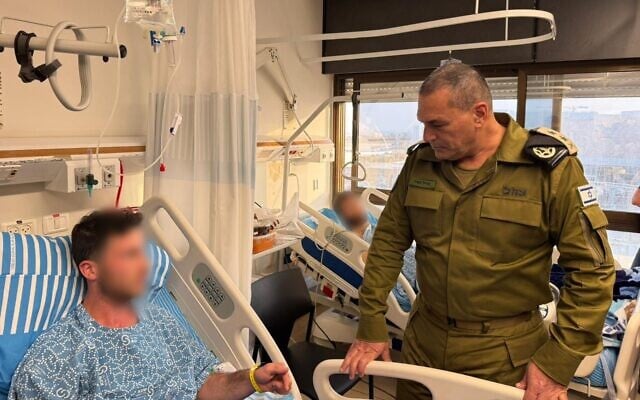
Doctors at Rambam Medical Center in Haifa are weighing an extraordinary decision: leaving a live bullet embedded in the heart of an IDF reservist wounded during a high-risk overnight raid in southern Syria last week.
The soldier is one of six reservists hit by heavy gunfire during the Nov. 27-28 operation targeting operatives from Jaama al-Islamiya, a Sunni terrorist group the IDF says was plotting attacks against Israelis.
Dr. Gil Bolotin, director of cardiac surgery at Rambam, said the team made a rapid but unanimous call to leave the projectile in place, for now.
“After a rapid consultation, we unanimously decided to leave the bullet in place,” Bolotin told Ynet. “We succeeded in stabilizing him, and today he is already recovering and communicating with those around him.”
Bolotin said the team will determine in the coming days whether to remove the bullet through another open-chest procedure or attempt to extract it via catheterization–a less invasive method using a thin tube guided into the heart. “It is certainly possible that the bullet will remain where it is,” he added.
According to Bolotin, the reservist arrived in critical condition and was rushed straight into emergency surgery “to stop the bleeding and stabilize his condition.” The operation required surgeons to open the chest from both the side and the center.
“The surgery was complex and challenging,” Bolotin said. “The bullet passed between the walls of the heart, perforated them, and came to a stop there.”
Two additional soldiers from the same raid remain hospitalized in serious condition in intensive care, where they are under close monitoring but listed as stable.
The strike in the Beit Jinn area marked a significant escalation. At least 13 terrorists were killed, and several high-value suspects were taken into custody and brought to Israel for interrogation, according to Ynet. It was the first time since the collapse of the Assad regime in late 2024 that Israeli forces sustained combat injuries on Syrian soil.
After the regime’s fall, Israel expanded its security zone in southern Syria, maintaining a growing military presence amid ongoing clashes and airstrikes. The IDF says the region has become a critical front for preventing cross-border attacks.
Blue and White Party leader Benny Gantz, a former IDF chief of staff and member of the War Cabinet, told JNS on Monday that operations in southern Syria must continue.
“We should, and probably can, reach some kind of security agreement with the Syrian administration,” Gantz said. “But following October 7, we must make sure that there is no threat of potential invasion along our borders. That includes the border at the Golan Heights.”
(YWN World Headquarters – NYC)
 Join the official YWN WhatsApp status