
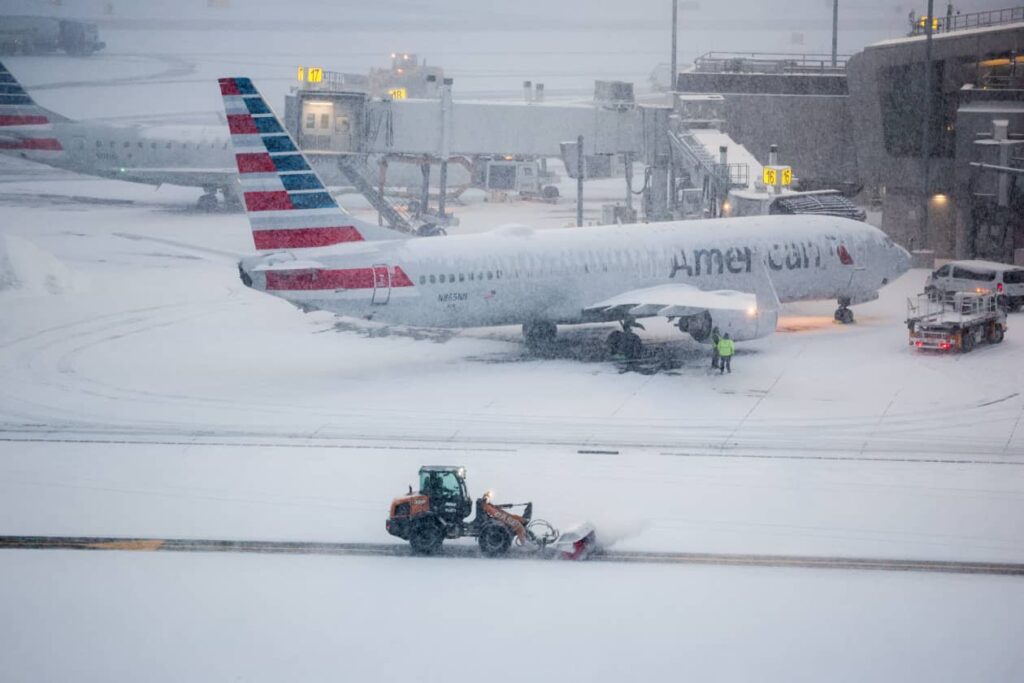
Hundreds of flights at New York City-area airports remain grounded in the aftermath of the powerful blizzard, leaving thousands of travelers stranded across the Northeast.
NYC Emergency Management confirmed Monday that there were “major flight disruptions” at all three major regional hubs — John F. Kennedy International Airport, LaGuardia Airport, and Newark Liberty International Airport.
Despite rapid efforts to clear runways and surrounding roadways, the storm’s impact continues to ripple through Tuesday’s travel schedule.
NYC Airport Breakdown (FlightAware):
?? LaGuardia Airport: 263 flights canceled (49% of total flights)
?? Newark Liberty: 257 flights canceled (49% of total flights)
?? JFK Airport: 249 flights canceled (41% of total flights)
Dizzying Nationwide Cancellations
The monstrous bomb cyclone has wreaked havoc on air travel nationwide, with more than 10,000 U.S. flights canceled from Sunday through Tuesday.
That includes over 2,000 cancellations already logged for Tuesday alone. The majority are concentrated at Boston Logan International Airport, with high levels of disruption also spread across the New York City-area airports, according to FlightAware.
Airlines are now scrambling to reposition aircraft and crews after days of shutdowns, and officials warn that delays and cancellations could continue even as skies begin to clear.
The massive wave of cancellations and delays has triggered a cascading backlog that aviation experts say could take several days — and possibly up to a week — to fully unwind.
Restarting operations after a complete shutdown at major hubs is a logistical nightmare, with three critical challenges disrupting the system:
First, aircraft are scattered across the country. Jets that were scheduled to operate out of New York or Boston are parked in cities like Miami, Orlando, Los Angeles, and San Francisco — and they cannot return until runways, taxiways, and gate areas are fully cleared of more than 20 inches of snow.
Second, thousands of pilots and flight attendants are out of position. Many crews became stranded during the storm and have since exceeded their federally regulated duty limits after sitting in hotels or waiting out delays at alternate airports.
Third, the timing could not be worse. The blizzard struck at the tail end of the busy winter break travel period, when many flights were already operating at or near capacity. With planes full, airlines have limited flexibility to rebook thousands of stranded passengers, leaving many facing waits of 48 to 72 hours — or longer — for confirmed seats.
Meanwhile, frigid temperatures at major hubs such as JFK and Newark have significantly slowed de-icing operations. Limited ramp space, repeated runway closures during peak snowfall, and snow removal constraints have nearly doubled aircraft turnaround times, compounding delays even after skies have cleared.
Major carriers including Delta, United, and American have extended flexible travel waivers through the end of the month. However, meteorologists caution that another fast-moving clipper system expected midweek could further complicate efforts to restore normal schedules.
Travelers are strongly advised to check directly with their airlines before heading to the airport.
(YWN World Headquarters – NYC)
 Join the official YWN WhatsApp status


One Response
Many of the flights were cancelled already shabbos which was great as so many secular Jews violate shabbos and now stayed stuck on the ground.