
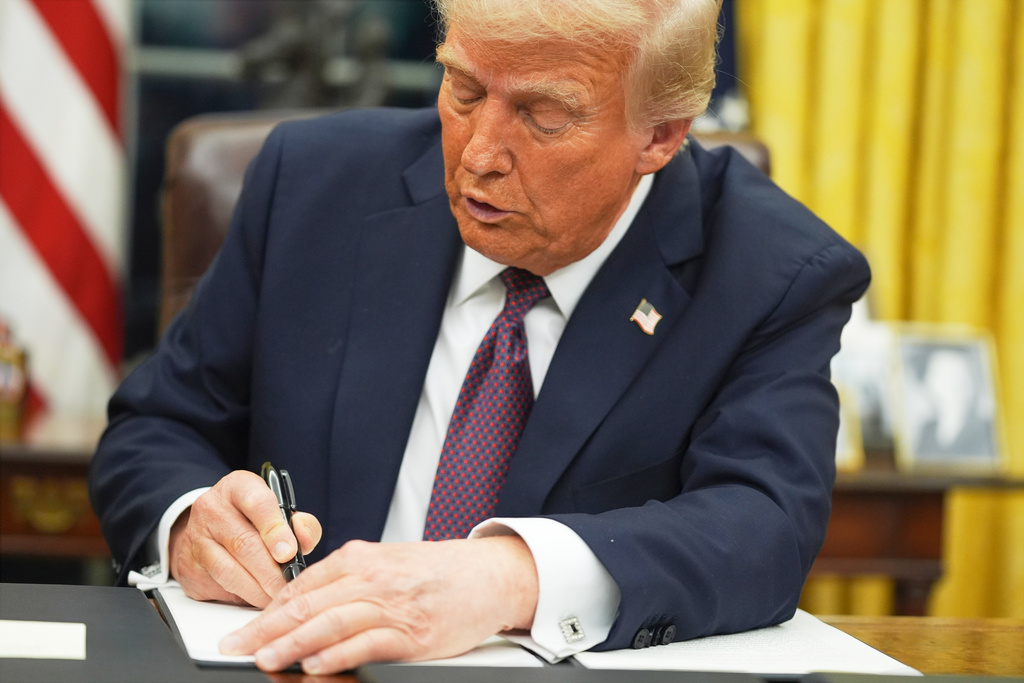
President Donald Trump on Thursday commuted the federal prison sentence of R’ Yaakov Chaim Deutsch, a 60-year-old resident of Williamsburg, bringing an early end to a punishment that advocates and supporters long argued was grossly disproportionate to the offense.
Deutsch had been serving a 62-month prison sentence and had already completed approximately 24 months behind bars at the time of the commutation. The sentence drew widespread criticism because federal prosecutors in the case had sought a maximum of 18 months, yet the court imposed more than three times that amount.
The offense was non-violent, resulted in no victims, and caused no financial loss, with no restitution ordered. Several co-defendants in the same matter received no prison time at all, further intensifying arguments that Deutsch’s punishment was unusually harsh.
In a statement released following the commutation, Tzedek Association praised the president’s decision and described it as a correction of a “clear miscarriage of justice.”
“Jacob Deutsch was serving an extraordinarily severe sentence in a non-violent, zero-loss case–punished at a level three times greater than what prosecutors themselves sought,” the organization said. “Today’s action restores proportionality, reunites a family, and reaffirms that mercy remains an essential pillar of American justice.”
Rabbi Moshe Margaretten, president of Tzedek Association, credited the White House for being willing to revisit the case and intervene.
“This commutation reflects moral courage and leadership at its best,” Margaretten said. “President Trump demonstrated that justice is not only about punishment, but about fairness, humanity, and the willingness to correct clear wrongs when they occur.”
The organization also thanked Alice Johnson, the Department of Justice, and others within the administration who were involved in reviewing the case.
Tzedek emphasized that the commutation effort relied solely on the merits of the case, stating that no lobbyists were hired and no money was spent to secure the outcome. Attorneys and advocates who worked on Deutsch’s behalf did so, the group said, largely pro bono and out of a belief that the sentence was unjust.
(YWN World Headquarters – NYC)
 Join the official YWN WhatsApp status





12 Responses
This guy may have had his sentence commuted by Trump, but has he gotten a pardon from the King of kings? What are he and Margaretten doing about that?
!???? ???? ??????
Can only begin to imagine the joy of this family in having their husband/father back home… it’s going to be a special shabbos, that’s for sure…
President Donald Trump is an Oheiv Yisroel par excellence and the most pro-Jewish President since President George Washington.
what did he do?
Name me a crime that is non-violent, resulted in no victims, and caused no financial loss?
What was his crime?
wisesage
president trump was convicted in NYC for financial fraud
it was non violent
no victims (the banks had no complaints and would continue doing business with him)
and no financial loss
Name me a crime that is non-violent, resulted in no victims, and caused no financial loss?
running a red light
@WiseSage58
Let�s say someone lies on an application for a car loan (he hides a bankruptcy or repossession), gets the loan and pays it off on schedule.
Is that illegal? Definitely.
Are there any victims? Not that I know of.
Did he cause a financial loss? Again, not that I know of.
A $50 million mortgage fraud scheme. If he benefited, someone lost something. He was ordered to pay fines and restitution. Trying to make him sound like an abused tzadik. Trump felt bad for him because he is a convicted felon for fraud as well.
Making a loan application with false statements (including overstating assets, making the property look better than it is, etc.), but which the bank ignores (bankers know to discount dubious statements on loan applications) and doesn’t give the borrower a lower rate, and no one is harmed since the loan is paid off. From the press accounts this is not uncommon, and there is often an apparent ulterior motive to justify a prosecutor preferring to go after a businessman who gets no extra benefit from the victimless crime, rather than wasting time going after people such as muggers and rapists (which is much messier).
RT, it’s a futile task to tell you to stop lying, since lying is your entire existence. But everyone else should note that the article says NO restitution was ordered, thus flatly contradicting your irresponsible and baseless assertion.
The facts are that the defendants in this case faked rent rolls in order to inflate the value of properties under their management, so they could get $50M worth of loans that they would otherwise not have been given. But they paid the loans off, so the lenders lost no actual money, and thus there was nothing to restitute.