
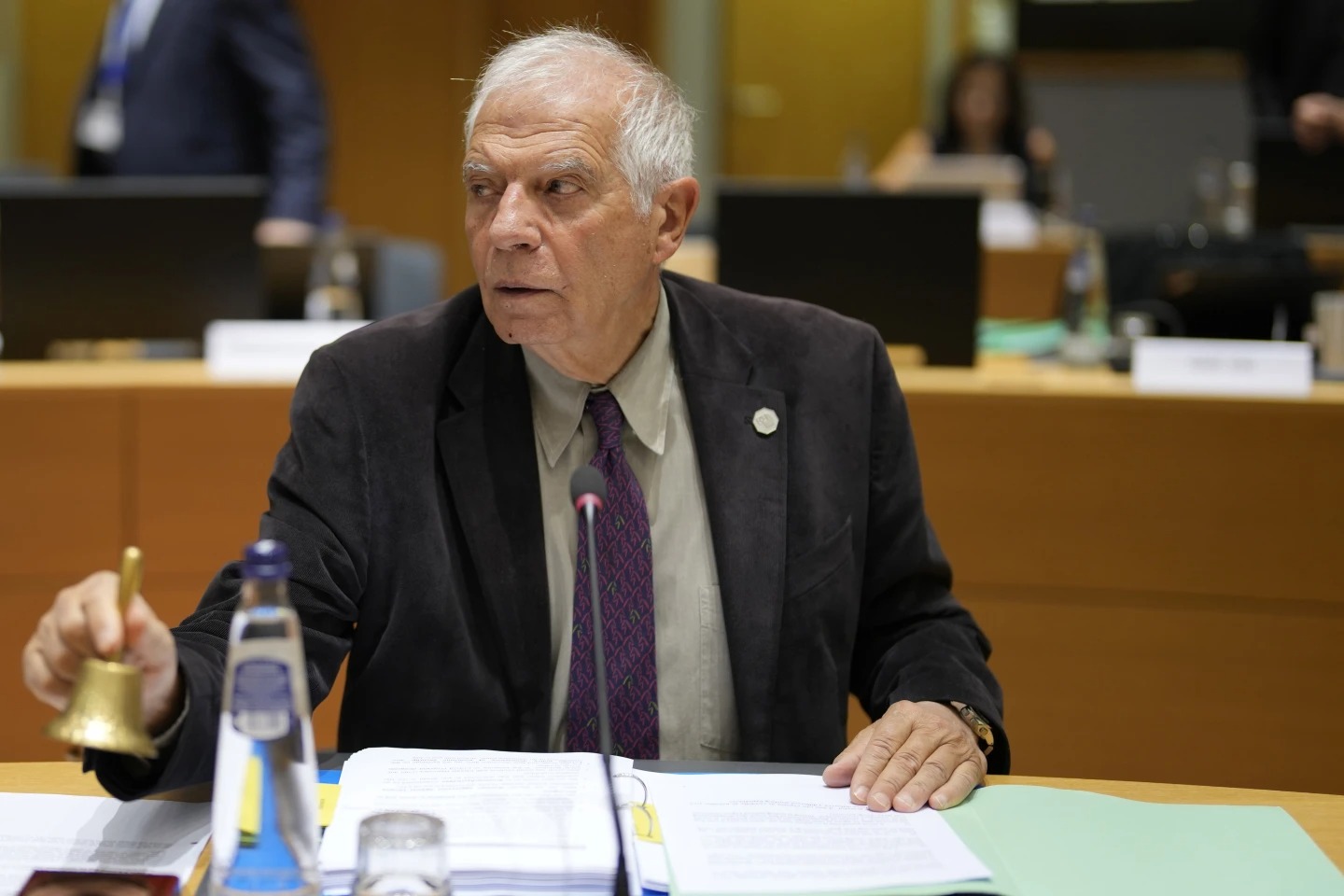
The 27 European Union nations have jointly condemned Hamas for the use of hospitals and civilians as “human shields” in the war against Israel.
At a meeting of the bloc’s foreign affairs ministers, Borrell brandished a statement he issued on behalf of the 27 nations as a show of unity following weeks of often contrasting statements on how the group should address the Israel-Hamas war.
“You know how difficult it has been the last times, after the vote in the United Nations, where countries were voted in different ways, to present a completely united approach,” Borrell said. Only hours after EU leaders professed unity over the Israel-Hamas war on Oct. 28, the member states were totally split in a vote on a General Assembly resolution calling for humanitarian truces in Gaza leading to a cessation of hostilities between Israel and Hamas.
Now, though, the EU nations said in a statement they join “calls for immediate pauses in hostilities and the establishment of humanitarian corridors, including through increased capacity at border crossings and through a dedicated maritime route, so that humanitarian aid can safely reach the population of Gaza.”
And they reiterated their “call on Hamas for the immediate and unconditional release of all hostages. It is crucial that the International Committee of the Red Cross is granted access to the hostages.”
And as a key tenet, it said that “the EU condemns the use of hospitals and civilians as human shields by Hamas.”
Latvian Foreign Minister Krisjanis Karins said that “Hamas is unfortunately using civilian infrastructure and civilians as shields against the Israeli Defense Forces. So the situation absolutely not black and white.”
He added that “no one in the West is interested in supporting any terrorist organization.”
The nations stopped short of calling for a cease-fire.
German Foreign Minister Annalena Baerbock said she understood “the impetus for a cease-fire.” But she said those who seek one must answer questions “for example, how can the demand for a cease-fire, acutely, and now in this terrible situation guarantee that Israel’s security is assured? What happens with the 200 hostages, and who negotiates it in a situation where negotiations barely seem possible?”
(AP)
 Join the official YWN WhatsApp status


