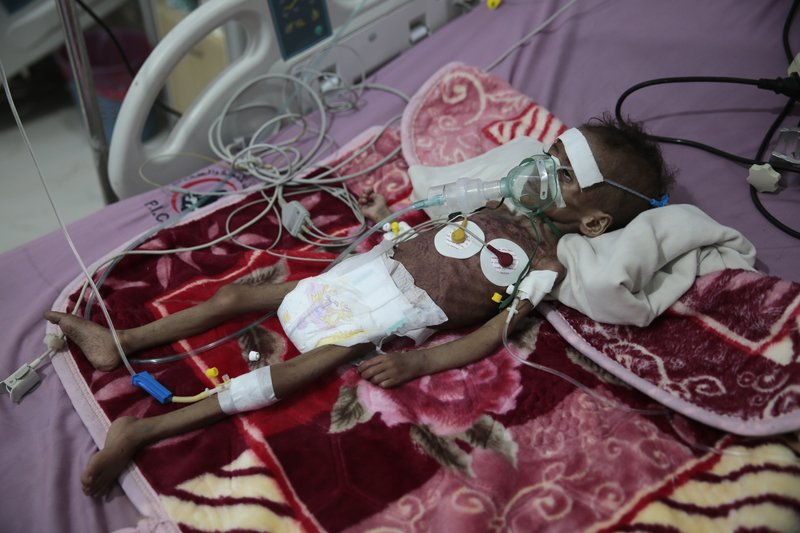
The window to prevent a famine in war-torn Yemen is narrowing, with a new study showing that millions of people in the country will face some form of food crisis next year, U.N. agencies warned on Thursday.
More than half of Yemen�s population of 30 million risks slipping into �worsening levels of hunger� by mid 2021, according to a joint statement by the World Food Program, UNICEF and the Food and Agriculture Organization.
�These alarming numbers must be a wake-up call to the world. Yemen is on the brink of famine and we must not turn our backs on the millions of families who are now in desperate need,� said David Beasley, WFP�s executive director.
The conflict in the Arab world�s most impoverished nation began when Iran-backed Shiite rebels, known as Houthis, captured the capital of Sanaa in 2014, forcing the internationally recognized government to flee.
The following year, a Saudi-led coalition supporting the government intervened to battle the rebels and curb Iran�s influence in what has turned into a stalemated regional proxy war. Since then, more than 100,000 people � fighters and civilians � have been killed.
The number of Yemenis poised to face an �emergency phase� of food insecurity � a prelude to famine � is expected to increase from 3.6 million to 5 million in the first half of 2021, said the U.N. statement. The emergency phase means people are suffering �enormously,� with some of the most vulnerable dying of hunger, according to the statement.
The three U.N. agencies also warned that the number of Yemenis currently suffering famine-like conditions could triple from 16,500 to 47,000 people between January and June 2021.
�Make no mistake, 2021 will be even worse than 2020 for Yemen�s most vulnerable people,� added Beasley. �Famine can still be prevented � but that opportunity is slipping away with every day that passes.�
In recent months, Yemen has witnessed a significant drop in humanitarian aid as key Arab donor countries failed to fulfill earlier pledges. Last month, U.N. humanitarian chief Mark Lowcock told the U.N. Security Council that the $3.4 million U.N. humanitarian appeal for 2020 for Yemen had received only $1.5 billion, or about 45%. By comparison, he said, last year at this time the U.N. had received twice as much � almost $3 billion.
�Cuts to humanitarian support this year, including food assistance, have erased previous food security gains and left families with worsening food consumption gaps,� the agencies also said. �Next year cuts will continue and may be expanded, unless funding is urgently received.�
(AP)
 Join the official YWN WhatsApp status