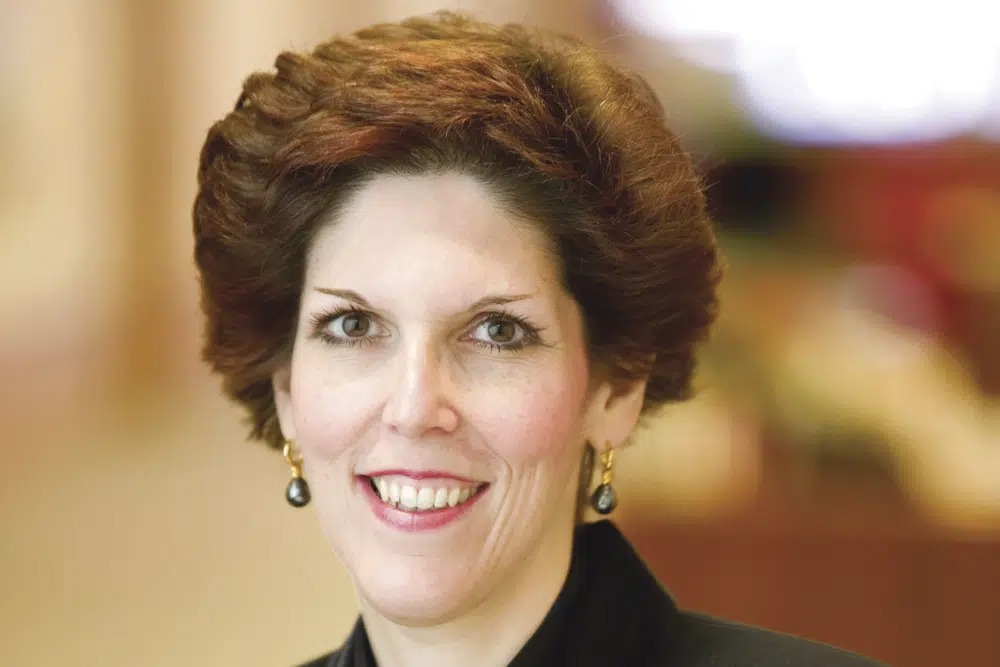
Growing evidence that high inflation is finally easing shows that the Federal Reserve�s sharp interest rate hikes are working as intended, says Loretta Mester, a key Fed policymaker. But further rate hikes are still needed, she says, to decisively crush the worst inflation bout in four decades.
�We�re beginning to see the kind of actions that we need to see,� Mester, president of the Federal Reserve Bank of Cleveland, said in an interview with The Associated Press. �Good signs that things are moving in the right direction … That�s important input into how we�re thinking about where policy needs to go.�
Other Fed officials, too, have said recently that they were encouraged by a series of milder readings on inflation and wage growth. But Mester�s comments are notable because she is among the more consistently hawkish members of the Fed�s 19-person interest-rate-setting committee. (�Hawks� typically support higher rates to fight inflation, while �doves� tend to favor lower rates to boost employment.)
�She has been ahead of the curve on a lot of the arguments that have pushed the Fed to act more hawkishly over the past year,� said Matthew Luzzetti, chief U.S. economist at Deutsche Bank.
As a result, Mester�s views provide a measure of how far the Fed�s more hawkish policymakers might be willing to go in their drive to tame inflation. Consumer price increases, as calculated by the government, have steadily eased from a four-decade high of 9.1% in June to 6.5% in December.
Yet because the Fed�s own inflation target is much lower � 2% � its policymakers have penciled in further rate increases. The rate hikes the Fed has already imposed have contributed to a near doubling of mortgage rates and to sharply higher costs for auto loans and other consumer and business credit. They have also elevated the risk of a recession.
How high the Fed will raise its benchmark short-term rate and how long it keeps it there will likely determine whether it ultimately curbs inflation � and at what price to the economy. The Fed�s rate is now in a range of 4.25% to 4.5%, the highest level in 15 years.
In her interview Tuesday with the AP, Mester, 64, stressed her belief that more hikes are needed and that the Fed�s key rate should rise a �little bit� above the 5% to 5.25% range that policymakers have collectively projected for the end of this year.
Mester, who has been president of the Cleveland Fed for eight years, didn�t say how large a rate hike she favored when the Fed�s next meeting ends on Feb. 1. Most economists expect the central bank to announce a smaller quarter-point hike. But Mester noted that the economy and the financial markets �were able to handle� the half-point hike that the Fed carried out in mid-December.
�We�re not at 5% yet, we�re not above 5%, which I think is going to be needed given where my projections are for the economy,� she said. �I just think we need to keep going, and we�ll discuss at the meeting how much to do.�
Mester�s comments follow remarks from other Fed officials last week that seemed to indicate a likely quarter-point hike at the Feb. 1 meeting. That move would follow a half-point rate increase in December and four three-quarter-point hikes before that.
Patrick Harker, president of the Federal Reserve Bank of Philadelphia, said that quarter-point hikes �will be appropriate going forward.� Two other Fed regional bank presidents � Susan Collins of the Boston Fed and Raphael Bostic of the Atlanta Fed � also said they were leaning toward a quarter-point increase.
Mester acknowledged that the Fed�s ever-higher rates will likely lead to layoffs and higher unemployment. But she said she thinks any increase in joblessness will be smaller than during a typical economic downturn.
She also said she hopes the Fed�s higher rates will mostly reduce the number of openings that employers have posted rather than cause widespread job cuts. Job vacancies are at historically high levels � a sign that companies are competing for scarce workers. If the number of posted job openings were to fall, it would mean that wages won�t likely rise so fast, a trend that should cool inflation.
On Wall Street, though, investors have signaled that they don�t expect the Fed to raise rates as high as Mester prefers. Futures prices suggest that the market thinks the central bank will implement two more quarter-point hikes and then stop.
But Mester said she would �need to see inflation moving down faster� before she could support a pause within the next few months.
�We�re starting to see our policy actions do what they�re intended to do,� she said. �But I do believe we have to continue raising … and then hold for a while so that we get back to price stability in a timely way.�
(AP)
 Join the official YWN WhatsApp status