
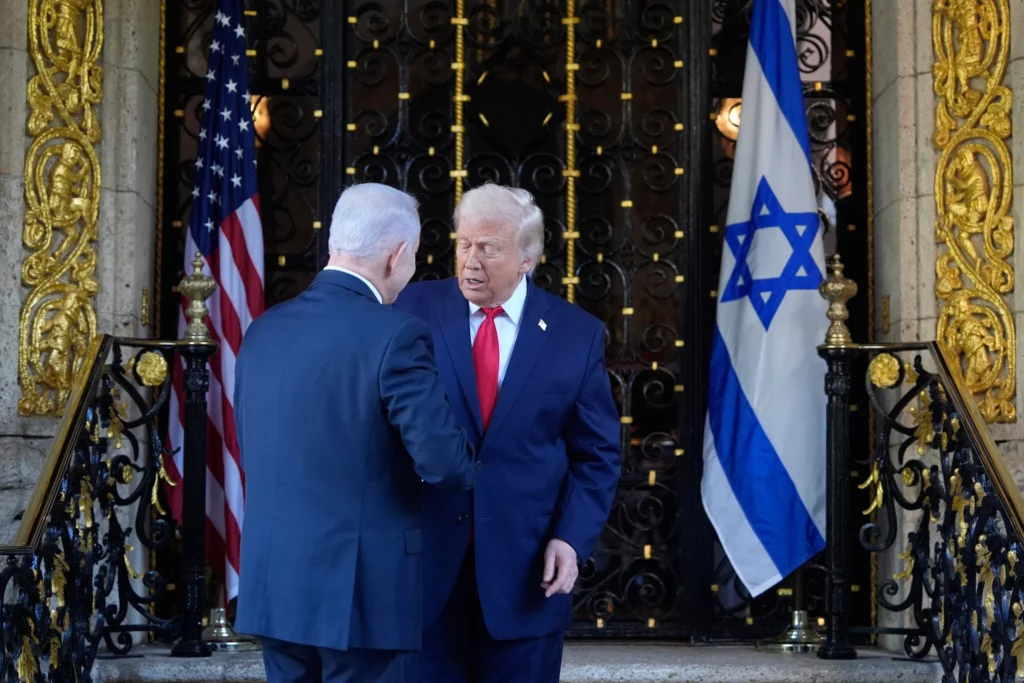
President Donald Trump�s advisers are brushing aside public statements by Israeli Prime Minister Benjamin Netanyahu on the next phase of the Gaza ceasefire, underscoring a widening rift over who controls the diplomacy as Washington pushes ahead with its own plan.
�This is our show, not his show,� a senior U.S. official told Axios, describing a White House determined to press forward despite Israeli objections. The official said the administration has achieved progress in Gaza �nobody thought was possible� and intends to continue. �If he wants us to deal with Gaza, it will have to be our way,� the official added, arguing that Netanyahu has little leverage to block the American approach.
The message from Washington, according to the official, is: accept U.S. terms or face a return to fighting, with Israel sending IDF troops back into Gaza while the United States steps aside. �We�re doing him a favor,� the official said, adding that Netanyahu could distance himself politically if the plan fails, or take credit if it succeeds.
The comments came as Trump announced the creation of a new international body to oversee Gaza�s postwar transition, a centerpiece of his administration�s 20-point peace plan that produced the ceasefire with Hamas last October. Posting on Truth Social late Thursday, Trump said the �Board of Peace for Gaza� had been formed and promised to reveal its members soon, calling it �the Greatest and Most Prestigious Board ever assembled.�
Under the plan, the Board of Peace would function as a transitional oversight authority during Gaza�s reconstruction, supervising an interim administration. Day-to-day governance would be handled by a technocratic Palestinian Arab committee, overseen by an intermediate executive body. Trump himself would chair the board, which is expected to include 10 to 15 leaders from Arab, Western and other countries. A senior representative on the ground in Gaza would be former U.N. Middle East envoy Nickolay Mladenov.
The proposed composition has set off alarms in Jerusalem. Turkey and Qatar � both supportive of Hamas and hostile to Israeli interests � are expected to be significant participants. On Saturday night, the Prime Minister�s Office said that announcements regarding the Gaza executive body subordinate to the Board of Peace �were not coordinated with Israel and run contrary to its policy,� adding that Netanyahu had instructed Israel�s foreign minister to raise the issue with Washington.
Trump�s declaration followed comments from U.S. Middle East envoy Steve Witkoff, who said the administration would move ahead with implementing the second phase of the Gaza plan even as unresolved hostage issues linger.
Hamas was required under the ceasefire to return all hostages in Phase One, but the body of Ran Gvili � the last remaining hostage � is still being held in Gaza. Hamas has claimed it does not know where Gvili�s body is, despite Israeli officials saying they provided information on the burial site that went unacknowledged.
Israel has insisted it will not accept the second phase of the agreement until Hamas fulfills all its first-phase obligations, including the return of Gvili. The White House, however, appears prepared to press on, betting that American leverage, rather than Israeli consent, will determine whether the fragile ceasefire holds and whether Gaza�s next chapter unfolds on Washington�s terms.
(YWN World Headquarters – NYC)
 Join the official YWN WhatsApp status


9 Responses
Excuse me but the way I recall it, Trump demanded Israel stop pressing on militarily, Israel did not ask for his help, he imposed it. As he does everywhere. Biggest, greatest, most beautiful blah blah blah. Qatar and Turkey are huge supporters of Hamas, they are no friend of Israel. Trump can do business with them, not “peace” deals where one party is Israel.
In other words; forget about Yom Hatzmaut as Israel is NOT an independent state! Perhaps if they would respect the Torah and Roshei Yeshivos, the world would respect them and their security interests as well!
And they say there is no G-D !!! Take a look how fast the “grapes turn sour “
Netanyahu is so stupid, it is unbelievable how stupid he is. He could’ve annex Gaza. Instead he involved Trump in every little detail and now power hungry Trump wants to take over Gaza completely with “Arab countries overseeing the peace and governing”. Yep, what peace will be achieved, it’ll be amazing…
Here’s another reason why Chareidim shouldn’t go to the army. The blood of the soldiers in the IDF is cheap. They continously fight, they keep on dying or coming home with missing limbs while the Israeli government makes all kinds of decisions that continously puts Israel in the position of having to constantly and continously fight wars.
Netanyahu needs to get in line and be thankful for the United States and President Donald Trump keeping him, his government and his country afloat, and adhere to American requirements of him with Derech Eretz rather than being ungrateful.
Chazal bring down the truth of millennia
“?? ???? ?? ?????, ???? ?? ???????”
This isn’t good for Netanyahu personally. It may or may not be good for Israel. It is probably better for the Jewish People as a whole for Israel to have less responsibility for what is going on in Gaza day-to-day. If Trump thinks he’s getting anything big and beautiful (or great and prestigious yada yada) out of Gaza, well, he’s making a mistake… And only liberals get Nobel Peace Prizes.
???? ??? ????? ???? ?????? ????? ????? ????? ????? ?? ????? ??????? ????? ??? ????? ????? ??, ??? ???? ?? ???? ???, ?????? ???? ????? ????: ??? ?’ ??? ??????? ??????, ???? ??? ????? ????? ??? ??? ????? ??? ??????? ???, ???? ??? ?? ?????? ????? ????? ???, ????? ????? ????? ????, ????? ????? ??? ?? ??? ??? ????? ?????, ?????? ????? ???? ?????? ?? ????? ???? ???? ??? – ?? ????? ??? ????? ???? ?????? ?????? ????? ?? ?????? ???????? ??????, ??? ????? ????? ?? ??? ??? ???
The secular world is not our friend and it�s a pity that the Zionist government still hasn�t learnt this lesson that is so clear to the religious people. If we try to imitate the goyim they will reject us over and over and over. Doesn�t matter the time or place. And all the fighting and death will just be another bump in the road.