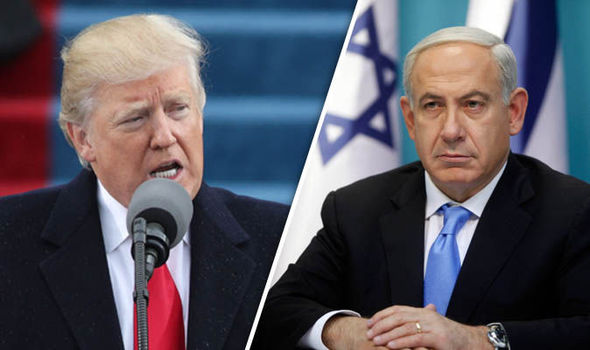
President Donald Trump and Israeli Prime Minister Benjamin Netanyahu held a phone call on Iran on Friday, according to Axios, underscoring the intensifying — and still apparently unsettled — debate inside the White House over whether to take military action against Tehran.
The conversation marked the second time the two leaders spoke in as many days, Axios reported. Both the White House and the Prime Minister’s Office declined to comment on the substance of the calls.
Behind the scenes, the discussions reflect growing tension between public threats and private caution. During the earlier call, Netanyahu reportedly asked Trump to delay any potential U.S. strike on Iran, arguing Israel would need additional time to prepare for the inevitable retaliation Tehran has promised, according to Axios.
Trump has repeatedly warned that the United States would intervene if Iran continued killing protesters amid nationwide anti-regime demonstrations. But in recent days, the president has appeared to pull back from the brink, even as Iran warned it would retaliate against Israel and U.S. military bases across the Middle East if attacked.
The hesitation is not limited to Washington. Senior officials from Qatar, Saudi Arabia, Oman and Egypt have urged the Trump administration to avoid a strike, warning it could ignite a regional conflagration without delivering a decisive blow to Iran’s leadership.
The urgency is driven by the scale of the bloodshed. The Norway-based Iran Human Rights group says it has verified the deaths of at least 3,428 protesters killed by Iranian security forces, based on its own investigations, corroboration from independent sources and data from within Iran’s health ministry for the period of Jan. 8-12. The group cautioned the true toll is likely far higher, citing an internet blackout imposed earlier this month that has severely hampered verification efforts.
Trump has claimed in the past 48 hours that the killing has slowed and that Iran paused executions under U.S. pressure, though independent confirmation remains elusive. Administration officials say military action remains on the table, and U.S. assets are continuing to move into the region to ensure readiness if the president orders strikes.
At the same time, doubts are growing inside the administration — and among allies — over whether airstrikes would fundamentally weaken the regime. Some officials are pushing instead to exploit Tehran’s weakened position to press for a broader deal on nuclear and regional issues.
Adding pressure from outside the government, Reza Pahlavi, Iran’s exiled former crown prince, publicly appealed to Trump on Friday, saying the protesters are placing their trust in the U.S. president to intervene.
Speaking at the National Press Club in Washington after footage of violent crackdowns and protest signs reading “Trump, don’t let them kill us,” Pahlavi argued the regime’s fall is inevitable but warned it will take “more time and more blood” without outside military action. He called for strikes on what he described as the regime’s “architecture of repression,” including command-and-control nodes of the Revolutionary Guards.
Asked repeatedly about Trump’s delays, Pahlavi said he still believed the president would act. “I believe the president is a man of his word,” he said.
Pahlavi estimated that as many as 12,000 people may have been killed during the protests, a figure that has not been independently confirmed. He rejected claims that the demonstrations are losing momentum, saying protesters are “bloodied but unbowed,” and laid out a proposed transition plan that would keep non-complicit public servants in place and restore Iran’s international ties.
He also floated a “Cyrus Accords,” modeled on the Abraham Accords, to normalize relations with Israel and regional powers such as Saudi Arabia — a proposal that would mark a historic reversal in Iranian foreign policy.
Still, the core question confronting Trump remains unresolved: whether military intervention would accelerate the regime’s collapse or risk entrenching it further, and whether a president who promised decisive action is prepared to wait longer as the death toll mounts.
(YWN World Headquarters – NYC)
 Join the official YWN WhatsApp status