
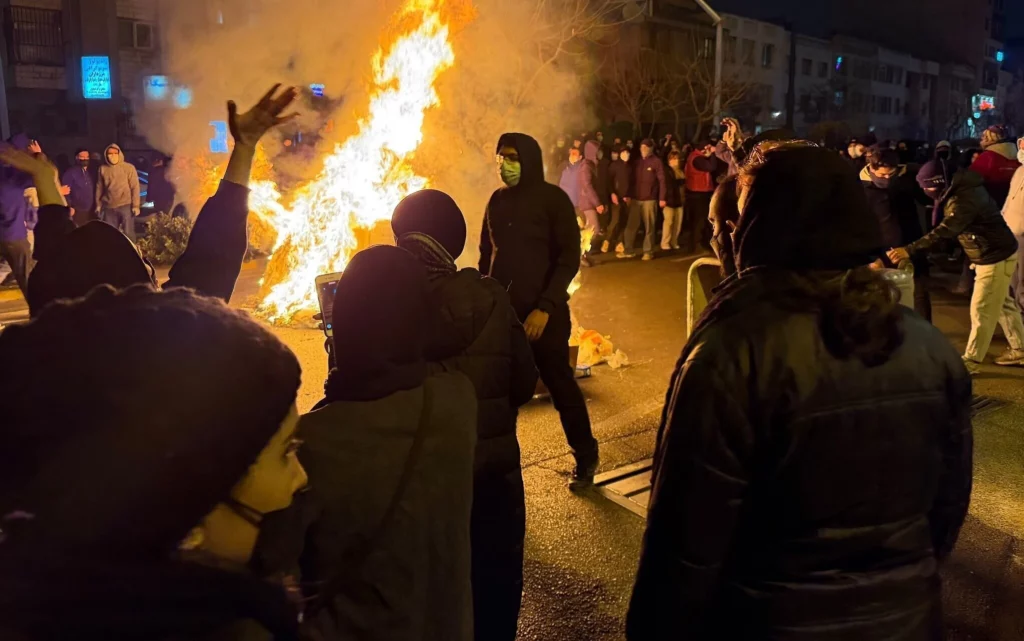
Iranian security forces are coercing families of slain protesters to falsely identify their relatives as members of the regime�s Basij paramilitary force, according to multiple accounts from inside Iran shared with The Times of Israel and relayed by anti-regime activists abroad.
The allegations come amid the bloodiest wave of unrest in the Islamic Republic�s history, as Iranian authorities seek to control both the streets and the narrative following weeks of nationwide protests and a sweeping internet shutdown.
According to activists based in the United Kingdom and Canada who received testimony from contacts inside Iran, families are being pressured to appear on state television, sign false documents, or accept posthumous Basij identification cards in order to portray victims as regime loyalists allegedly killed by demonstrators rather than by security forces.
�Families are forced to pay for the bullets used [to kill their relatives], or they are told when and where they can bury the body, or even forced to lie on state TV, claiming the victim was a Basij member killed by protesters,� a Tehran resident said in a Farsi-language voice message forwarded to the activists and shared with The Times of Israel.
The practice, which could not be independently verified in each case, aligns with findings cited by the United Nations� special rapporteur on human rights in Iran, who referenced similar tactics in a briefing to the U.N. Human Rights Council last week.
Activists say the forced reclassification of victims serves a dual purpose: deflecting blame for civilian deaths and bolstering the regime�s claim that it is fighting violent extremists rather than suppressing popular dissent.
One case described to activists involved Saeed Golsorkhi, a 31-year-old from Shahrud in northeastern Iran who was shot during protests on Jan. 9. A relative said security forces raided the hospital where Golsorkhi was being treated and later stormed his mother�s home, beating him and pressuring him to sign documents falsely identifying him as a Basij member.
When he refused, authorities shot him in the head and back, the relative said. Graphic images viewed by The Times of Israel appeared to show severe bruising and gunshot wounds to his eye and torso. One of Golsorkhi�s brothers was later arrested, and his whereabouts remain unknown.
In another case, relatives of Mohammad Zareh, a 40-year-old from Isfahan, said he was killed by Iran�s Islamic Revolutionary Guard Corps. The family was initially told Zareh was linked to ISIS and was asked to pay to retrieve his body. When no evidence of ISIS ties emerged, Iranian state media reportedly labeled him a �martyr� and falsely identified him as a Basij member killed by protesters.
Rights groups and dissident media outlets have reported similar patterns during past unrest, but activists say the scale and brutality of the current campaign are unprecedented.
The Human Rights Activists News Agency, a U.S.-based group that tracks casualties through a network inside Iran, said Tuesday that at least 6,126 people have been killed in the recent protests. The group identified 5,777 of the dead as protesters, along with 86 children and dozens of non-demonstrating civilians. More than 41,800 people have been arrested, the group said.
Iran�s government has acknowledged far fewer deaths, putting the toll at 3,117 and labeling many of the dead as �terrorists.� Past protest movements have shown that official Iranian figures often undercount casualties, and the current internet shutdown has made independent verification difficult.
Activists and witnesses describe a climate of fear and control that extends beyond the protests themselves.
�When you go outside, the atmosphere is completely controlled,� the Tehran resident said. �If someone in authority notices anything suspicious, they check your phone, go through it, and even the smallest thing can put you in serious danger.�
Banks, shopping centers and public buildings have been fortified with security forces, he said, transforming daily life into a militarized environment.
International pressure is mounting as images and testimony continue to filter out despite communications restrictions. Iranian Americans and diaspora groups have held demonstrations in Washington and European capitals, urging governments to impose additional sanctions � particularly on the IRGC � and to take stronger diplomatic action.
As protests appear to have been violently suppressed for now, activists say families are being left with little recourse � and little hope that the truth about what happened to their loved ones will be acknowledged inside Iran.
�Nothing is left we can do inside Iran,� a woman identified as Ava, a Tehran resident, told activists in a voice message. �Every hour of delay means more arrests, torture and killings.�
(YWN World Headquarters – NYC)
 Join the official YWN WhatsApp status



One Response
title almost certainly meant to say �Libel Slain Protesters�, and how unfortunate.