
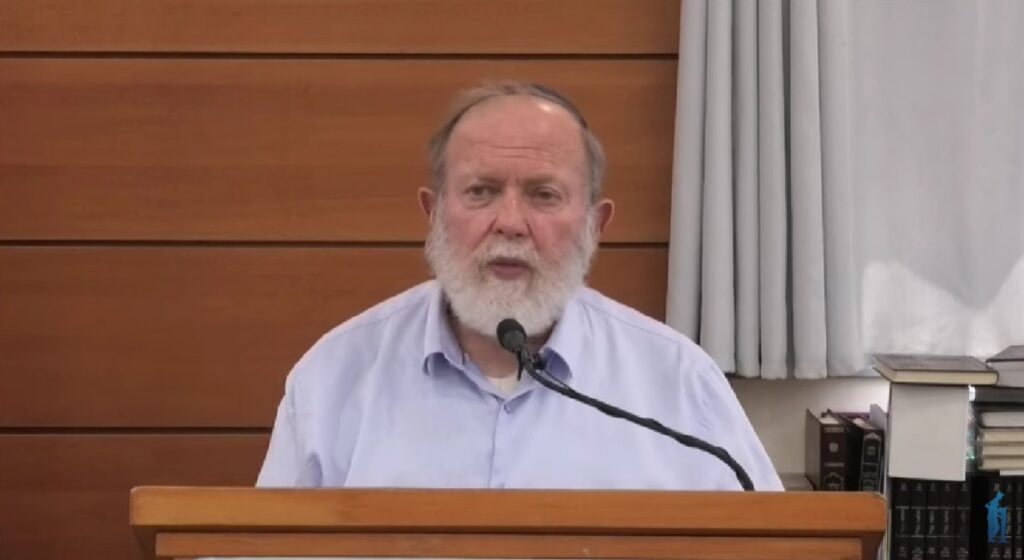
Rabbi Eli Sadan, the founder and head of the Bnei Dovid pre-military academy in Eli, published a sharply worded letter on Monday following a Golani ceremony earlier this month that featured female singers. Dozens of religious oldiers left the ceremony in protest.
“I was told that there was a Golani Brigade gathering marking two years since the war, and again they brought female singers in honor of the event,” Rabbi Sadan wrote. “As is known, about 30% of Golani soldiers are Religious Zionist– twice their proportion in the general population.”
“I expect that when such a high percentage of the soldiers are Shomrei Torah U’mitzvos, those arranging a cultural evening can show a little moral sensitivity and avoid including content that contradicts the way of life of so many of the soldiers. I was told that some of the soldiers were pained by it and left in protest. I wasn’t there, but that’s what I was told.”
“A debate emerged over whether they acted correctly, and some even quoted what I wrote 15 years ago in the booklet Kri’at Kivun for Religious Zionism, claiming in my name that one should not walk out of such a ceremony. Therefore, I must set the record straight. First, and this is a very fundamental point in my eyes, there is a difference between the group of soldiers from 15 years ago and those of today. Fifteen years ago and earlier, the religious public was a minority among the soldiers, but today, their share has grown significantly. It’s unacceptable that event organizers ignore this and continue treating the army as entirely secular, as if religious soldiers are invisible and need not be considered–‘We run a secular army, and the religious will manage.’ I see this as coarse behavior and a lack of basic human sensitivity.”
Regarding the halachic shaila, he wrote: “It is known, and as I also wrote 15 years ago, sitting and watching a woman sing before an audience is forbidden according to halacha, and there is no dispute about this. Some are meikel regarding hearing women sing on the radio, when the listener doesn’t see or know the singer. But to sit and watch a female singer perform before an audience is, according to all opinions, prohibited, and I know of no recognized poskim who disagree.”
He also addressed earlier statements attributed to him: “In the booklet, I made a very, very significant distinction between a cultural event and official military ceremonies–such as a change?of?command ceremony or an official Yom Ha’atzmaut ceremony–from which a soldier cannot be absent. In those ceremonies, I suggested that they lower their heads so as not to look at the female singer, and cover their ears with both hands so they would not violate any prohibition.”
“This does not apply to a cultural event that is not obligatory. A soldier has the right to be absent from a cultural event that does not align with his principles. People will say–bonding and unity are necessary. Whoever wants unity should provide cultural content that everyone can participate in together! But expecting religious soldiers to give up their values and what they believe in for the sake of ‘togetherness’ is unfair, immoral, and inhumane.”
“No one would ever think to bring two female singers to perform in front of the soldiers of the Chashmonaim Brigade! They would all go home. But the national?religious soldiers, who for years have been willing to shrink themselves and live within secular society as brothers?in?arms, and live together, there’s a mindset that they can be trampled and forced to conform to secular culture.”
“It won’t work. It’s immoral, unjust, and will not succeed. Religious soldiers’ desire to be integrated into the army as full partners applies to the military mission–training, operations, and facing the enemy. But it’s not correct culturally– there’s no justification to crush the national religious identity or compel them to conform to secular culture. Event organizers must show a bit of human respect–a bit of respect for human beings, a bit of respect for the soldiers. A bit of derech eretz and common courtesy!”
The video below shows the Golani soldiers who left the ceremony and sang and danced in the hallway:
(YWN Israel Desk–Jerusalem)
 Join the official YWN WhatsApp status







6 Responses
And this is what happens when you trust your religious well-being with people who couldn’t give one hoot about religion
A wake-up call for the mizrachnikim! the IDF is not a jewish army and jews should stay away!
Finally the religious Zionist are waking up. They think they are smarter than the Chareidim. The Zionist founders wanted only to destroy Torah Judaism.
“No one would ever think to bring two female singers to perform in front of the soldiers of the Chashmonaim Brigade!”
At least not right at the start. Don’t worry. They will find the ‘appropriate’ time to do so. The gratuitous ????????? ?????? ????? and worse are a feature not a bug.
It’s troubling to watch how the RZ worship the IDF with religious zeal and sincerity, the best and most loyal soldiers, probably the only ‘Zionists’ left who truly believe in what they are doing, and in return they get kicked around and spat in the face by the IDF brass. Again. And Again. And Again… When will they wake up and realize that in the eyes of the Leftist post-Zionists they are Zhidim just like the Chareidim are?
good morning dati-leumi zionist. Woken up that army is treif and intentionally tries to secularise religious soldiers?
There is also no excuse to force religious soldiers to attend ANY event with female singers!
Now if only the rest of them will wake up and realize even risking one Jewish soul to the poison of secularism is also Retzicha. Just because many are strong and are able to withstand tests doesn’t mean everyone is able to do the same. Throw a very religious boy into a secular College and see how long it takes for him to slip. The Army is no different