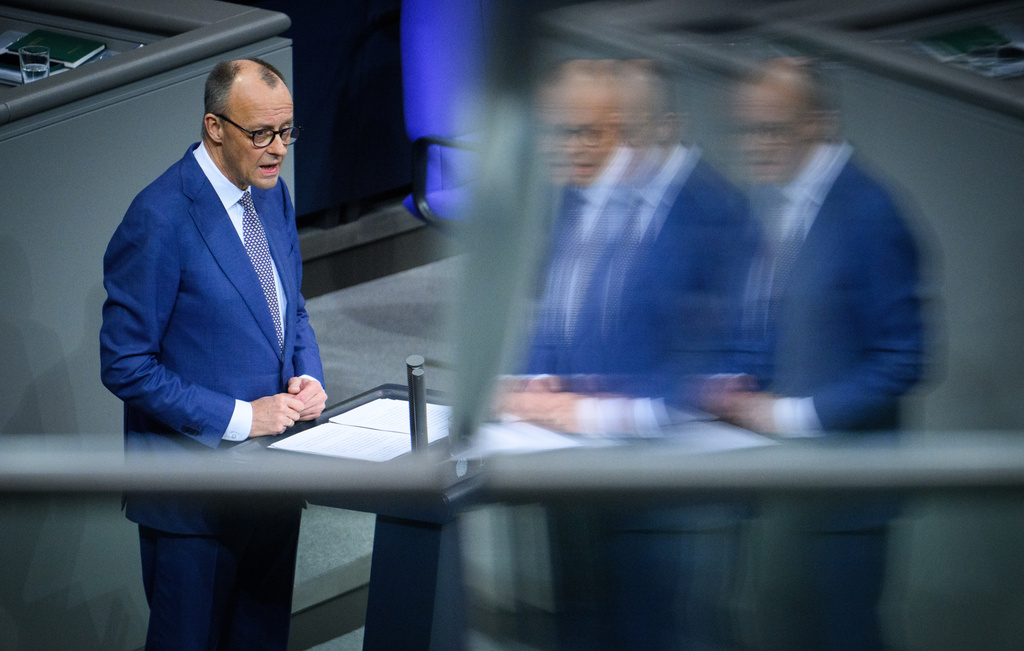
German Chancellor Friedrich Merz hailed the European Union on Thursday as an �alternative to imperialism and autocracy� that can forge deals with like-minded partners in a world of increasing great power rivalry.
Merz underlined the continuing value of a NATO in which Europe will intensify its defense efforts, and said it will always seek cooperation with the United States � but not as a �subordinate.� He also joined other European leaders in pushing back against U.S. President Donald Trump’s assertion that troops from non-U.S. NATO countries avoided the front line during the war in Afghanistan.
Merz spoke to the German parliament about foreign policy a week after Trump withdrew a threat of new tariffs against Germany and seven other European countries to press for U.S. control over Greenland, a semiautonomous territory of NATO ally and EU member Denmark.
�We are seeing increasingly clearly in the last few weeks that a world of great powers is beginning to form,� Merz said. �A harsh wind is blowing in this world, and we will be feeling it for the foreseeable future.�
But that also opens opportunities for Europe, he said, as democracies with open and growing markets �seek what we have to offer them, namely partnerships on the basis of mutual respect, trust and reliability.�
�We should not underestimate how attractive this European model can be for new partners and new alliances,� Merz told lawmakers. �We are also a normative alternative to imperialism and autocracy in the world.�
He emphasized the value of unity in the sometimes fractious 27-nation EU, saying the bloc had shown last week that it could act fast. �We agreed that we would not be intimidated again by tariff threats,� he said.
But he said that Europe also needs to �learn the language of power politics� to assert itself in a changing world, for example by taking greater responsibility for its security, striving for greater �technological independence� and boosting its economic growth.
Merz is a strong backer of the EU making more trade deals, including one with South America’s Mercosur bloc and another struck this week with India.
While seeking new alliances, �it is also clear for us and for me that we should not carelessly jeopardize existing alliances,� Merz said, adding that �trans-Atlantic trust is a value in itself even today.�
He said that Europeans want to preserve NATO and make it stronger, and �we will always reach out the hand of cooperation to the United States of America.�
�At the same time, the basis of this guiding principle remains … as democracies, we are partners and allies and not subordinates,� he added.
Merz noted that 59 German troops died in Afghanistan during the country’s nearly 20-year deployment in Afghanistan, and well over 100 were wounded.
He did not directly reference an interview by Trump last week when the president said he wasn�t sure the other 31 nations in NATO would be there to support the United States if and when requested and that troops from those countries stayed �a little off the front lines” in Afghanistan.
Merz said that �we will not allow this deployment, which we also performed in the interest of our ally, the United States of America, to be disparaged and demeaned today.�
(AP)
 Join the official YWN WhatsApp status