By Yosef Sosnow
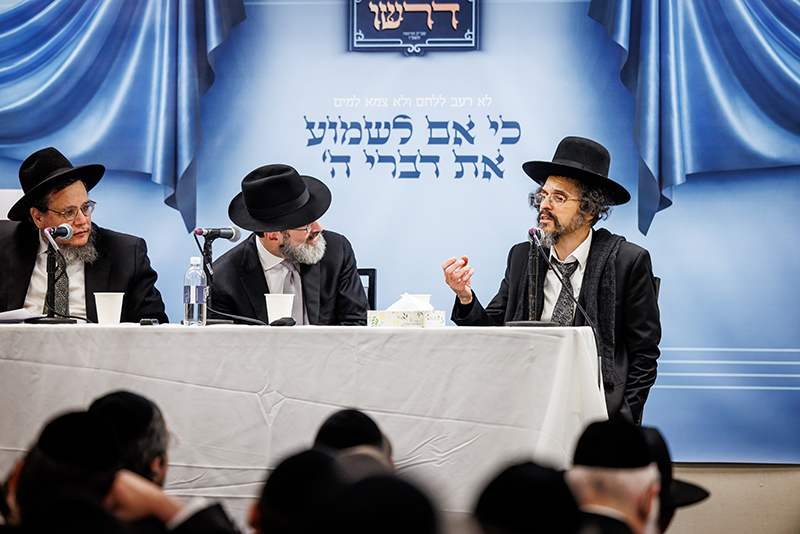
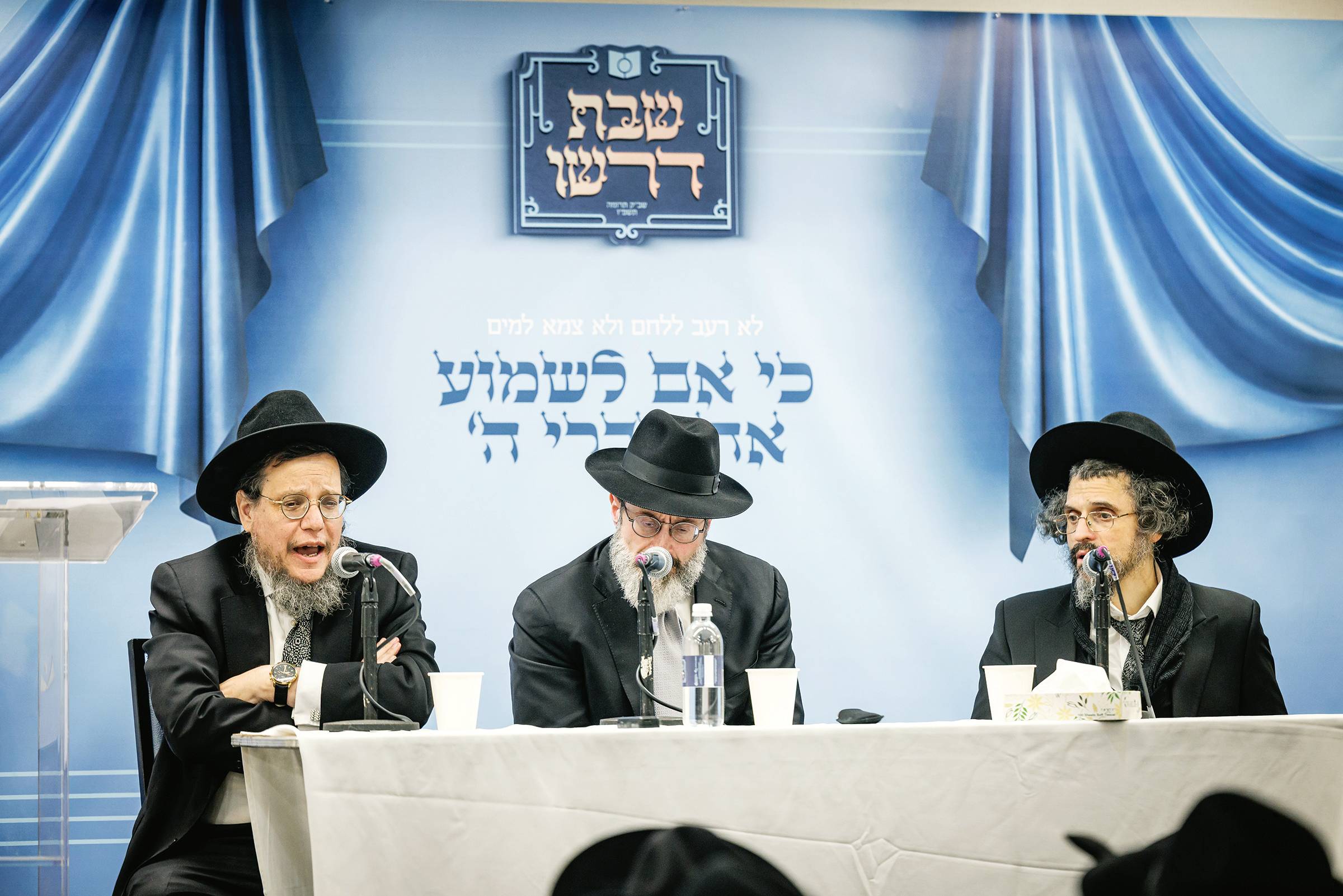
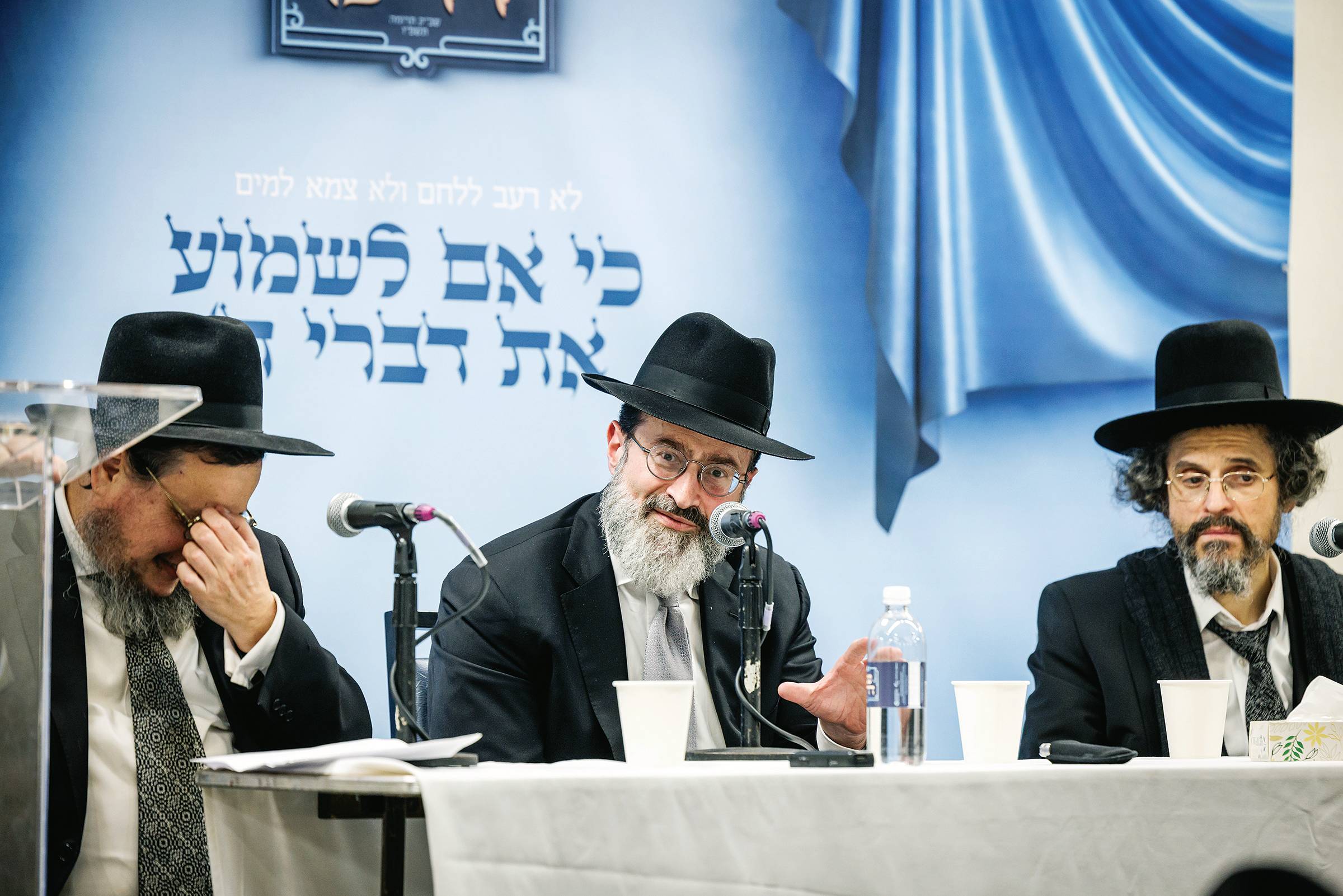
One of the most gratifying aspects of a Dirshu Convention is the opportunity it offers to avail oneself of the tremendous gift that Hashem has given us, being able to hear guidance from Gedolei Yisrael. For the first time, Dirshu featured a panel of three Rabbanim, answering questions sent in by lomdei Dirshu. It was a sight to watch the packed assemblage thirstily absorbing words of advice and chizuk given by the Rabbanim.
The panel members were Rav Chaim Mordechai Ausband, Rav Eytan Feiner, and Rav Shlomo Cynamon. (Space constraints have forced us to summarize the answers.)
Lomdei Dirshu learn with a strong emphasis on covering ground, learning with accountability and mastering considerable amounts of Gemara. At the same time, their sons are in yeshiva, often learning at a slow pace, under great Roshei Yeshiva, who say shiurim with tremendous iyun. When their sons come home, they seek to talk in learning with their fathers. However, their fathers learn differently and may not believe that the way their sons learn is optimum. This can, challilah, lead to a situation where the son does not completely respect his father’s approach to learning and vice versa. How does one balance these two approaches so they do not contradict each other?
Rav Ausband: It goes without saying that both approaches to learning are very important. A person must learn with great iyun, but must also cover ground and complete masechtas. Now, the father has two choices: Either send his sons to a yeshiva that encourages the same approach as he has, or send to a yeshiva that has shiurim and learns with great iyun – but then he must fully support the yeshiva’s approach. If you send your son to a yeshiva, he must feel that you hold of the yeshiva. Now, whether or not the son will respect his father if his father cannot say over a Rav Chaim with a chakira? That is indeed a good question.
Rav Feiner: In truth, this question is similar to one brought in the Gemara. The Gemara asks what is better a Sinai or an okker harim? Is it better to have knowledge all over Shas or able to incisively uproot mountains with your logic?
Yes, undoubtedly, one needs to learn how to learn in yeshiva and that requires iyun. Nevertheless, that doesn’t absolve a person from the obligation to broaden his knowledge of Shas.
Rabbi Cynamon: We live in a cynical time where people find it easy to criticize. Every father must be extremely vigilant that not one word of criticism or lack of satisfaction should leave his mouth regarding a mossad where any of his children learn. A child must be certain that his parents have tremendous respect for the yeshiva and for the child’s rebbi. You may have legitimate criticism regarding the way the yeshiva is learning, the pace may be too slow, etc. Nevertheless, if your son detects even a small seed of disrespect for his rebbi or his yeshiva he will not be able to grow properly there. Therefore, it is imperative that parents fully support the yeshiva where their son learns.
If someone is already learning Daf HaYomi and Amud HaYomi and has some extra time in his day, what should he do? Should he perhaps add learning Tosafos to his schedule? Should he perhaps review a few more times? Or should he take on another Dirshu program?
Rav Ausband: The general rule is that a person who has many different sedarim a day will not acquire Torah properly. When there are too many, you end up with very little of anything. The Brisker Rav would say that he doesn’t know how somebody could even learn three different things a day, perhaps two, but three is already too much! It is probably better not to take on a new seder but rather to learn with more depth that which you are already learning.
That said, the first thing a person must do is make sure to have a seder in Mishnah Berurah. It is an absolute obligation to learn daily halachos so he should know how to conduct himself.
Rabbi Cynamon: If a person values Hashem’s Torah and has a few extra minutes he should think about what he just learned. Look into a Rashi a bit more, learn another Tosafos, review what you just learned so you can gain clarity. Part of kavod haTorah is when it is important enough to you to spend a few extra minutes thinking deeply and reviewing what you learned! This is a much more productive use of one’s time than haphazardly adding another seder to one’s day.
Rabbi Feiner: Firstly, let me reiterate what the Rosh Yeshiva said, that a daily seder halacha, to learn halachos that one encounters every day is imperative. In addition, I would add that a daily mussar seder is imperative. The baalei mussar teach that a person should find half an hour each day to learn mussar.
Rav Gedaliah Nadal once said, ‘I have met many great men, but I never met a gadol who became a gadol just from learning. The way one becomes a gadol is through constant chazarah, constant review.’
Today, most homes need two incomes. Whether the husband is learning in kollel or even when he is working, it is often impossible to get by with one income. The question is: should the wife take care of all practical financial decisions to enable the husband to learn more? Is that the tzurah of a Jewish home or is it perhaps a deficiency when the husband is not in charge of the finances?
Rav Ausband: What can be wrong? Even the Gemara says that the woman is in charge of worldly matters and the man should be in charge of spiritual matters. I don’t see anything wrong with that arrangement.
Rabbi Feiner: This question I think may depend on the individual dynamic between husband and wife. There is no one size-fits-all answer for such a question and each couple should consult with their individual Rav on this matter. As a general rule, however, what Rav Ausband said is correct.



 Join the official YWN WhatsApp status