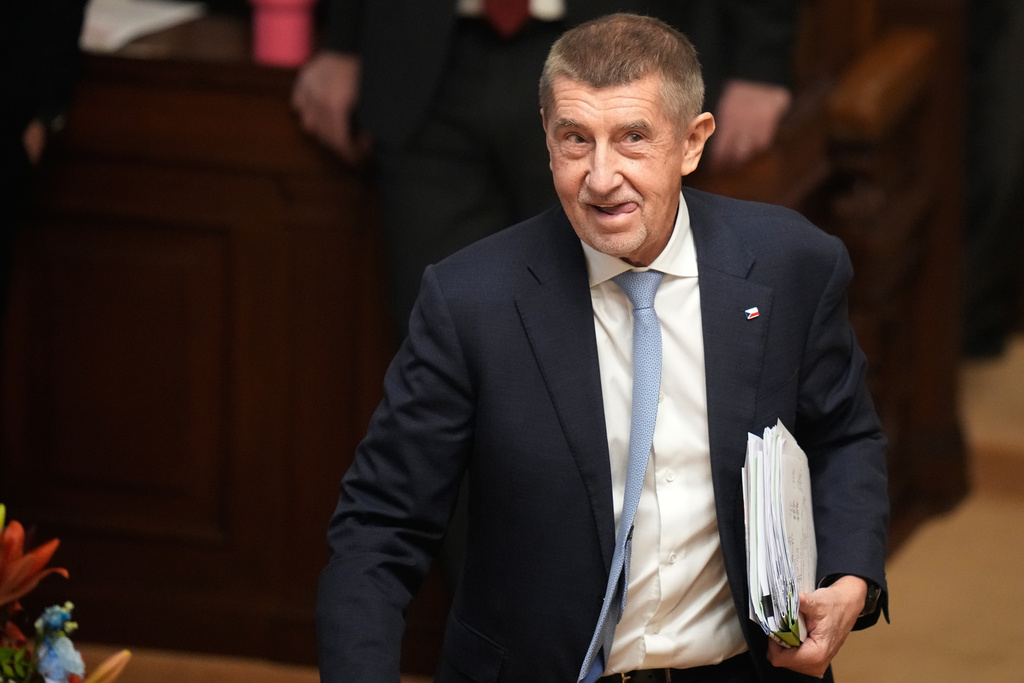
Czech Republic lawmakers on Thursday rejected a motion to lift the immunity from prosecution of Prime Minister Andrej Babi? in a $2 million fraud case involving European Union subsidies.
The legislators voted 104-81 to dismiss the measure in the 200-seat lower house of Parliament, with one abstention and 14 lawmakers absent.
Approval would have allowed Prague’s Municipal Court to deal with the case and issue a verdict. The court had acquitted Babi? twice before, but an appeals court canceled those rulings, saying they didn’t properly assess evidence and requested the lower court to issue a guilty verdict in a retrial.
The rejection of the motion means that he can stand trial only after his term in the house expires in 2029.
Babi? had pleaded not guilty and said that the case “is clearly politically motivated.” The prosecution had originally requested a suspended sentence and a fine to be paid by the populist billionaire, who began his third term as prime minister in December.
The case centered around a farm known as the Stork’s Nest, which received EU subsidies after its ownership was transferred from the Babi?-owned Agrofert conglomerate to Babi?’ family members. Later, Agrofert again took ownership of the farm.
The subsidies were meant for small- and medium-sized enterprises, meaning that Agrofert wouldn’t have been eligible. The conglomerate later returned the subsidy.
Babi?’ former associate Jana Nagyov?, who signed the subsidy request, will face retrial. She is currently a member of European Parliament, which has already lifted her immunity.
Babi? returned to power after his ANO, or YES, movement won big in an October election, forming a governing coalition with two small political groups, the Freedom and Direct Democracy anti-migrant party and the right-wing Motorists.
His government has a majority in the lower house.
The coalition’s agenda includes steering the country away from supporting Ukraine and rejecting some key EU policies.
In a separate case, lawmakers also refused to agree to allow prosecution of lower house speaker Tomio Okamura, the head of the Freedom party, on inciting hatred charges.
(AP)
 Join the official YWN WhatsApp status