
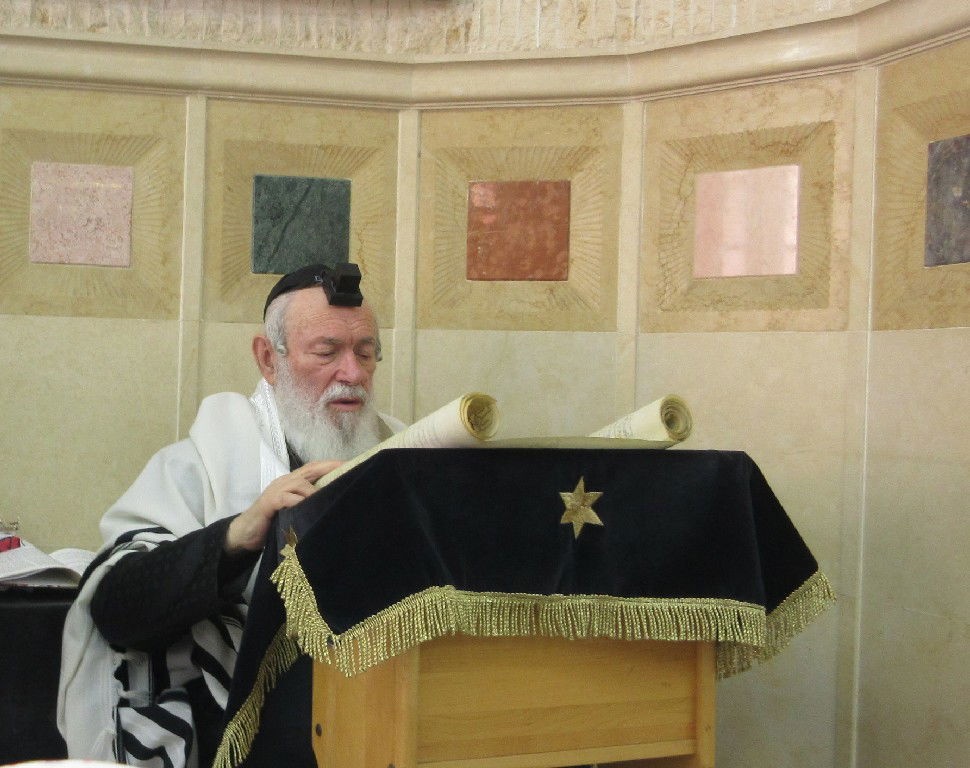
As Operation Roaring Lion continues, many asked shailos on how to act if a siren sounds in the middle of Kriyas Megillah. The following piskei halacha by HaGaon HaRav Yitzchak Zilberstein were published on the Siach Yitzchak hotline, based on clear instructions he issued before Purim during the 1991 Gulf War.
A. Can one recite Tehillim (if a siren sounds) in the middle of Kriyas HaMegillah?
If a siren sounds in the middle of Kriyas HaMegillah and people disperse to shelters or protected spaces, it is forbidden to interrupt (??????) the Megillah reading — even to recite Tehillim, even between perakim–because that constitutes a full interruption (hefsek) and the entire goal of reciting Tehillim is to seek favor from Hakadosh Baruch Hu, and this is better achieved by avoiding issurim and not making a hefsek in the middle.
One may, however, silently think tefillos or pirkei Tehillim in one’s heart, or read midrashim or Rashi on the Megillah, which is allowed l’chatchilah even in the middle without fear of a hefesk, since they relate directly to the Megillah.
B. If part of the tzibur leaves for shelters–should the Kriyah continue?
If the majority of the minyan (six men) remains in the shul, mei’ikar hadin, the Kriyah may continue and be completed, including the bracha afterward ‘??? ?? ?????.’ During the wait, people should not talk but rather learn Midrashim on the Megillah or Rashi.
C. From where do you resume Kriyah after the tzibur returns?
If the tzibur stayed in a clean place where it would have been halachically possible to read the Megillah, then even if a long time passed and even if they had to interrupt by talking, they resume from the point where they stopped and do not return to the beginning.
But if they were in a shelter that is not halachically clean (a place where one may not read the Megillah), or if such a long time passed that they could have completed the entire Megillah from start to finish during that interval, then they must go back and read from the beginning. In that case, they do not repeat the brachos, as long as they never fully removed their mind (hesach da’as) from the mitzvah.
D. Are the brachos repeated when they continue the Kriyah?
When the tzibur regathers and continues from where they left off, if they did not divert their minds (hesach da’as) from the Megillah, they do not recite the brachos again.
If their attention was diverted from the mitzvah, they must repeat the bracha of ‘Al Mikra Megillah’ (but not the other brachos).
E. Siren between the brachos and the Kriyah
If a siren sounds immediately after the three brachos were recited, but before the Kriyah began, or right after finishing the Kriyah but before reciting ‘??? ?? ?????’, the following applies:
If they then spoke or lost focus on the mitzvah (hesach da’as), the brachos must be repeated (and it appears they should also repeat “She’asa Nissim” and “Shehecheyanu”).
But if they managed to read even one word of the Megillah (for example, “Vayehi”) before the interruption, this already counts as beginning the mitzvah, and the original brachos remain valid.
Therefore, if a siren sounds between the brachos and Megillah, the Shliach Tzibur should quickly recite at least one word of the Megillah as soon as he completes the brachos in order not to invalidate them.
F. Limmud Torah before Seduas Purim–a Segulah to be saved from the dangers of wartime.
During the Gulf War, HaRav Zilberstein provided an eitzah regarding Seduas Purim during wartime, based on the Rema, who writes that ‘it is good to study a bit of Torah before starting the Seudah, as hinted by the verse “LaYehudim Hay’sa Oorah V’simcha” – “Orah” meaning Torah.
The Rema in his sefer Darkei Moshe quotes ???”? ????: ‘It’s a mitzvah to be oisek in Torah before the Seduah, and it protects a person from mishaps during the seudah.”
HaRav Zilberstein applies this to wartime. “If one learns Torah before the Seduah, it serves as a segulah that no danger or harm from the terrors of war will befall them, and that the Torah will shield us so that no ‘sound of the trumpet of war’ reaches us.”
(YWN Israel Desk–Jerusalem)
 Join the official YWN WhatsApp status


