America�s vaping industry has in recent years taken its fight to fend off regulation directly to President Donald Trump�s doorstep, with a lobbying group twice booking annual meetings at his Washington hotel and e-cigarette maker Juul hiring two of his former White House officials.
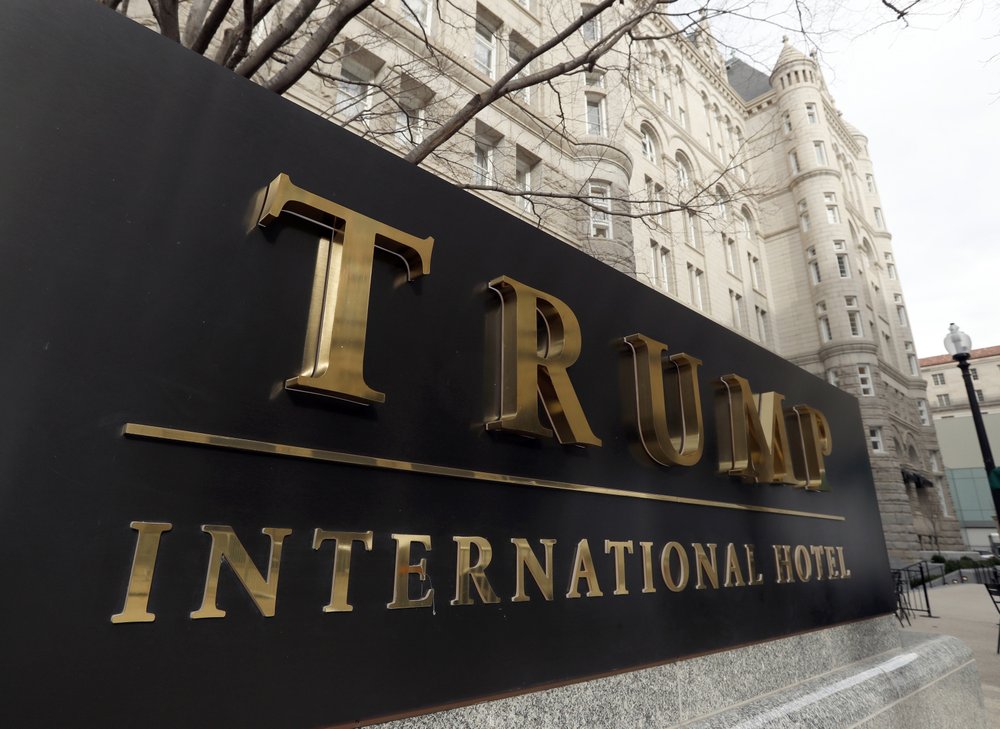
In 2017 and 2018, the Vapor Technology Association met at Trump�s hotel to strategize how to lobby the administration, with a Republican lawmaker at one conference advising it to emphasize jobs created by the growing industry and how regulation could devastate hundreds of small vaping businesses.
An intensive, multimillion-dollar lobbying effort by the industry in the last two years alone had largely been successful, until an outcry over hundreds of breathing problems and at least six deaths among users of e-cigarettes and similar devices led the Trump administration to crack down Wednesday with a proposal to ban flavored e-cigarettes popular with teens.
Ethics experts point to vaping as a glaring example of what they were worried about from the moment Trump took office � an industry seeking to shape government policy while putting money in the president�s pocket by holding events, booking rooms and paying for food at one of his properties.
�Whether it is foreign governments or e-cigarette companies, there is a perception that staying at a Trump hotel benefits the patron in some way,� said Matthew Sanderson, a former legal adviser to several Republican presidential campaigns. �This cuts to the heart of why there are concerns about the president having active business interests.�
The Vapor Technology Association did not reply to an email and phone request for comment on its lobbying efforts but told The Associated Press last year that it booked Trump�s hotel for budget reasons and its proximity to Capitol Hill. This year�s meeting will be held next week at Washington�s Hotel Fairmont.
As for Trump�s proposed ban, the group said in a statement that there was no evidence that vaping is to blame for recent cases of lung illness and urged the president to reverse course before �small businesses around the country are forced to close their doors, and tens of thousands of people are laid off.�
Anticipating such criticism, Trump appeared to walk a line Wednesday between acknowledging the wealth created by the burgeoning industry and the growing health dangers.
�They�ve become very rich companies very fast. The whole thing with vaping is … it�s been very profitable,� Trump said. �But we can�t allow people to get sick, and we can�t have our youth to be so affected.�
The Vapor Technology Association has spent $678,000 on federal campaigns in the past three years, with Juul pitching in $3.7 million more.
Last year, Juul hired former Trump communications aide Josh Raffel and, earlier this year, Johnny DeStefano, who served as counselor to the president.
Among those lobbying on Juul�s behalf are Jim Esquea, who worked during the Obama administration as an assistant secretary at the Department of Health and Human Services, and Ted McCann, who was a top policy aide to former House Speaker Paul Ryan.
The 2017 vaping conference at the Trump International Hotel in Washington featured a keynote address from Sen. Ron Johnson, a Wisconsin Republican pushing the Food and Drug Administration to pull back on a 2016 rule requiring e-cigarette makers get federal approval.
Ten days later, the FDA did just that, announcing that manufacturers of e-cigarettes and cigars already on the market would get a reprieve of four years � since changed to three years � before they would be required to get agency approval.
Tony Abboud, executive director of the Vapor Technology Association, told the AP last year that it was �overly simplistic� to suggest the event at Trump�s hotel had anything to do with the FDA delay.
In June last year, the group held a second two-day conference at Trump�s Washington hotel, with speakers lined up to talk about such topics as �ending improper marketing,� ?reclaiming the public health narrative� and �defending flavors.�
The keynote speaker, then-U.S. Rep. Ryan Costello of Pennsylvania, was quoted by the business magazine Fast Company as saying that the industry needed to talk about jobs if they hoped to fight off regulation.
�If there�s one thing elected officials want to be on the right side of, it�s job creation,� Costello said. �Lead with: improved public health outcomes from those switching, and then the economic impact. How many jobs will this legislation cost? How many small businesses will close? That�s what legislators need to know.�
(AP)
 Join the official YWN WhatsApp status