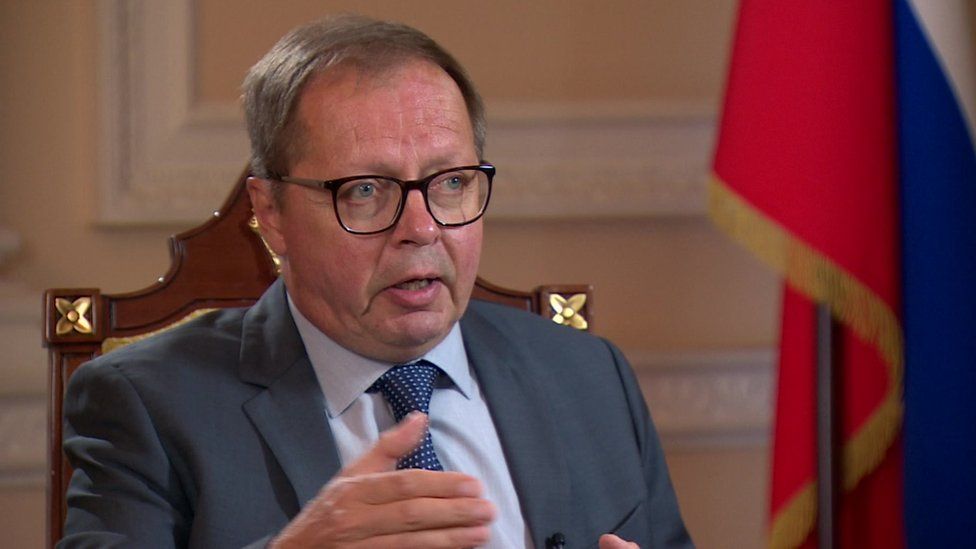
Russia’s ambassador to Britain has rejected allegations that his country’s intelligence services sought to steal information about a coronavirus vaccine.
Andrei Kelin said in a BBC interview broadcast Sunday that there was “no sense” in the allegations made last week by the United States, Britain and Canada.
“I don’t believe in this story at all, there is no sense in it,” he said when asked about the allegations. “I learned about their (the hackers) existence from British media. In this world, to attribute any kind of computer hackers to any country, it is impossible.”
Intelligence agencies in the U.S., Britain and Canada on Thursday accused the hacking group APT29 — also known as Cozy Bear and believed to be part of Russian intelligence — of using malicious software to attack academic and pharmaceutical research institutions involved in COVID-19 vaccine development. It was unclear whether any useful information was stolen.
British Foreign Secretary Dominic Raab also said that “Russian actors” had tried to interfere in last year’s general election by “amplifying” stolen government papers online.
Kelin said in the interview that his country had no interest in interfering in British domestic politics.
“I do not see any point in using this subject as a matter of interference,” he said. “We do not interfere at all. We do not see any point in interference because for us, whether it will be (the) Conservative Party or Labour’s party at the head of this country, we will try to settle relations and to establish better relations than now.”
Raab said Sunday that Britain will work with its allies to call Russia out on its “reprehensible behavior” and make sure research organizations know “so that they can better defend against it.”
The allegations came days before the British parliament’s Intelligence and Security Committee prepares to release a long-awaited report on Russian interference in British politics.
(AP)
 Join the official YWN WhatsApp status