
Reviewed and approved by Harav Simcha Bunim Cohen shlit”a
Where to light
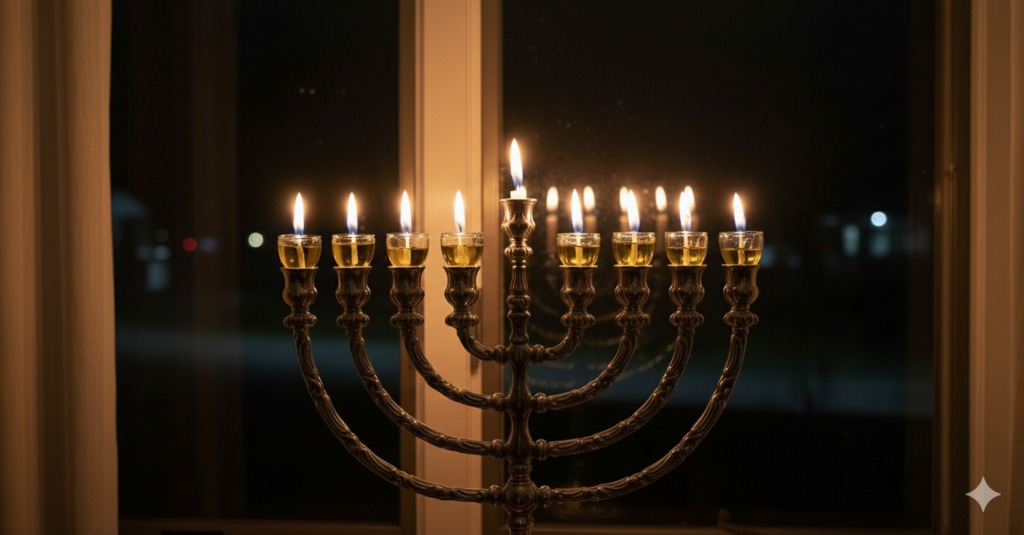
- The ideal place to light is wherever both passersby and members of the household can see the neiros, even if that spot is not commonly used, such as a window in a side room. When lighting in such a location, one should try to ensure the menorah is easily seen, (e.g., leaving doors open or spending some time there).[1]
- When not lighting at a window, there is an order of preference. Ideally, one should light by a door. If there is no door, one should light at the doorway itself, since according to some a mezuzah is not required without a door. When lighting by a doorway, the menorah should be placed on the left, opposite the mezuzah.[2] An unsafe location should never be used.
- Therefore, if one has a storm door facing passersby, lighting opposite the mezuzah is ideal, as it fulfills all conditions, this applies even to those who also have a window where they could light.
Where to light when not home
Preface: To fulfill the mitzvah of lighting the menorah, the lighting must take place in one’s bayis. The term bayis does not refer exclusively to one’s house but can also extend to the place where one is staying, depending on the situation:[3]
- If one leaves home but plans to return that night, such as for a Chanukah mesibah or chasunah, one should light at home. If leaving before shkiyah, one lights upon returning, and if leaving after shkiyah, one lights before leaving. A mesibah or chasunah does not attain the status of a bayis, since eating alone does not establish it.[4]
- If one is sleeping away, even for a single night, that location becomes their bayis upon arrival, and they may light the menorah there even before actually sleeping. For example, when going away for Shabbos, the menorah may be lit on Friday in the place where one will be staying, even if they have not yet slept there.[5]
- If at the zman hadlakah one is still in a location that was considered their bayis the previous night but plans to return home later that evening (e.g., Motzei Shabbos), they may light where they slept the previous night if they plan to stay there for a while. However, if they intend to leave within a half an hour of lighting and will not be getting home too late, they should wait to light until they get home.[6]
- If one is not at home and is sleeping in one location but eating in another, they should light in the place considered their main location. For example, if traveling overnight for a chasunah, the lighting should be done where sleeping. If spending Shabbos at one’s parents’ home but sleeping at a neighbor, the lighting should be by the parents. (This may differ from Shabbos neiros, which must be lit where one will benefit.)[7]
- When staying at a hotel, some poskim hold that only the bedroom and the actual place where one eats attain the status of one’s bayis. If the hotel does not permit lighting there and assigns a separate area for lighting, it may not have the status of a bayis, and one must consult their rav whether a berachah may be recited.[8]
Lighting 101
- Within the half hour preceding the zman hadlakah, anyone who will be lighting should not begin a meal of more than a kebeiah of bread or mezonos. Eating other foods, or less than a kebeiah of mezonos, is not considered a meal. If a shomer (a person who is not eating or an alarm) is appointed to remind them to light on time, this does not apply.[9]
- There is a hiddur to use olive oil that was not cooked (cold-pressed and non-refined), and it is preferable that the oil be edible (pomace is cooked and often not edible).[10]
- The berachah should be recited while holding the candle (or match) closest to the ner that will be lit first.[11]
- One may not speak, recite Haneros Halalu, or answer Amen until the first candle has been lit properly. Some are makpid to wait until most of the wick that will catch fire is aflame before proceeding to the next candle.[12]
- No matter what time one lights, neiros should only be extinguished after burning for half an hour past tzeis hakochavim. If the plan is to extinguish the menorah after that time, it is best to stipulate that only the volume of oil needed for that half hour is designated for the mitzvah.[13]
- Women and girls who live independently, such as an almanah, have a full chiyuv to light the menorah. If she wishes for a man to recite the berachos and light on her behalf, she should stand, listen, and be yotzei. If he has not yet lit in his own home, he must have in mind that the berachos are only for her.[14]
- The minhag is that women refrain from sewing or doing laundry during the first half hour after the candles are lit. However, she may put a load into the washing machine and ask her husband or son to turn it on. [15]
Shabbos Chanukah
- On Erev Shabbos, it is preferable to daven Minchah before plag haminchah and before lighting the neiros.[16]
- Ideally, the menorah should be lit before the Shabbos candles. Although one may light anytime after Plag HaMinchah, it is preferable to light closer to candle lighting time, while ensuring there is no risk of chilul Shabbos by lighting too close to shkiah.[17]
- One must place enough oil for the Chanukah neiros to burn for at least half an hour past tzeis hakochavim.[18]
- A menorah on Shabbos is muktzah. If it was placed on a table together with Chanukah zemiros (that include Tehillim and pesukim), the table may be moved after the flames go out if the space is needed.[19]
- On Motza’ei Shabbos, one should follow their father’s minhag regarding whether to light the menorah or recite Havdalah If the family minhag is not known, either practice may be followed.[20]
[1] ??’ ??? ??? ??’ ??, ??’ ??”? ?”? ??’ ?? ??? ?
[2] ??”? ??”? ??’ ???? ??’ ?-?, ??’ ???? ???? ?”? ??’ ?
[3] ?”? ??’ ???? ?”? ?
[4] ?”? ??’ ???? ?”? ?, ?????? ???? ?’ ?? ??? ?
[5] ???? ???? ?”? ??? ?, ?????? ???? ?’ ?? ??? ? ?]
[6] ??’ ?????? ???? ?’ ?? ??? ??, ??’ ????? ???? ??’ ?? ??? ?
[7] ?????? ???? ?’ ?? ??? ?
[8] ??’ ??”? ???? ????? ?”? ??’ ??
[9] ?’ ????? ????? ?”? ????? ??? ?, ???’ ???? ?????? ?”? ??’ ??? ??? ?-?
[10] ??’ ????? ????? ?’ ?
[11] ?”? ??’ ???? ?”? ??
[12] ???? ???? ??’ ???? ?”? ?????, ??’ ????? ?? ??? ?’ ? ??’ ??
[13] ?”? ??’ ???? ?”? ?, ??’ ????? ??? ??’ ???? ?”? ?
[14] ??’ ???? ??’ ?, ??”? ?”? ??’ ??
[15] ??’ ??? ??’ ?, ??’ ??????? ???? ?’ ?? ??’ ?
[16] ?”? ??’ ???? ?”? ?, ???’ ???? ????? ?? ?”? ?
[17] ??”? ??’ ???? ??”? ?”? ?, ???’ ??”? ??”? ?”? ??’ ??
[18] ?”? ??’ ???? ?”? ?
[19] ???? ????? ?”? ????? ??? ?’ ??
[20] ?”? ??’ ???? ?”? ?, ??’ ???? ?????? ??’ ???? ??? ? ???? ????? ?????? ???? ???? ???”? ?????? ???? ?????
 Join the official YWN WhatsApp status


