President Donald Trump said Friday that he has canceled a previously expected second wave of U.S. military attacks on Venezuela, attributing the decision to cooperation from the South American nation’s government and progress on related issues including political prisoner releases and collaboration on energy infrastructure.
In remarks and social media posts, Trump described the development as a sign of constructive engagement between the United States and Venezuela, particularly in efforts to rebuild the latter’s oil and gas sector. He said major U.S. oil companies are expected to invest at least $100 billion in Venezuela’s energy industry as part of those recovery efforts.
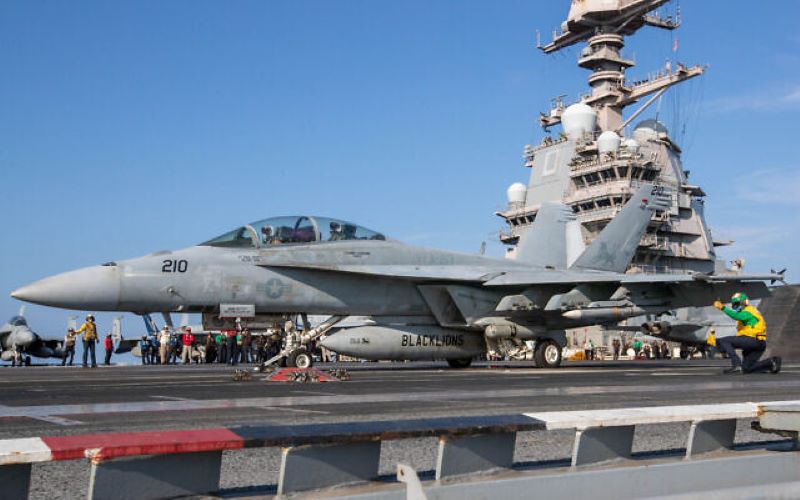
“Because of this cooperation, I have canceled the previously expected second wave of attacks, which looks like it will not be needed,” Trump posted on Truth Social. He added that U.S. naval vessels would remain in place in the region for “safety and security purposes.”
Trump’s announcement comes amid a week of intense political turbulence in Venezuela following a dramatic U.S. military operation earlier this month that resulted in the capture of Venezuelan President Nicol�s Maduro, who was flown to the United States to face federal charges.
The president said the decision to pause further military action was influenced by Venezuela’s moves to release a significant number of political prisoners, which he termed a gesture of “seeking peace.” He also reiterated his administration’s focus on strengthening bilateral cooperation around Venezuela’s oil production.
Trump said he planned to meet with oil industry executives at the White House on Friday to discuss long-term investments and the rebuilding of Venezuela’s energy infrastructure. He described the country’s oil resources as plentiful and of “unbelievable quality,” asserting that private companies would take a leading role in reconstruction.
Despite canceling the second wave of attacks, Trump emphasized that U.S. ships would remain positioned near Venezuela “for safety and security purposes,” signaling continued military involvement in the region.
The developments follow a broader shift in U.S. policy toward Venezuela, which also included plans to refine and sell up to 50 million barrels of Venezuelan crude oil that were previously blocked under sanctions. The move underscored the administration’s dual focus on strategic energy interests and geopolitical engagement with Caracas.
Venezuelan authorities have said they are working with Washington under the interim leadership of Delcy Rodr�guez, although questions remain about the internal political dynamics and the legitimacy of transitions in the country’s government.
The announcement drew mixed reactions in Washington, including legislative scrutiny over presidential war powers and debate over the long-term implications of U.S. involvement in Venezuela’s domestic affairs.
(YWN World Headquarters – NYC)
 Join the official YWN WhatsApp status