
By Rabbi Yair Hoffman
Very often, we can find answers to halachic questions from understanding the shift in thinking in a Gemorah from a hava Aminah to a maskana. “Mah Savar HaMakshan” is a question that has been explored by meforshim – from the rishonim to the acharonim to the Gedolei HaRoshei Yeshiva. Today’s daf is no different.
The Gemorah in the beginning of Shabbos 128a asks why the Mishna needed to list tevel as forbidden to be removed – is it not obviously Muktzeh since it is inedible and thus forbidden to be eaten? The Gemorah answers that it also includes derabanan tevel such as from a tree grown in a potted plant.
WHAT WAS THE SHIFT?
The question is what is the movement between the Gemorah’s initial thinking and the Gemorah’s ultimate conclusion? What is the shift in thought?
Also, we need to provide such possibilities both for the Rambam and for the Rashba. The Rambam (Maachalos Asuros 17:27) holds that it is forbidden to feed a child food that is forbidden miderabanan. The Rashba (Yevamos 114a and Teshuvos 1:92) holds that it is permitted, even though the Shulchan Aruch (OC 343:1) rules like the Rambam forbidding it.
Rambam Possibilities:
- Originally, we would have thought that since there are leniencies regarding shvus deshvus and such – that chazal did not also include derabanan prohibitions with Muktzah. The Gemorah concludes that since people would become confused they included all prohibitions within Muktzah.
- It is like the Chakira that Rav Moshe Feinstein provides in Dibros Moshe Baitzah 3a regarding how we understand Muktzah on foods – is it because of the pasuk of vehechinu asher yaviu and since this is not in the pasuk originally – they did not make it Muktzeh. The Gemorah concludes that it is solely dependent on the person’s thought process on Friday during Bain haShmashos.
Rashba Possibilities
- It could be that, the original thinking is that it is permitted to feed children – so it would not have been Muktzah at all. The Mishna is teaching us that, true – it could be used to feed children, but since he plans to eventually take trumah off it – he is not thinking that it could be used and it is Muktzah in his mind. This fits into the Sha’ar HaMelech Shvisas Asor 1:5).
- It could be that the makshan held that since one may feed it to another’s children – it is not muktzah. The Mishnah comes to teach us that even still, since there is a Mitzvah of chinuch on a father, a person only thinks of the tevel in terms of his own children and he does not even consider that it could be used for another’s children and it is still Muktzah. This fits into the Chasam Sofer’s understanding of the Rashba.
There may be a halachic repercussion involved here regarding the question of whether specialized medicines are Muktzah on Shabbos in someone’s house – when there was no one in the house who needed it on Friday. The Shmiras Shabbos K’hilchasa 20:36 seems to rule that all medicines are forbidden since they are Muktzah unless there was already a sick person in the house. Perhaps though, there is a difference between regular medicines such as aspirin and highly specialized medicines – see Orchos Shabbos Vol. II p. 61. The understanding of what is the shift here, according to the Rashba, may have halachic repercussions regarding this issue. According to the Mishna Brurah 328:58 – it is permitted even for a specialized medicine with a little bit of a shinui – if a choleh needs it.
The author can be reached at [email protected]
 Join the official YWN WhatsApp status





One Response
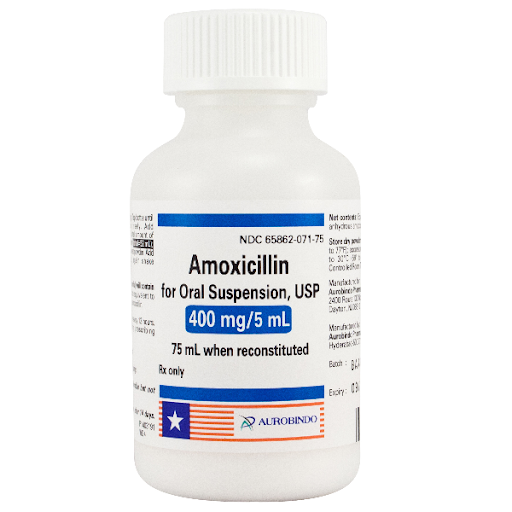
Why would anyone other than a professional pharmacist have antibiotic powder? It is not normally sold to consumers. Consumers normally have pills or liquid solutions. It is unheard of for a consumer to compound or mix a drug. If someone is so ill that they need a medicine that has to be especially manufactured by a specialist, it is likely they are in a life-threatening situation, rendering the discussion moot.