
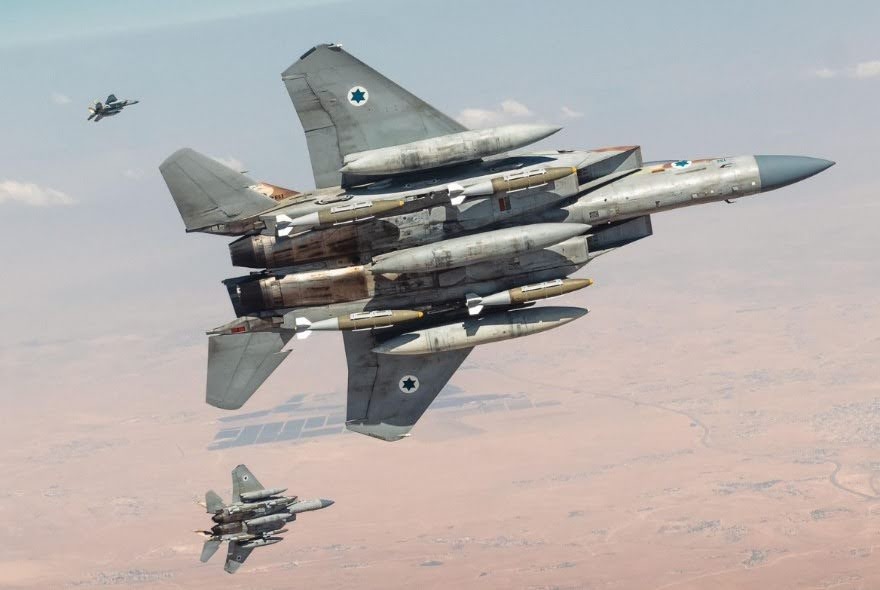
Israel is preparing to enter talks with the Trump administration over a new 10-year security agreement that could reshape the nature of U.S. military support, moving away from large annual cash grants and toward deeper joint weapons development and defense cooperation.
The negotiations, expected to begin in the coming weeks, would follow the expiration of the current 10-year memorandum of understanding in 2028 and come as Israeli leaders publicly signal an ambition to reduce long-term dependence on American military aid.
Gil Pinchas, who recently stepped down as chief financial adviser to Israel’s military and defense ministry, told the Financial Times that Israel plans to prioritize joint military and defense projects over what he described as “free money” in future talks with Washington.
“The partnership is more important than just the net financial issue in this context,” Pinchas said. “There are a lot of things that are equal to money. The view of this needs to be wider.”
Under the existing agreement, signed in 2016, the United States committed to provide Israel with $38 billion in military assistance over 10 years, including $33 billion in grants for U.S. weapons purchases and $5 billion for missile defense systems. The deal provides roughly $3.3 billion annually in foreign military financing.
Pinchas said that direct financial support could be gradually reduced in a future agreement, with Israel seeking to emphasize joint research, co-production and shared defense initiatives instead.
“Pure financial support — or ‘free money’ — is one component of the MOU that could decrease gradually,” he said.
The comments reflect a broader strategic recalibration underway in Jerusalem, as Israel weighs how to maintain its qualitative military edge while preparing for a future in which U.S. aid may no longer be guaranteed at current levels.
But the messaging from Israeli leadership has not been entirely consistent.
Prime Minister Benjamin Netanyahu said earlier this month in an interview with The Economist that he aims to taper off Israel’s reliance on American military aid within the next decade, saying the process is already “in progress.” Netanyahu suggested Israel may not seek to fully renew the roughly $3.8 billion in annual U.S. military assistance when the current deal comes up for renegotiation in 2028.
Those remarks appear to go further than Pinchas’ comments, which framed any reduction in cash assistance as gradual and tied to expanded defense cooperation rather than a clean break.
The talks will also test the Trump administration’s broader approach to alliances and foreign military assistance, particularly as Washington balances demands for burden-sharing with the strategic importance of Israel in the Middle East.
For Israel, the shift would mark a significant evolution in a relationship that has long relied on U.S. grant funding as a cornerstone of its defense budget, even as Israeli officials increasingly emphasize technological self-sufficiency, domestic arms production and collaborative development with U.S. firms.
The coming negotiations could determine whether the next phase of the U.S.-Israel security partnership is defined less by checks and more by shared systems, co-designed weapons and deeper operational integration.
(YWN World Headquarters – NYC)
 Join the official YWN WhatsApp status


One Response
Unless codified as a treaty (which requires a 2/3 vote in the Senate), the agreement effectively expires when Trump leaves office unless the new president extends it (probably would happen if JD Vance or Josh Shapiro is the new president, not at all likely if the Democrats go with their “From the river to the sea” group that seems to be taking over the party.