
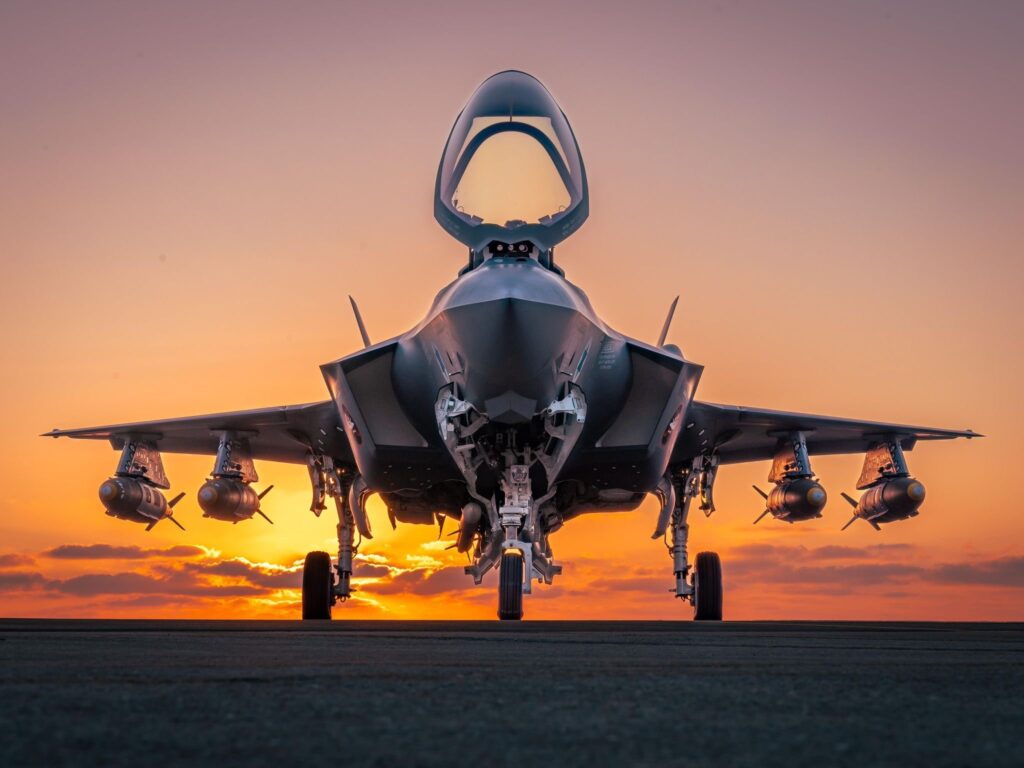
Israel has quietly expanded the reach and potential punch of its most advanced fighter jets, with new modifications that could reshape its long-range strike capabilities, according to comments by the country’s ambassador to Washington.
In an interview with Yisrael Hayom, Yechiel Leiter said Israel has developed new fuel systems for its F-35I stealth fighters that significantly extend their operational range without sacrificing their low-profile design.
“We developed fuel tanks that extend the aircraft’s range without compromising stealth,” Leiter said. “And we added four missiles on the wings.”
The remarks appear to confirm years of speculation that Israel has been working to adapt its F-35 fleet for long-distance missions, potentially enabling strikes on distant targets such as Iran without relying on vulnerable aerial refueling aircraft.
The F-35, manufactured by Lockheed Martin, is designed primarily as a stealth platform, relying on internal weapons bays and smooth contours to evade radar detection.
Traditionally, adding external fuel tanks would dramatically increase an aircraft’s radar signature, undermining that advantage unless the tanks were dropped before entering hostile airspace.
Leiter’s claim that Israel has solved this problem suggests a significant technical breakthrough, though defense analysts caution that details remain classified and difficult to verify.
Leiter also confirmed that Israel has expanded the jet’s weapons capacity by mounting missiles on its wings, a configuration known as “beast mode,” in which stealth is sacrificed in favor of heavier firepower.
The concept is not new, but Israel has been at the forefront of operationalizing it.
Last year, the Israeli Air Force said it had developed the capability in cooperation with Lockheed Martin and the Pentagon’s F-35 program, part of the United States Department of Defense.
At the time, the IAF said it was the only F-35 operator conducting real-world strikes with externally mounted weapons.
Images released during the June 2025 war with Iran appeared to confirm those claims, showing Israeli F-35I jets flying with missiles attached to their wings.
Leiter emphasized that Israel’s operational experience has made it a key player in shaping the future of the aircraft.
“The number of flight hours our pilots have on the F-35 is greater than that of all the pilots of the other foreign countries that were partners in developing the aircraft,” he said.
According to Leiter, feedback from Israeli pilots regularly flows back to Lockheed Martin, influencing upgrades and design changes.
When he visited the company’s headquarters recently, Leiter said its chief executive told him that Israel’s contributions “are worth many billions” to the firm.
(YWN World Headquarters – NYC)
 Join the official YWN WhatsApp status





One Response
Billions for military toys – but there are people who have no homes, no safety in their own Land, people who have to scrounge for a living while the Erev Rav formulates their plans for yet another war. And the people? Time to connect – from Binyamin to Beit Shemesh to Arad to Yerushalayim to Tveria to Tzfat to Bnei Brak – one circle around the Land. Before it is too late.