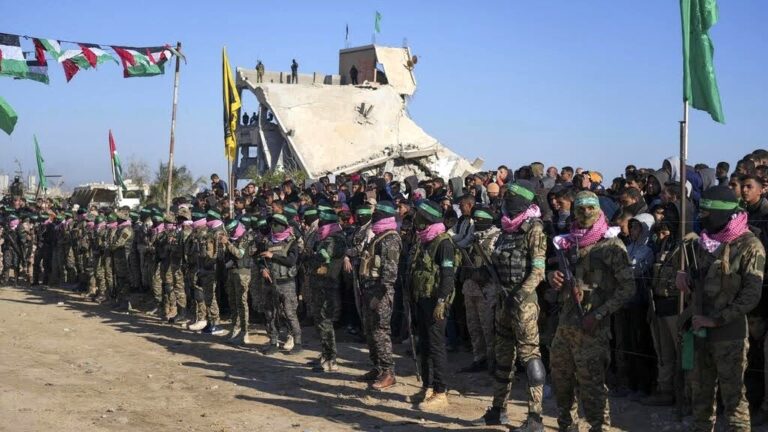
Iran warned Monday that Israeli airstrikes on Hezbollah targets in Beirut would shatter the U.S.-Iran ceasefire on every front, raising the prospect of direct Iranian retaliation as Prime Minister Benjamin Netanyahu’s government orders an expanded campaign against the Lebanese terror group.
Iranian Foreign Minister Abbas Araghchi delivered the warning in a post on X, hours after Israel’s security cabinet greenlit strikes on Hezbollah infrastructure inside the Lebanese capital.
The truce between Iran and the United States is a ceasefire on all fronts, including in Lebanon, Araghchi wrote, calling any breach in? one theater a breach across the board.
“The US and Israel are responsible for the consequences of any violation,” he wrote.
The Iranian warning collides head-on with the public position of Washington and Jerusalem, both of which have consistently held that the April 8 ceasefire ending the U.S.-Israeli war with Iran does not cover Israeli operations against Hezbollah. Netanyahu has said publicly that Israel will continue to strike Lebanon, saying Hezbollah is outside the scope of the deal. Vice President JD Vance has echoed that line in his own statements since the truce went into effect.
The Trump administration had quietly pressed Jerusalem to hold off on hitting Beirut during the weeks Washington spent trying to lock in a follow-on memorandum of understanding with Tehran. Israeli officials largely complied, confining their fire to southern Lebanon even as Hezbollah resumed rocket and drone attacks on northern Israeli communities and on IDF positions inside Lebanese territory. That self-imposed restraint has now collapsed, with the Israeli political echelon citing the death of soldiers and an intensifying campaign against northern civilians as justification for resuming strikes on the Hezbollah heartland in the Lebanese capital.
The Israeli air force has been conducting its largest wave of operations across Lebanon since the start of the ground campaign, hitting more than 100 Hezbollah command nodes and military sites in recent days, the IDF said. Residents of Beirut’s southern Dahiyeh suburb, a longtime Hezbollah stronghold, have been streaming out of the area following Israeli warnings of imminent strikes. The IDF on Sunday captured Beaufort Castle, a strategic high-ground position in southern Lebanon, and lost a soldier in a Hezbollah drone strike on the same day.
Araghchi’s warning was paired with a separate statement from the Islamic Revolutionary Guard Corps carried on Iranian state television, threatening that Iran will fulfill its duty and deliver a response if the Israeli campaign in Lebanon does not stop. Hezbollah Secretary-General Naim Qassem has rejected a U.S. de-escalation offer in recent days, according to reports out of Beirut, leaving little immediate diplomatic off-ramp.
The Iranian position rests on the argument, advanced from the start of the ceasefire, that the agreement was a regional truce rather than a bilateral one. Tehran has consistently grouped Lebanon, and at times the Houthis in Yemen, under the same umbrella, and Pakistani Prime Minister Shehbaz Sharif, who helped mediate the original deal, has at points described it in similar terms. U.S. and Israeli officials have rejected that reading, with the Trump administration treating Hezbollah’s continued fire on northern Israel as confirmation that the Lebanese front lies outside the scope of the agreement.
(YWN World Headquarters – NYC)