

Iran on Sunday threatened to retaliate directly against Israel after Israeli warplanes struck Hezbollah targets in the southern suburbs of Beirut, the latest flashpoint in a war that has repeatedly threatened to spill beyond a fragile ceasefire.
A senior Iranian lawmaker vowed what he called a “painful and decisive response” to the strikes. “This rabid dog must be disciplined and put in its place,” Ebrahim Rezaei, spokesperson for the Iranian parliament’s foreign policy and national security committee, wrote on X. “Watch the sky of the occupied territories tonight,” he added, using Tehran’s term for Israel. He did not specify what form any response would take.

The warning followed an Israeli air raid on Beirut’s southern suburbs, a Hezbollah stronghold, that Lebanon’s National News Agency said hit two apartments. The IDF said it carried out the strikes after Hezbollah fired rockets at northern Israel, and that it had destroyed rocket launchers used in the attack.
The exchange marks a sharp escalation along a front that has flared on and off for months. A ceasefire first reached in April between the United States and Iran — and a parallel arrangement covering Lebanon — has been extended several times but never fully held, with Hezbollah firing into northern Israel over what it calls Israeli violations and the IDF responding with strikes deeper into Lebanon.
Iran had signaled in advance that an Israeli move against Beirut would cross a line. Foreign Minister Abbas Araghchi warned last week that any Israeli attack on the Lebanese capital would amount to a violation of the truce and trigger what he described as a “full-scale resumption” of the U.S.-Iran conflict. Tehran considers Hezbollah, which it founded and arms, a central pillar of its regional network.
Israeli officials have maintained that the ceasefire leaves them room to act. Defense Minister Yisrael Katz said last week that the agreement grants the military the “freedom” to strike Beirut if Hezbollah attacks Israeli communities, and that operations against the group’s infrastructure in southern Lebanon would continue.
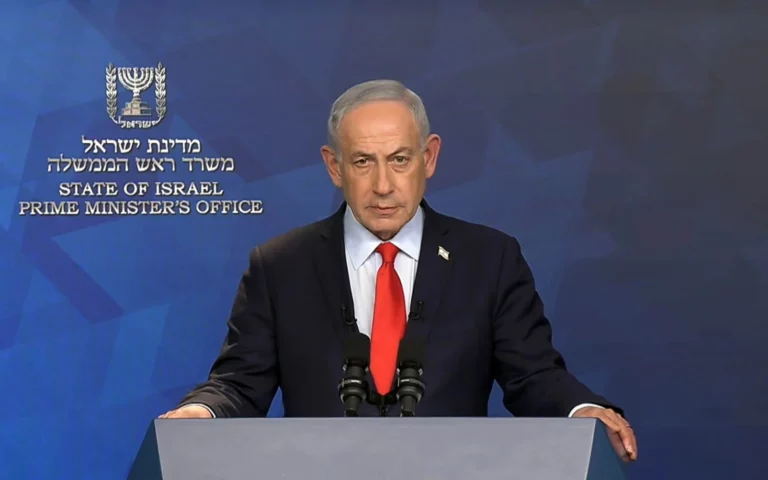
The strikes came despite reported U.S. efforts to prevent them. President Trump said last week that he had persuaded Netanyahu to call off a major raid on Beirut, writing on Truth Social that the Israeli leader “turned his troops around” after a phone call. The renewed bombing Sunday suggested those restraints had loosened.
The Beirut raid unfolded against a backdrop of continued friction in the Persian Gulf. U.S. Central Command said its forces shot down two Iranian attack drones threatening shipping in the Strait of Hormuz on Sunday, days after downing four more and striking Iranian coastal radar sites. Iran fired missiles at the U.S. allies Bahrain and Kuwait over the weekend, even as Washington and Tehran continue indirect talks aimed at ending the war.
(YWN World Headquarters – NYC)
 Join the official YWN WhatsApp status





0 Responses
And the TRUMPet will then abandon Israel.