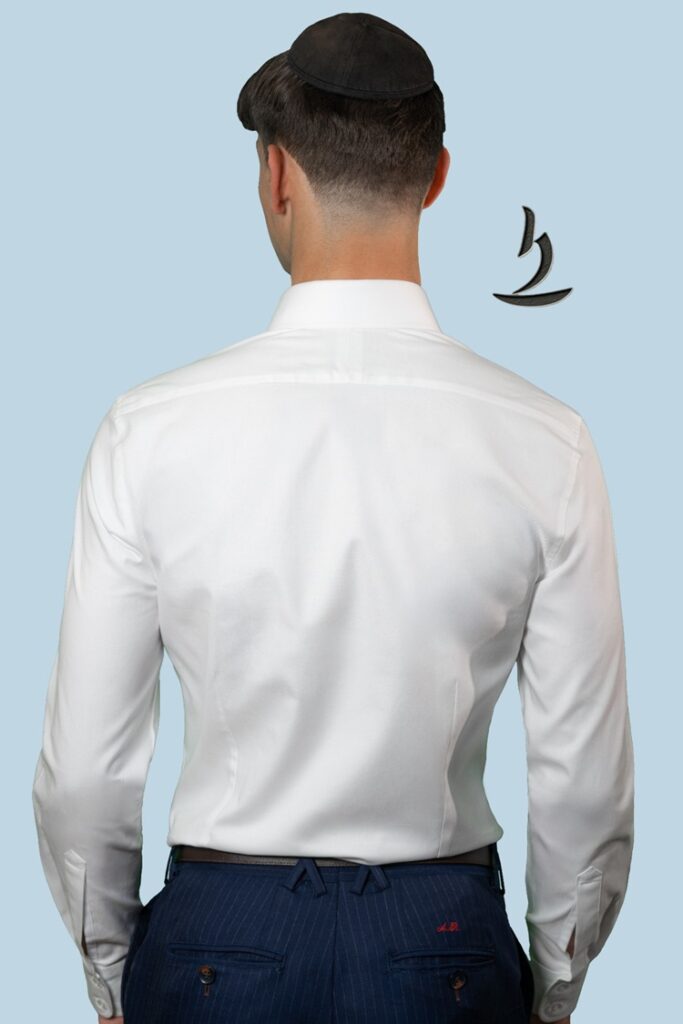
How a baalas teshuva brought the discipline of global commodities trading to the shirt worn in yeshiva every day.
When people look at a white dress shirt — especially the kind worn every day by boys in yeshiva — it seems like one of the simplest products in the world. Just a white shirt.
But after watching my mom build her company, I learned that there is nothing simple about making a really good one.
What makes the story even more surprising is that my mom did not come from the clothing world at all.
For many years, she worked in commodities trading, specifically in steel and pig iron. Her world was made up of cargo ships crossing oceans, contracts worth millions, international negotiations, and high-pressure decisions where every detail mattered. It was a serious, demanding industry built around numbers, margins, and risk. And she succeeded in it — in a field that was tough, competitive, and about as far from fashion as you can imagine.
But her life began to change in a much deeper way when she became a baalas teshuva.
As Torah moved to the center of her life, her priorities shifted. Business success was no longer the ultimate goal. What mattered most became Torah, Jewish family life, and serving Hashem in a meaningful way.
And that shift eventually led to something unexpected: a white shirt.
That is how Lvorn began.
The name itself reflects the idea behind it. Lvorn comes from the word lev — heart. The idea is that things done with heart are done differently. They are done with care, with attention, with intention.
A white shirt may seem like a simple garment, but for boys in yeshiva it is something worn every single day — to learn Torah, to daven, to grow. My mom believed that something connected to that daily life deserved to be made with heart.
What I admire most is that she approached the project the same way she approached trading — with total focus on standards and details. She was not trying to simply sell a shirt. She wanted to understand what actually makes one exceptional.
So she researched everything. Fabric quality to find the softest, lightest cotton twill that could still hold structure. Non-iron performance so the shirt stays crisp. Stitching and collar construction so collar stays would not fall out in the wash. Buttons that are easy to fasten and durable enough for everyday wear. And fit engineering so the shirt looks polished but still feels comfortable.
She understood that if she was going to make something for yeshiva boys, it had to be done right. Comfortable. Durable. Polished. Built to a higher standard.
But for her, this was never just about clothing.
She wanted to build a company that could truly serve the Jewish people.
That is why Lvorn is not just another brand. From the very beginning, she made a permanent commitment that 20% of profits would go directly to yeshivos. This is not a promotion or a marketing angle. It is part of the company’s purpose. When someone buys a Lvorn shirt, they can choose which yeshiva receives the donation.
That idea says a lot about who my mom is.
She wanted to create something practical and beautiful, but also something that carries real values behind it. In a world where many companies are focused only on selling more, she wanted her business to support Torah learning — because she believes that Torah is the foundation of our people.
Lvorn may look like a white shirt.
But to me, it represents something much deeper: my mom’s journey, her standards, her emunah, and her desire to build something with heart that gives back to the community in a real way.
To experience the Lvorn shirt — built with heart and higher standards — visit LVORN.com
https://lvorn.com/products/physical-product-dress-shirt


 Join the official YWN WhatsApp status