
A major Turkish television channel has aired a rare and measured analysis of what it refers to as the �12-day confrontation� between Israel and Iran, offering unusual praise for the IDF and Israeli Air Force while also underscoring what it describes as clear limitations of power, a heavy economic cost, and potential vulnerabilities ahead.
On Turkey�s GZT channel, a wide-ranging analysis was presented by anchor and analyst Ural Toga, who adopted an uncommon tone for Turkish media. The segment openly acknowledged Israel�s military superiority, while simultaneously delivering sharp criticism of the strategic outcome.
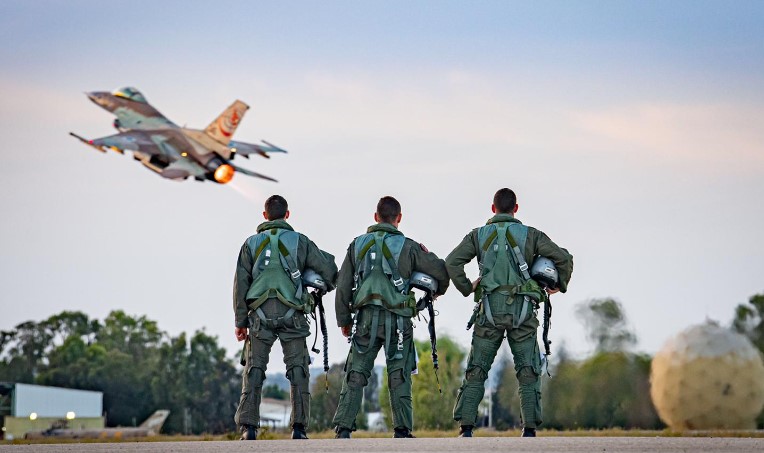
According to the analysis, Israel�s air superiority was absolute. �Air superiority was unquestionably in Israel�s hands,� the report stated, highlighting what it described as an extraordinary statistic: more than 70 Iranian air-defense batteries were neutralized during the fighting, while not a single Israeli fighter jet was lost. Turkish commentators emphasized that this reflects an exceptional operational and intelligence achievement, pointing to deep Israeli penetration and close coordination between the air force, intelligence services, and military command.
However, this is where the analysis pivoted. Despite the military success, the Turkish channel argued that Israel did not translate battlefield dominance into a decisive strategic outcome. The precise strikes, it claimed, did not destroy Iran�s nuclear program and at most delayed it. �The air superiority and precision were impressive, but they did not achieve the central objective,� the analyst said.
Beyond the nuclear question, the Turkish report identified what it described as a significant shift in Israel�s security doctrine. According to the analysis, Israel is moving away from a policy of containment and deterrence toward a model of permanent forward deployment. New bases have been established in the Golan Heights, southern Lebanon, and areas surrounding Gaza, with sustained military presence in both the north and south becoming the norm. Turkish commentators noted that while this may enhance control, it also creates long-term strain and ongoing attrition.
The economic toll also featured prominently. The cost of the 12 days of fighting was estimated at approximately $5.9 billion, roughly one percent of Israel�s GDP. The report cited significant depletion of interceptor stocks, particularly Arrow 3 and David�s Sling systems, along with damage to critical infrastructure, including the Haifa oil refineries and Soroka Hospital.
The Turkish analyst�s conclusion was blunt. The confrontation showcased Israel�s formidable air and intelligence capabilities, but it also exposed the limits of military power. �Air superiority and precise strikes were successful, but they did not eliminate the nuclear program,� he reiterated toward the end of the segment.
In closing, the Turkish assessment warned that a future confrontation could prove even more complex. Iran, according to the analysis, is expected to arrive better prepared, more resilient, and with a clearer understanding of Israeli operational patterns.
(YWN World Headquarters – NYC)
 Join the official YWN WhatsApp status


One Response
Turkish president Sayepp Erdwan is talking out of both sides of his mouth. He wants to have his cake, and eat it, too. On the one hand he berates the Israeli Government & its leaders. He even goes so far as threatening them with military intervention. On the other hand he wants to keep the mult-Million Dollar deals he has with Israel. And keep the cash flowing. Such as the pipeline that delivers oil to Israel. He should make up his mind & the direction that his government takes. Is he an ally/friend of the Nation of Israel. Or their enemy.