
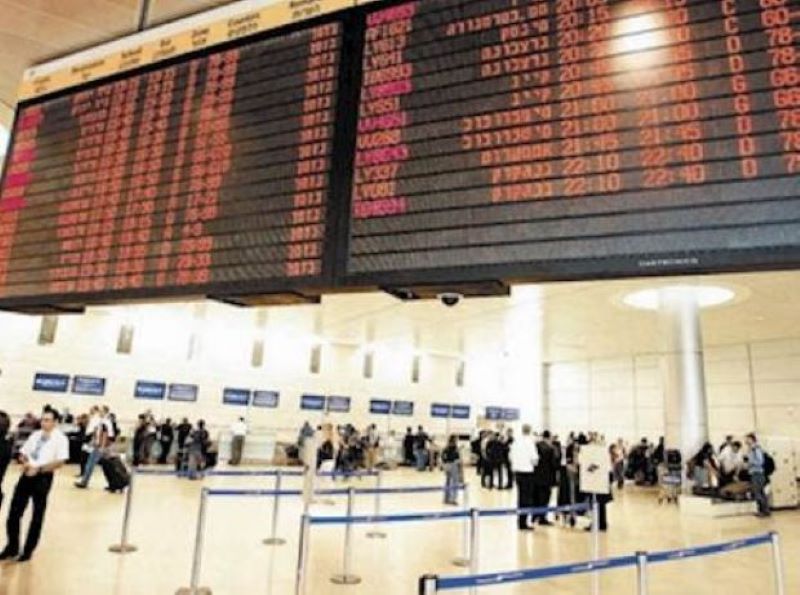
Beginning this Shabbos, Route 711 operated by the “Na’im Busofash” initiative will connect Shoham and Tel Aviv with a stop at Terminal 1 of Ben Gurion Airport — marking the first time a direct public transit route to the airport will operate on Shabbos.
Until now, even as flights continued to depart and land on Saturdays, travelers had no access to public buses or trains to reach the airport. But under the new arrangement, buses will stop at Terminal 1, where free shuttles operated by the Israel Airports Authority connect passengers to Terminal 3. Service will run every two to three hours, with 17 total trips each weekend, according to Tel Aviv officials.
The move represents the latest expansion of “Na’im Busofash,” a network launched in late 2019 by four municipalities to specifically provide transportation options on Shabbos. It previously included 13 municipalities, but Yehud-Monosson recently voted to withdraw from the program, leaving 12 local authorities funding the network.
Tel Aviv Deputy Mayor Meital Lehavi, who oversees the city’s transportation portfolio, said the airport extension was made possible after Yehud-Monosson opted out. “At their last council meeting in Yehud, they decided not to continue with ‘Na’im Busofash,’ so we said there was an opportunity here to add a stop at the airport instead,” Lehavi said.
Tragically, the expansion comes as demand for transportation on Shabbos continues to rise. In 2025, “Na’im Busofash” recorded 1.8 million passengers across more than 44,000 trips, covering over 1 million kilometers. Ridership in 2026 is projected to increase by an additional 14 percent.
The broader backdrop is a longstanding policy gap. Since a 1991 amendment to Israel’s Traffic Ordinance granted the transportation minister authority to prohibit bus operations on Shabbos, most state-run bus and rail lines do not operate on Saturdays. Limited exceptions exist, primarily for routes licensed prior to the amendment or lines serving Arab communities or mixed cities.
In response, municipalities have increasingly stepped in. In Ramat Gan and Givatayim, the “Sababus” project provides free Shabbos routes. In Haifa and the Krayot region, the “Shabus” service operates under a similar model. Like “Na’im Busofash,” these initiatives are locally funded and free, allowing them to function without requiring formal licenses from the Transportation Ministry.
(YWN World Headquarters – NYC)
 Join the official YWN WhatsApp status








9 Responses
Continue to play with G-d and His Torah and watch how the world gangs up on Israel. Very interesting.
What is more heinous outrageous:- This Public desecration of the Holy Schabbos? or an Avreich being hindered from laying ?????? in a kangaroo prison?
Not that I condone Shabbos Transportation but what exactly about this government or anything about these people is Shabbos observant that this matters over the million other things running on Shabbos? The weather authority, Sports, the airport has plenty of people working in it, all the TV and radio, and all the million people that are driving around with their own cars
News from the Non-Jewish State.
maybe they feel the urgency of ppl needing to leave hamalchus ha’rishaah is so important that one may be mechallel shabbos to leave, and they are assisting the tzibbur
reb boruch of gorlitz said there will come a time that an ehrlice yid will not be able to live in eretz yisroel
he said this over 100 years ago
chochom adif mi’novi
And that’s with so called religious parties in this government with the haskamah of the gdolei hadoHAR . R’L generation of pashtanims tipshims
HaShem Yirachaim!
The truth is the time will come when most of Israel will be Chareidim. It�s happening my friends. We just need to marry at 17 and aim to have between 12 and 19 kids. It�s not that difficult. There are women who have 21 kids in Brooklyn. Yes heimisha religious women. A good idea would be for rich Chareidim to offer a million dollars whoever can have 15 kids.
why should people risk their lives with �nationalist� drivers instead? they used to insist on non-jewish drivers, but since oct 7, that has become less advisable. there needs to be an alternative to arab taxis, to keep people safe.