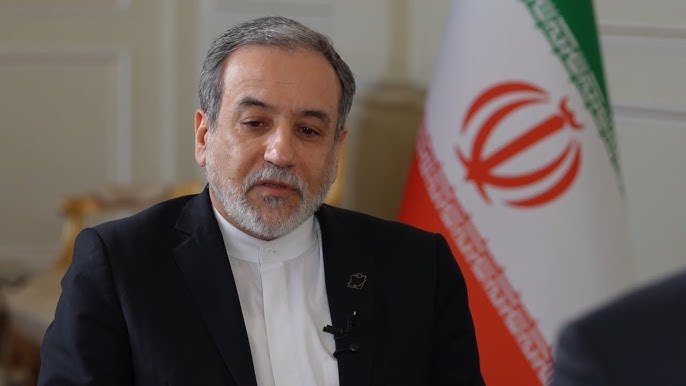
Iranian Foreign Minister Abbas Araghchi pushed back Saturday against claims by U.S. Defense Secretary Pete Hegseth that Iran’s newly named supreme leader, Mojtaba Khamenei, had been wounded and disfigured.
“There is no problem with the new supreme leader,” Araghchi said in an interview with MS Now. “He is performing his duties according to the constitution, and he will continue to do that.”
The remarks come amid ongoing speculation regarding Khamenei’s condition after he has not appeared publicly since the beginning of the war between Iran, the United States, and Israel. U.S. officials have suggested the new leader may have been injured during the early stages of the military campaign, though Tehran insists the government remains fully functional.
Araghchi also addressed tensions surrounding the Strait of Hormuz, denying claims that Iran had fully shut down the vital shipping route. Instead, he said the passage was only restricted to certain vessels.
“It is only closed to American, Israeli ships and tankers, and not to others,” he said.
The Strait of Hormuz remains one of the world’s most critical oil shipping lanes, and any disruption there has raised concerns about global energy supplies.
Commenting on the ongoing strikes carried out by U.S. and Israeli forces against Iran, Araghchi vowed retaliation for the recent U.S. military strike on Kharg Island, a key hub that handles much of Iran’s oil exports. He warned that Iran’s armed forces would target energy infrastructure tied to American companies in the region if attacks on Iran’s oil facilities continue.
Araghchi also claimed the strikes were launched from territory in the United Arab Emirates, specifically from Ras al-Khaimah and a location near Dubai. He described the alleged launches as “highly dangerous” and “unacceptable,” citing their proximity to civilian populations.
“Our armed forces have already answered that they would retaliate if our oil and energy infrastructure are attacked,” Araghchi said.
Asked about possible military support from Russia and China, Araghchi acknowledged that both countries are “strategic partners” and confirmed ongoing military cooperation, but declined to provide additional details.
He also rejected claims that Iran had threatened to weaponize its enriched uranium stockpile during negotiations with the United States, saying he was only describing the potential scope of concessions Iran was willing to make.
“We were close to reach a deal,” he said. “That is the reality.”
“This is an imposed war against us,” he added. “We didn’t start this war. We are only defending ourselves.”
The United Arab Emirates quickly rejected Araghchi’s accusations. Anwar Gargash, a senior diplomatic adviser to the UAE president, said the Iranian foreign minister’s comments reflect “a confused policy that has misdirected its aim, lost its compass, and forsaken wisdom.”
In a post on X, Gargash said Araghchi’s remarks effectively “condemned his own country” and further deepened Iran’s isolation. He added that the UAE had made “sincere efforts” to mediate and prevent a war between the United States and Iran.
Gargash said the UAE continues to prioritize reason and restraint while seeking a path out of the conflict for both Iran and the region, but emphasized that the Emirates maintains the right to defend itself against what he described as terrorist aggression.
(YWN World Headquarters – NYC)
 Join the official YWN WhatsApp status