
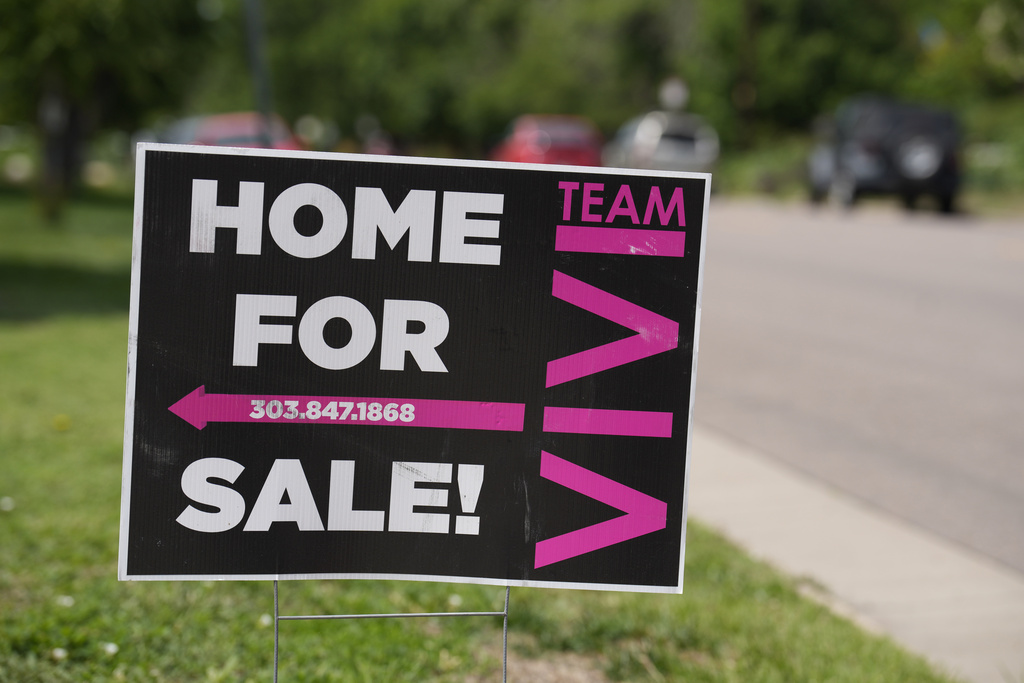
Sales of previously occupied U.S. homes fell in June to the slowest pace since January, as a near-historic low number of homes for sale and rising mortgage rates kept many would-be homebuyers on the sidelines. The national median sales price fell on an annual basis for the fifth month in a row, though fierce competition led to about one-third of homes selling for more than their list price.
Existing home sales fell 3.3% last month from May to a seasonally adjusted annual rate of 4.16 million, the National Association of Realtors said Thursday. That�s slightly below what economists were expecting, according to FactSet, and marks the slowest sales pace since January.
Sales sank 18.9% compared with June last year. That makes it 11 consecutive months of annual sales declines of 20% or more. All told, sales are down 23% through the first half of this year.
The national median sales price fell 0.9% from June last year to $410,200. That’s the smallest annual decline since March. While down from a year earlier, the median sales price rose from the previous month, reaching the second-highest level on records going back to January 1999.
�Perhaps home prices are beginning to firm up or at least certainly any downward pressure is ending,� said Lawrence Yun, the NAR�s chief economist.
The latest housing market figures are more evidence that even with prices easing back on an annual basis after rising for more than a decade many house hunters are being held back by a persistently low inventory of homes for sale.
Some 1.08 million homes remained on the market by the end of June, down 13.6% from a year earlier, the NAR said. That amounts to a 3.1-month supply at the current sales pace. In a more balanced market between buyers and sellers, there is a 5- to 6-month supply.
The shortage of homes for sale has kept the market competitive, driving bidding wars in many places, especially for the most affordable homes. About one-third of homes purchased last month sold for above their list price, and 76% of homes sold in June were on the market for less than a month.
�This is a tough market to be a buyer,� Yun said.
The combination of high borrowing costs and intense competition for the most affordable homes on the market is shutting out many first-time buyers. They accounted for 27% of home sales last month, down from 28% in May and 30% in June last year, the NAR said. In a normal housing market, that would be 40%.
The U.S. housing market has yet to emerge from a slump that started a little more than a year ago, when the average rate on a 30-year mortgage began to climb from ultra-low levels as the Federal Reserve began raising its short-term rate in its fight against inflation.
Global demand for U.S. Treasurys, which lenders use as a guide to pricing loans, investors� expectations for future inflation and what the Fed does with interest rates influence rates on home loans.
The average rate on a 30-year home loan is still more than double what it was two years ago, when the ultra-low rates spurred a wave of home sales and refinancing. Weekly average rates on a 30-year mortgage ranged between 6.67% and 6.79% in June, according to mortgage buyer Freddie Mac.
Higher mortgage rates can add hundreds of dollars a month in costs for homebuyers on top of already high home prices. They also discourage homeowners who locked in those low rates two years ago from selling — one reason the supply of homes for sale has been low even during the traditionally busy spring homebuying season.
(AP)
 Join the official YWN WhatsApp status


