
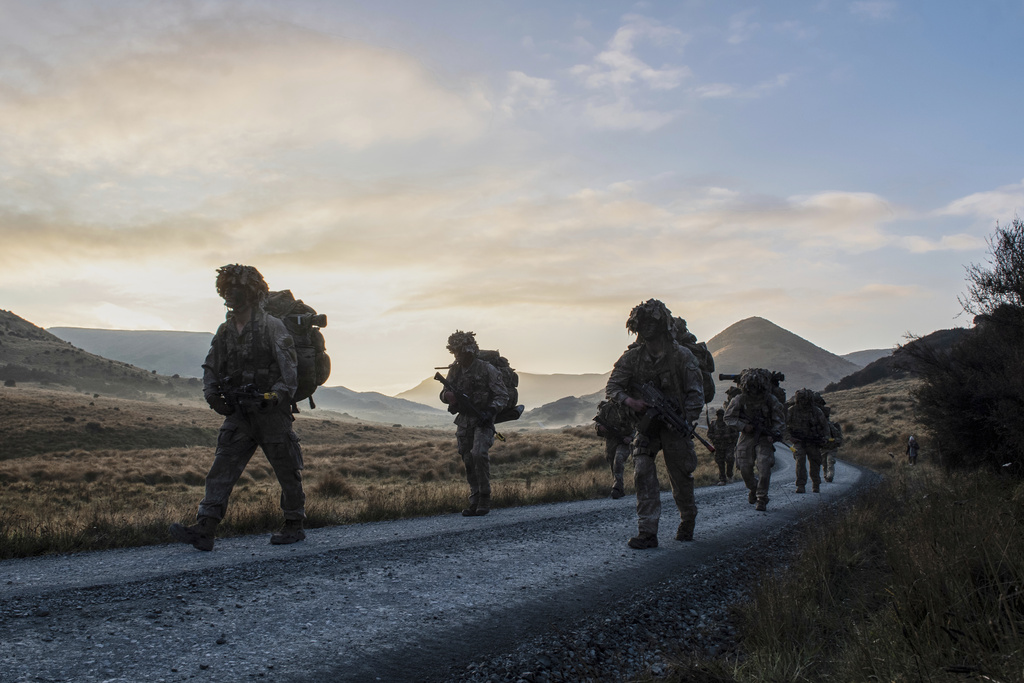
A New Zealand soldier who tried to spy for a foreign power has admitted to attempted espionage in a military court.
Monday’s conviction was the first for spying in New Zealand’s history. The soldier’s name was suppressed, as was what country he sought to pass secrets to.
Military court documents said the man believed he was engaged with a foreign agent in 2019 when he tried to communicate military information including base telephone directories and maps, assessments of security weaknesses, his own identity card and log-in details for a military network. The wording of the charge said his actions were “likely to prejudice the security or defense of New Zealand.”
He wasn’t speaking to a foreign agent, but an undercover New Zealand police officer collecting intelligence on alleged right-wing extremist groups, documents supplied by the military court showed.
The soldier came to law enforcement attention as part of an operation that was established after a March 2019 terrorist attack on two mosques in the city of Christchurch, when an Australian white supremacist opened fire on Muslim worshipers, killing 51.
He was based at Linton Military Camp near the city of Palmerston North.
Officers spoke to the man twice about his involvement in a group, court documents showed, and after the government became aware he had expressed a desire to defect he was contacted by the undercover officer.
When the soldier’s hard drive was searched, investigators found a copy of Christchurch gunman Brenton Tarrant’s livestreamed video of his massacre and a manifesto document he published online before the killings. Possession of either without permission is a criminal offense in New Zealand and the soldier, who admitted that charge too, joins several others convicted in New Zealand of having or sharing the terrorist’s banned material.
In a statement read to the court by his lawyer, the man said the two nationalist groups with which the man was involved were “no more than groups of friends with similar points of view to my own,” according to Radio New Zealand.
The laywer, Steve Winter, added that his client denied supporting the Christchurch shooter’s ideology, RNZ reported.
The soldier also pleaded guilty to accessing a military computer system for dishonest purposes. The amended suite of three charges replaced 17 counts levelled against him earlier in the proceedings.
Each of the three charges he admitted carries a maximum prison term of either seven or 10 years in New Zealand. His sentence was expected to be delivered by a military panel within days after Monday’s conviction.
The man was due to stand trial by court martial on the charges before he admitted the offenses.
His was the first charge in a New Zealand military court for espionage or attempted spying. The last time such a case reached the civilian courts before was in 1975, when a public servant was acquitted on charges alleging he had passed information to Russian agents.
A spokesperson for New Zealand’s military said they would not comment until the proceedings against the soldier finished.
(AP)
 Join the official YWN WhatsApp status


