
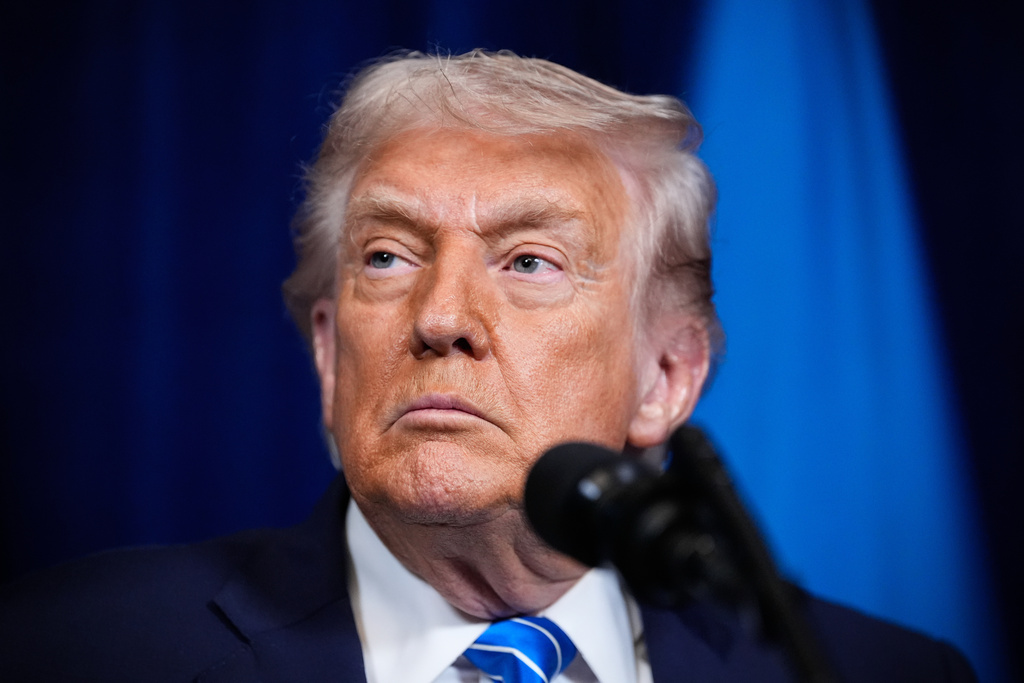
President Donald Trump is escalating his pressure campaign on Europe, threatening to slap 200% tariffs on French wine and champagne after France declined to join his newly created Board of Peace.
France was among dozens of countries invited last week to join the board, which was initially conceived to oversee postwar governance and reconstruction in Gaza but has since expanded far beyond that scope. French President Emmanuel Macron has no intention of participating, according to a senior French official, citing concerns that the project cuts across established international frameworks and raises questions about the role of the United Nations.
Trump reacted angrily when asked about Macron’s refusal, dismissing the French leader’s relevance and threatening economic retaliation.
“Oh, did he say that?” Trump told reporters Monday night. “Well, nobody wants him because he’s going to be out of office very soon. That’s all right. I’ll put a 200% tariff on his wines and champagnes and he’ll join — but he doesn’t have to join.”
The threat revived memories of Trump’s earlier trade battles with Europe, including a 2019 proposal to impose steep tariffs on European wine that rattled the continent’s alcohol industry even though it was never fully implemented. The United States remains the world’s largest importer of European sparkling wine, with roughly $1.75 billion entering the country in 2023, making any such move economically significant for France.
Trump later posted screenshots on Truth Social of private messages he said he received from Macron, including texts praising cooperation on Syria and Iran while expressing confusion over Trump’s parallel push to acquire Greenland. The messages also appeared to propose a multilateral meeting in Paris involving Ukraine, Denmark, Russia and Syria, followed by a private dinner between the two leaders.
French officials, however, were far less amused by Trump’s public posture. France’s agriculture minister, Annie Genevard, accused the president of outright intimidation.
“It’s shocking,” Genevard told TF1. “It’s brutal, and it’s done to force compliance.”
The confrontation comes amid a broader pattern of Trump using tariff threats as leverage to advance foreign policy goals. Over the weekend, he warned that European countries could face 10% tariffs — potentially rising to 25% — if they do not support his proposal to bring Greenland under U.S. control.
Despite the backlash, Trump has continued to aggressively promote the Board of Peace, describing it as “the Greatest and Most Prestigious Board ever assembled.” Invitations were extended to roughly 60 countries, including U.S. allies and adversaries alike. Among those invited was Russian President Vladimir Putin, a move that surprised diplomats and prompted questions about the board’s underlying purpose.
Asked directly whether Putin had been invited, Trump responded simply: “Yeah, he’s been invited.”
Several leaders aligned with Trump have accepted seats, including Argentine President Javier Milei and Hungarian Prime Minister Viktor Orb�n. Canada’s Prime Minister Mark Carney also agreed to participate, though his government made clear it would not pay the administration’s controversial $1 billion “seat fee,” a requirement Trump has said is necessary to maintain long-term membership.
France, by contrast, formally rejected the invitation on Monday, arguing that the board’s charter “goes beyond the framework of Gaza” and raises fundamental concerns about international governance norms.
Inside the board, Trump has assembled a high-profile executive circle that includes Secretary of State Marco Rubio, Middle East envoy Steve Witkoff, Trump’s son-in-law Jared Kushner, major donor Marc Rowan and former British prime minister Tony Blair — a lineup that underscores Trump’s ambition to turn the initiative into a parallel power center on global affairs.
(YWN World Headquarters – NYC)
 Join the official YWN WhatsApp status





One Response
The EU can retaliate against American goods (hard liquor, aircraft) and services (especially internet services and financial services). Also the EU is busy developing closer economic ties with other countries that Trump has tariffed (including China), while the Americans will end up with inferior goods at higher prices.