
As Klal Yisrael prepares to light the first Chanukah candle on Sunday night, an astonishing discovery in the hills south of Yerushalayim may shed new light on one of the most dramatic episodes of the Chanukah story.
Dr. Dvir Raviv of Bar-Ilan University revealed to The Press Service of Israel that his archaeological survey at Churvat Bet Zecharia, in Gush Etzion, has uncovered objects that match both the time period and military character of the famous the confrontation in 163 BCE in which Elazar HaMaccabi sacrificed his life beneath a war elephant.
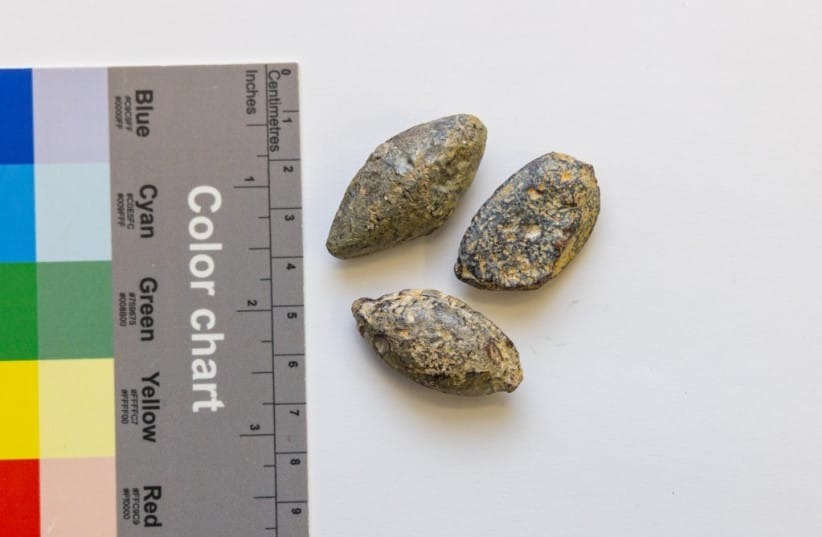
Raviv’s team discovered three cast lead sling bullets — the classic ammunition of Hellenistic armies — on the western slope of the hill overlooking the ancient Yerushalayim-Chevron road. One was stamped with the winged thunderbolt of Zeus, a signature symbol of Seleucid (Yevani) projectiles.
“You do not expect to find Seleucid military equipment in a small rural village unless an army actually fought there,” Raviv said.
The bullets were clustered exactly where the Seleucid forces would have advanced according to historical texts. Across Eretz Yisrael, such Hellenistic sling bullets have been found at only about twenty known battle or siege sites, including Yerushalayim, Shomron, Dor, Yodfat, and Har Gerizim.
“These finds sit where the sources place the battle,” Raviv noted. “They give us, for the first time, an archaeological echo of the confrontation described in the texts.”
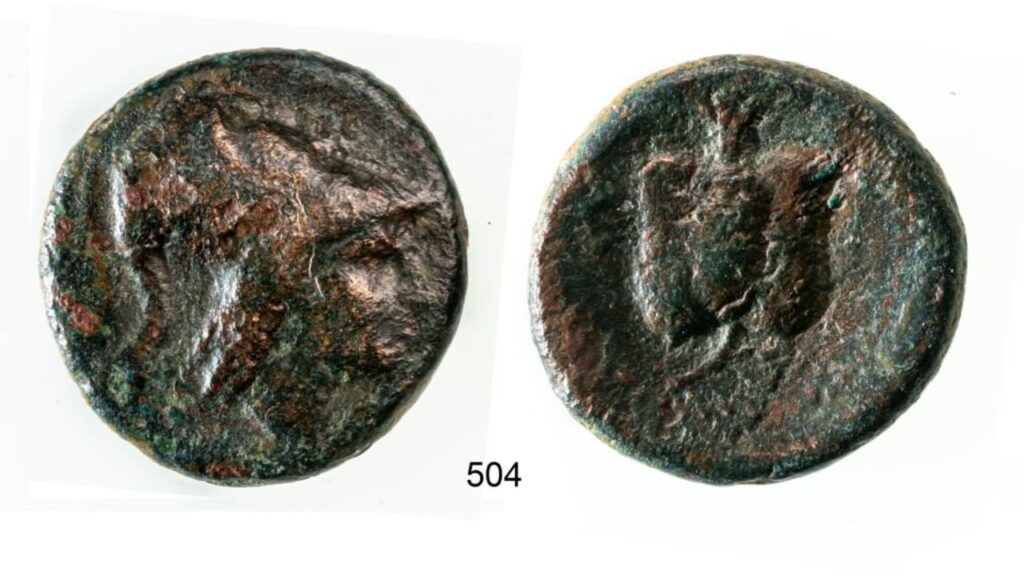
Alongside the bullets, the team uncovered a bronze coin minted in the ancient city of Side in Asia Minor — a known recruitment hub for Seleucid mercenaries. The coin features Athena on one side and a pomegranate, which was Side’s emblem, on the other.
While around 120 such coins have been found in Israel, this is the first time one has surfaced in a location directly tied to a Chahmonean battlefield.
“Its presence, alongside the sling bullets, reflects military activity that fits the historical description of the battle,” Raviv said.
The battle at Bet Zecharia was Yehuda HaMaccabi’s fifth major confrontation. The Seleucid army, marching north with war elephants, clashed with the Maccabean forces along the Yerushalayim-Chevron road. In its most legendary scene, Elazar — seeing the largest elephant — dashed beneath it, killing the beast before being crushed under its weight.
The battle ultimately ended in a Seleucid victory and a siege of Yerushalayim.
Until now, however, no archaeological evidence had ever corroborated the details of the battle.
“This is the first time we may be holding objects that came from one of Judah Maccabee’s battlefields,” Raviv said. “This is where history, text, and ground finally begin to meet.”
(YWN World Headquarters – NYC)
 Join the official YWN WhatsApp status


2 Responses
I highly doubt it was just found now, rather they�re putting it out there for the public because of Chanukah
Literal Chanukah Gelt!