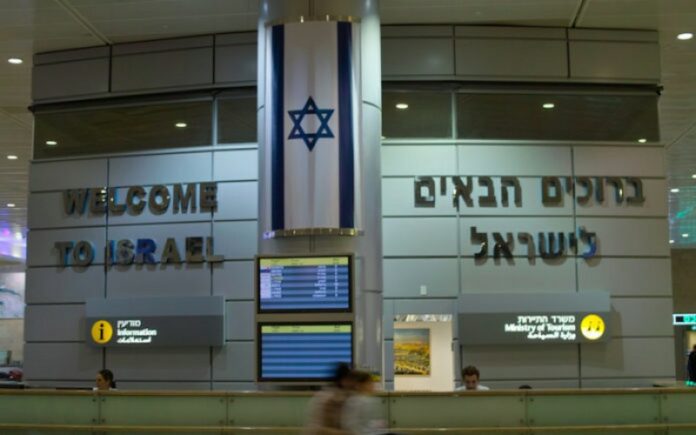
More than half of the Israelis who found themselves stranded overseas when war erupted with Iran have now made their way back home as the country gradually restores its air travel network.
Israel’s airspace was abruptly closed on February 28 following the joint U.S.-Israeli strike on Iran that triggered a rapidly escalating regional conflict. The shutdown left an estimated 100,000 Israelis stuck abroad, forcing the government to launch a large-scale repatriation effort by air and land.
The effort began to gain momentum this week when Tel Aviv’s Ben Gurion Airport partially reopened Wednesday night, allowing inbound flights to resume under tightly controlled conditions.
Since the reopening, approximately 24,000 Israelis have returned on 133 repatriation flights operated by Israeli airlines, the Israel Airports Authority said. Authorities expected the number to rise further on Monday, with 44 additional flights scheduled to land carrying roughly 8,000 more passengers.
Between February 28 and March 8, another 22,800 Israelis crossed back into the country via land border crossings with Egypt and Jordan, providing an alternative route for travelers unable to secure flights.
During that same period, the crossings also saw significant outbound traffic. More than 29,000 people left Israel via the same land crossings, underscoring the fluid movement in and out of the country during the early days of the conflict.
Despite the progress, tens of thousands of Israelis remain abroad as authorities continue working to expand repatriation flights while maintaining strict security controls amid the ongoing war.
Officials say the gradual reopening of Ben Gurion Airport is expected to accelerate the process in the coming days, bringing thousands more Israelis back home even as the conflict with Iran continues to unfold.
(YWN World Headquarters – NYC)
 Join the official YWN WhatsApp status