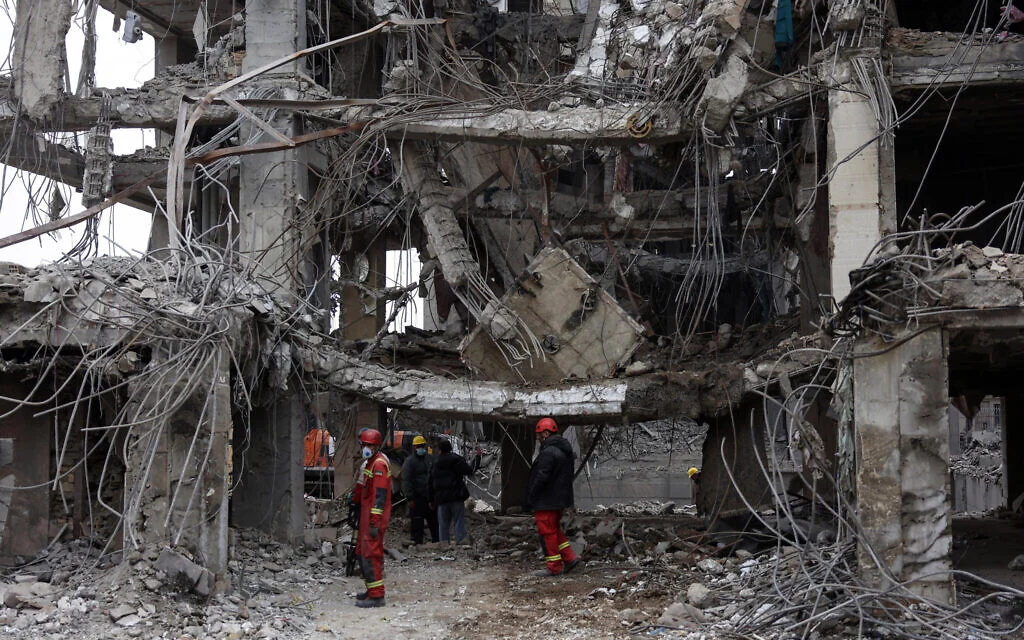
Nearly two weeks into a massive U.S.-Israeli military campaign against Iran, American intelligence agencies assess that the country’s ruling regime remains firmly in control and is not in immediate danger of collapse, according to Reuters.
A “multitude” of intelligence reports compiled in recent days have produced a consistent conclusion: Iran’s leadership remains cohesive and retains control over the population despite the intense bombardment, one source said.
The intelligence picture presents a stark challenge for policymakers in Washington and Jerusalem who are now grappling with how the war might end.
President Donald Trump has hinted that the largest U.S. military operation since 2003 could conclude “soon,” as political pressure mounts over soaring global oil prices tied to the conflict. But intelligence officials warn that ending the war could prove complicated if Iran’s hardline leadership remains entrenched.
The latest intelligence assessments highlight the resilience of Iran’s clerical system even after the dramatic killing of Supreme Leader Ayatollah Ali Khamenei on February 28, the opening day of the joint U.S.-Israeli strikes.
In the aftermath of Khamenei’s death, Iran’s ruling establishment quickly moved to maintain continuity. Earlier this week, the Assembly of Experts–an influential body of senior Shiite clerics–named Khamenei’s son, Mojtaba Khamenei, as the country’s new supreme leader.
U.S. intelligence now indicates that Iran’s security apparatus, including the powerful Islamic Revolutionary Guard Corps (IRGC), remains largely intact and continues to exert control across the country.
The strikes have killed dozens of senior Iranian officials and some of the highest-ranking IRGC commanders, but intelligence agencies say the organization’s structure and authority have not collapsed.
The Trump administration has offered differing explanations for the war’s objectives. When the campaign began, Trump publicly urged Iranians to “take over your government,” fueling speculation that regime change might be a goal. Administration officials later said overthrowing Iran’s leadership was not the mission.
Meanwhile, Israeli officials privately acknowledge that military strikes alone may not bring down Iran’s clerical government. A senior Israeli official familiar with internal discussions said there is no certainty the war will ultimately lead to the regime’s collapse.
Analysts say that toppling Iran’s leadership would likely require a ground invasion capable of creating conditions for widespread internal protests–an option that would dramatically escalate the conflict.
The Trump administration has not ruled out deploying U.S. troops into Iran, though no decision has been announced.
Some opposition groups have sought to position themselves as potential partners in weakening Tehran’s grip on power. Iranian Kurdish militias based in neighboring Iraq have discussed possible attacks against Iranian security forces in the country’s western regions, according to previous reporting. Leaders of those groups say they are prepared to mobilize if the United States provides military support.
Abdullah Mohtadi, head of the Komala Party of Iranian Kurdistan, said his organization has networks inside Iran and that “tens of thousands of young people are ready to take up arms” against the government if armed by Washington. Mohtadi claimed that Iranian security forces have abandoned some positions in Kurdish areas out of fear of further U.S. and Israeli strikes.
But recent U.S. intelligence assessments cast doubt on the militias’ ability to mount a sustained challenge to Iran’s security forces.
According to two sources familiar with those reports, analysts believe the Kurdish groups lack both the manpower and the firepower needed to seriously threaten the Iranian state.
The militias have recently asked U.S. officials and lawmakers for weapons and armored vehicles, another person familiar with the discussions said.
Trump, however, said over the weekend that he had ruled out sending Iranian Kurdish fighters into Iran.
For now, intelligence officials say the central reality remains unchanged: despite the loss of its supreme leader and heavy military strikes, Iran’s government still holds power–and there is no clear path to bringing it down.
(YWN World Headquarters – NYC)
 Join the official YWN WhatsApp status