
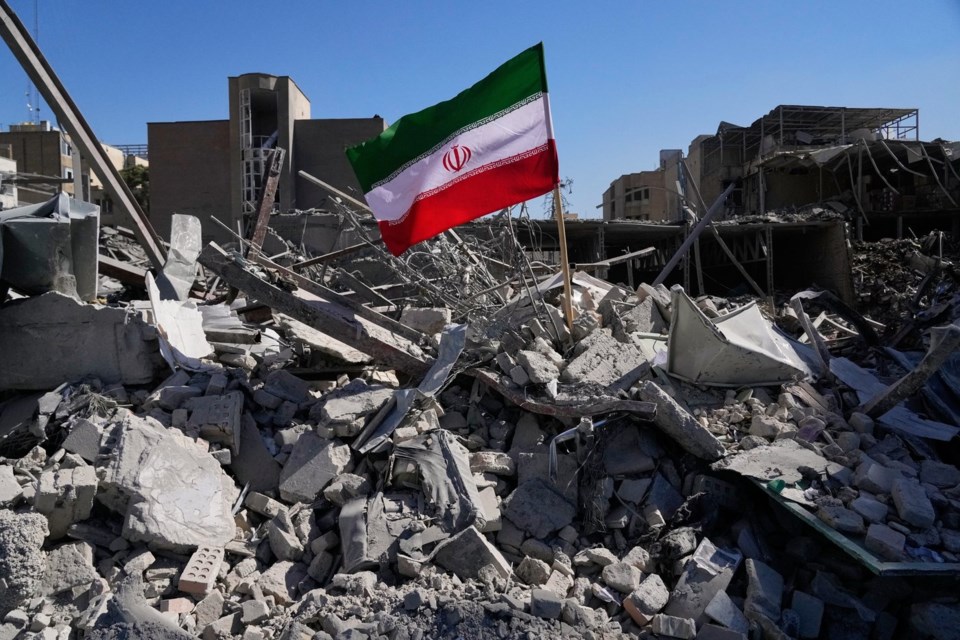
The IDF says it has destroyed roughly 70 percent of Iran’s missile launchers since the start of the war, dramatically reducing the scale of Iranian missile barrages and signaling a campaign described by Israeli officials as progressing “beyond expectations.”
A senior Israeli security official said Sunday that the decline in the size of missile attacks is one of the clearest indicators of the damage inflicted on Iran’s military infrastructure during the conflict.
“On the first day of the war, dozens of missiles were fired in each barrage,” the official said. “Since then, the numbers have steadily declined.”
The IDF believes the sharp reduction reflects both the destruction of launch infrastructure and the disruption of command networks within Iran’s armed forces.
Despite internet restrictions inside Iran, which have made it difficult to independently assess developments on the ground, Israeli intelligence officials say they believe they have a reliable picture of the situation inside the country.
According to the security official, Iran’s leadership was caught off guard by the scale of the Israeli offensive, even though Tehran had long prepared for a possible confrontation.
Senior Iranian leaders remain largely in hiding, complicating decision-making and the transfer of operational orders to military units across the country.
“There are early signs of declining motivation among Iranian commanders,” the official said, adding that some commanders appear reluctant to leave hiding places to coordinate operations. He cautioned, however, that reports of potential desertions among Iran’s security forces remain preliminary.
Israeli security officials estimate that around 5,000 members of Iran’s regime forces have been killed since the start of the war. U.S. officials believe the toll may be even higher.
Much of the internal chaos, the official said, stems from the death of Supreme Leader Ali Khamenei during the opening stages of the war.
“In Iran, the leader is everything,” the official said. “Now he is gone.”
Khamenei’s son, Mojtaba Khamenei, who was elevated to replace him, has yet to fully consolidate control over the regime’s command structure, according to Israeli assessments.
Iranian forces are now believed to be hiding in mountainous regions, attempting to coordinate missile launches across scattered command networks. Rather than launching large coordinated attacks, Iran has shifted to multiple smaller missile barrages, though Israeli officials are still determining whether this reflects operational limitations or a deliberate attrition strategy.
Israeli officials say the war has unfolded in three major phases.
The first phase involved a massive opening strike that targeted about 50 senior regime figures, including military commanders, nuclear personnel and Khamenei himself — one of the most heavily protected leaders in the Middle East.
The second phase has focused on dismantling what Israeli officials call the regime’s “enablers of action” — including missile systems, air defenses and radar infrastructure.
Although Israel declared early in the war that it had achieved air superiority, Iranian forces still retain some anti-aircraft capabilities. Over the past two weeks, the Israeli Air Force has struck about 100 air-defense units and roughly 120 detection systems, including radar installations used to track Israeli aircraft.
The third phase centers on preventing Iran from rebuilding its military capabilities.
Israeli forces have targeted the country’s defense industry, which relies heavily on domestic production. Officials say strikes on key facilities in major cities have halted missile manufacturing during the war.
“They are firing what they already have,” the security official said. “Damage to military infrastructure is an insurance policy for the coming years.”
The Israeli military has also targeted Iran’s internal security apparatus, striking approximately 2,200 facilities tied to the regime’s security forces and the Basij militia.
Officials say many targets are identified in real time, with Israeli aircraft receiving updated strike coordinates even while airborne. When Iranian forces relocate operations to backup headquarters, those locations are quickly targeted as well.
One major question still looming over the conflict is the status of Iran’s nuclear program. While nuclear facilities were central to Operation Rising Lion, the Israeli campaign launched in June, officials say dozens of nuclear-related sites — including university laboratories involved in nuclear work — have been struck in recent weeks. Hundreds of kilograms of enriched uranium are still believed to remain somewhere in Iran, and Israeli officials say locating the material remains an ongoing intelligence priority.
Meanwhile, Israel is also preparing to expand operations on its northern front with Hezbollah in Lebanon. Additional reserve units have been mobilized, and troops from the Golani, Nachal and Paratroopers brigades have been deployed to reinforce Israel’s Northern Command. While Israeli officials say a major push toward the Litani River is not currently planned, ground maneuvering operations in southern Lebanon are expected to intensify.
Before Israel’s Operation Northern Arrows in September 2024, Hezbollah was believed to possess roughly 150,000 rockets. Israeli officials now estimate the group’s arsenal has been reduced to about 15,000.
Roughly 450 Hezbollah fighters have been killed during the war, including about 120 members of the elite Radwan force, according to Israeli officials.
“Hezbollah is no longer a strategic threat to Israel,” the security official said.
Israeli strikes have also targeted Iran’s Quds Force, the branch of the Islamic Revolutionary Guard Corps responsible for coordinating operations with regional proxy groups.
During the conflict, the head of the Quds Force’s Lebanon branch was killed in Tehran, and additional operatives linked to the unit were killed in a strike on a hotel in Beirut.
Israel has also destroyed 17 Quds Force transport aircraft used to move weapons from Iran to Hezbollah in Lebanon.
According to IDF spokesperson Brig. Gen. Effie Defrin, Israel plans to continue airstrikes inside Iran for roughly three more weeks, noting that the military still has thousands of additional targets in its strike database.
However, the campaign is being conducted in close coordination with the United States — meaning Washington will likely play a key role in determining how and when the war ultimately ends.
(YWN World Headquarters – NYC)
 Join the official YWN WhatsApp status


One Response
Last week, we were told that 90% were destroyed. What happened?