

Since October 7th, the Israeli aviation market has operated under extraordinary uncertainty. Airlines serving Israel have faced repeated cancellations, sudden schedule changes, and periodic airspace closures due to the ongoing security situation.
At the same time, there was significant frustration with non-Israeli carriers for failing to clearly communicate their cancellation plans and frequently canceling flights at the last minute, leaving passengers stranded.
This led many travel agents serving the Israeli market to advise passengers that non-Israeli airlines had become unreliable, while Israeli airlines were the safer choice. In the US-Israel market many agents ranked reliability in the following order. ELAL, Arkia, followed by several Middle Eastern airlines, and only then European and US carriers.
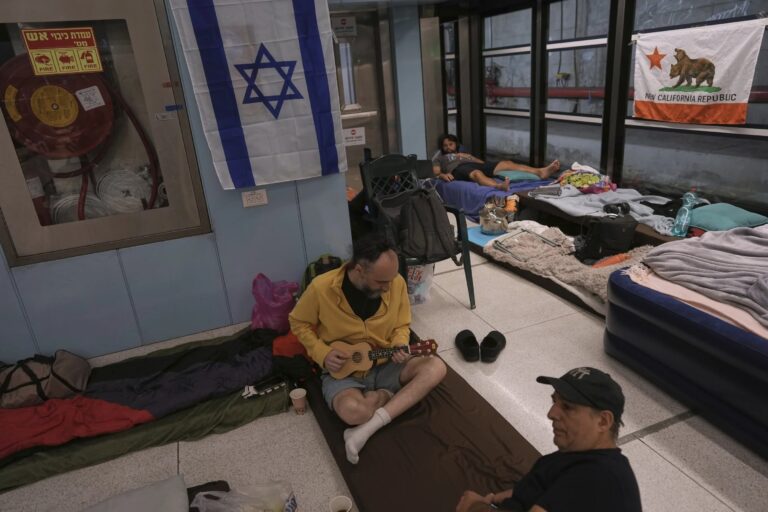
Then came the Am Kalavie war, and for the first time Israeli airlines were truly put to the test when the Israeli airspace was completely shut down.
Here is how the Israeli airlines serving the US-Israel market reacted.
EL AL
As soon as the airspace reopened, El Al quickly placed all flights back on sale both for existing passengers and for new bookings.
Travel agents were able to prioritize humanitarian passengers traveling for urgent medical reasons by contacting airline representatives directly. That system worked.
However, there were significant issues.
The rebooking process was far from smooth and passengers requesting refunds for air extras such as paid seats, luggage etc. had to wait months for the refunds to be processed since ELAL did not allow agents to refund on their own.
They had also held seats to “rescue” students of which many were holding existing ELAL tickets and made them pay for a new ticket instead of simply reissuing their original ticket as an even exchange.
These policies created significant confusion for both travel agents and passengers.
That said, many agents and passengers were willing to give the airline the benefit of the doubt. This was the first time they had faced a disruption of this magnitude, and the airline indicated it would review the problems and improve its processes should another crisis occur.
The Roaring Lion War
When the Roaring Lion war erupted, many agents hoped that lessons from the previous crisis had been learned.
Unfortunately, that has not been the case.
Refund Process
Instead of enabling agents to easily refund canceled tickets and paid extras, the airline automatically exchanged many fully unused tickets. Once that happens, agents lose control of the tickets and can no longer process refunds. I can only assume that this was done with the implications in mind since the same thing happened not long ago (during the winter storm in NY) where agents complained about lacking the ability to refund their passengers. (Important to note. The fully un-flown passengers are the ones most likely to cancel and request a refund.)
Passengers who did cancel and requested refunds were frequently sent back and forth between the airline and their travel agent. When agents requested that tickets be reopened for refund processing, the requests were often denied and directed instead to fill out an online refund form that could take months to process.
Communication
Communication has been another major challenge. Since the start of the war, travel agents have received 14 different policy updates, many of which contained outdated or inaccurate information.
For example, on March 11 the airline announced that all scheduled flights would be canceled until March 14. In reality, flights had already been canceled through March 18 at that time.
Then, on Friday, March 13 at 2:00 PM, the airline announced six non-stop flights between Tel Aviv and New York for the following week, claiming they would operate at full capacity.
Once again, the messaging was misleading. The six flights were spread across an entire week rather than replacing the nearly 30 originally scheduled flights while many passengers understood the announcement to mean that daily service would resume.
On Friday afternoon we received numerous calls from concerned parents of yeshiva students asking us to make sure their children were booked on those flights. Our job became explaining that, in reality, six flights for the entire week was far from sufficient.
The timing of the announcement was also problematic. In Israel it was already after candle lighting, and in the United States most travel agents were already out of the office for the weekend.
A PR team working overtime, but disconnected from the operational reality, ended up creating confusion not only for agents but also for thousands of passengers trying to understand their options.
Rebooking Strategy
Another major issue has been the rebooking strategy.
Agents repeatedly asked the airline to prioritize rebooking stranded U.S. passengers onto flights to European destinations, where they could then continue to their final destinations.
Instead, the airline initially focused almost entirely on rebooking passengers directly to the United States.
Given limited airport slots and aircraft capacity, with more than 3,000 passengers stranded and the number growing, this approach quickly became unsustainable. Only on March 11 did the airline begin rebooking passengers onto some European destinations. By then, much valuable time had already been lost.
Humanitarian Requests
Humanitarian rebooking requests have also been difficult.
Our office submitted two urgent humanitarian requests. As of yet, neither request has been accommodated properly.
This is particularly troubling because priority appears to be given to frequent-flyer status passengers, rather than those with urgent humanitarian needs.
One live example. We had a passenger, a single mother traveling with 5 children (all under the age of 12), originally scheduled to fly on March 6. She was rebooked for March 17 via the EU with a six-hour layover, which was later delayed by 12 hours causing a misconnection ELAL had denied rebooking them on to their added nonstop flights while some passengers originally scheduled for March 19 are already confirmed for… yes March 19. This is not a corrupt system. This is just not a system at all. (Once ELAL received allowance to operate flights to New York with full capacity. They finally rebooked them on to a non-stop flight.)
Is it the Israeli team?
For the sake of fairness, it is important to note that the US sales team has historically been a pleasure working with. They have that human touch you want from an airline.
However, many tools involving the rebooking process is managed by the Israeli team, where they unfortunately operate with a very different approach affecting US passengers negatively.
ARKIA
Before October 7th, Arkia was a relatively small regional airline operating primarily shorthaul routes to a handful of destinations.
When the crisis began, they quickly recognized the surge in demand and expanded operations dramatically, adding flights to Europe and other destinations. This expansion helped thousands of stranded passengers travel in and out of Israel.
Their growth has continued.
In February 2025, Arkia launched a nonstop flight to the United States, operating three times per week using a wet-leased aircraft. This provided much-needed additional capacity in the US-Israel market.
When regional tensions later prevented that aircraft from landing in Tel Aviv, Arkia quickly adapted. Flights were temporarily routed through Athens, with passengers continuing to Tel Aviv on Arkia-operated aircraft.
During that period, Arkia allowed travel agents to self-refund passengers, giving agents and customers flexibility and avoiding long processing delays.
The 12-Day War
When the 12-day war disrupted flights again, Arkia continued this approach.
Agents were allowed to immediately refund canceled tickets, and the airline restored its schedule shortly after the conflict ended. As a result, passengers were not severely affected.
The Roaring Lions War
When the latest conflict disrupted travel again, Arkia took several creative steps.
At a time when the Israeli airspace was completely shut Arkia was the only airline to provide a solution for standard US passengers by launching an historic direct flight to Sharm El-Sheikh in Egypt, allowing passengers to enter or exit the region through an alternate route.
It was not the most convenient option. However, for many stranded passengers this was a lifeline.
Arkia also continued allowing agents to easily process refunds for canceled flights themselves and offered rebooking options to multiple European destinations.
As of March 12, the airline also announced limited nonstop flights to the United States for stranded passengers after securing some airport slots.
Conclusion
For years, El Al has been widely perceived as the most reliable option in the US-Israel travel market.
However, recent events suggest that reliability should not be defined only by whether an airline continues operating flights. It is also defined by how it treats passengers and partners during times of crisis.
The past two crises have shown that operating flights alone is not enough to define reliability. The true measure is how an airline supports its passengers and partners when things go wrong.
Many agents hope that Airlines including ELAL will take this moment to reflect on what worked, what didn’t, and learn from the past so that the next crisis tells a better story.
Moshe Rosenberg
CEO Runway Travel LLC
The views expressed in this article are those of the author and do not necessarily represent those of YWN. Have an opinion you would like to share? Send it to us for review.
 Join the official YWN WhatsApp status






10 Responses
As a frequent ElAl passenger, I read the story above with careful attention to the details. I’m surprised at ElAl and not because they mishandled the arena entirely but because they’ve developed a renewed reputation of we do care about out passengers and now they’ve let is falter. Reputations are hard to build; why would they wish to let it get destroyed! It makes no sense. They should have been open and shared with their loyal customer base however they could that they were handling the situation that they have no control over as best as they can. They didn�t. Hopefully they can apply some damage control tourniquet; although that doesn’t seem like they’re following that model.
What a level headed thoughtful letter.
Too bad most of the commenters on this site can�t write like this.
“Hope” they “learn”
And yet another article hating on ELAL by YWN….Is anyone surprised?
It seems personal at this point.
“Only on March 11 did the airline begin rebooking passengers onto some European destinations.”
In reality, during that time, tickets were being sold at outrageous premium prices -through unscrupulous travel agents – to the highest bidders who didn�t even hold El Al tickets in the first place. I personally know of dozens of seats to Warsaw, Sofia, Tbilisi, and other destinations being sold for $500�$600 each.
And the injustice hasn�t stopped. Even now, European passengers are being pushed to the back of the line while U.S.-bound travelers are given priority. All this despite the fact that Alon Lavi, Director of Operations at the El Al Control Center, assured us that “not a single ticket would be sold before all existing El Al ticket holders were taken care of” – an assurance that now appears to have been nothing more than a blatant lie!
The bigger question is why on earth you think Americans should get prioritized on the European flights?? Why do they deserve seats more than those who have real humanitarians reason to needs to get to the UK & Europe and who are being repeatedly told there are no seats whatsoever and nothing can be done because their cancelled seats (which they had actually booked on prior to this) have been allocated to Americans with protekzia instead?????
Why the behind the scenes
Why would “rescuing” yeshiva bochurim and seminary girls from having to spend Pesach in EY (only a dream for most of us) be a higher humanitarian priority than adults who have to get back to their jobs and family responsibilities?
The parents, bochurim, and seminary girls should be ashamed of themselves for taking seats away from people who have to get back to work and back to taking care of their families. (And that’s aside from the hashkofa of not valuing the opportunity to spend Pesach in EY.)
Simple we orthodox Jewish Americans voted for Trump so we get rewarded. That�s why Chareidim have first choice. The secular Jews voted for Biden and Harris. We were loyal to President Trump.
CLICKBAIT ARTICLE half your claims and pieces on elal or straight up exaggerated or even made up if you write a hit piece on a frum company at least be truthful for example theyre six flights was very clear no one with a half a brain thought it meant 30 and no the statement was released before shabbos because we signed up for it when it was released before shabbos so please cut the trash be truthful for once