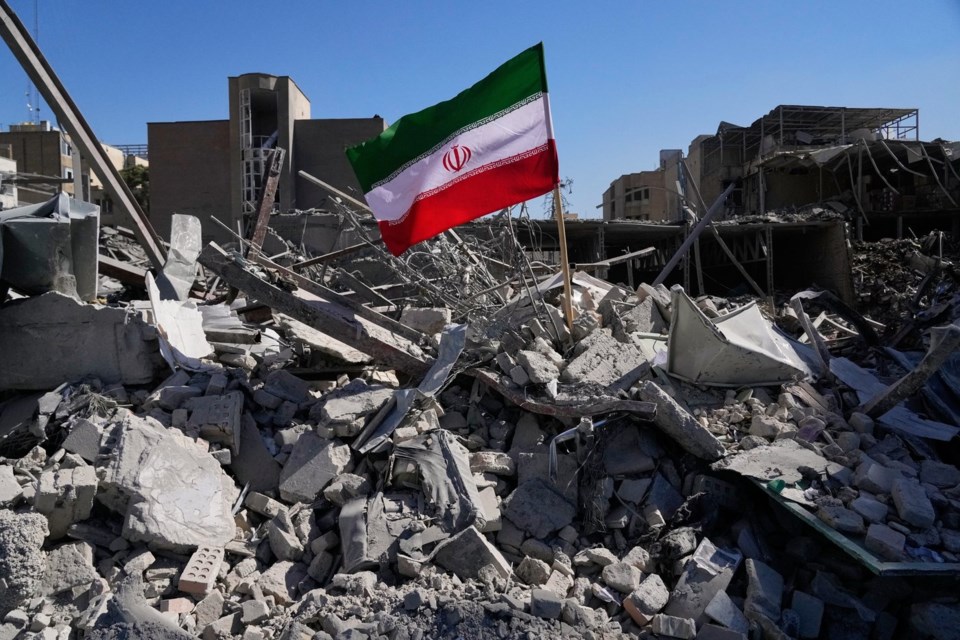
IDF officials believe they have already degraded roughly 70 percent of Iran’s military industrial capacity and are pressing to reach 90 percent within days.
An IDF officer, speaking to Walla, said the campaign has targeted a broad swath of Iran’s defense infrastructure, including surface-to-surface and surface-to-air missile systems, ballistic missile manufacturing facilities, Defense Ministry production sites, and a headquarters involved in developing naval weapons. Several of the targeted facilities, the officer added, had also been used to supply weapons to Hamas and Hezbollah.
The strikes were designed not only to destroy Iran’s current operational capabilities but to cripple its future production capacity through sustained economic disruption, the officer said.
On the nuclear front, IDF Spokesperson Brig.-Gen. Effie Defrin confirmed that two nuclear-related sites had been struck, including what he described as a uranium facility and the heavy water plant in Arak – a site he said had been used in nuclear weapons development. The senior officer noted that Israel was conducting its nuclear campaign methodically and was not expending munitions indiscriminately, adding that previously struck sites, including in Arak, had been hit again, though he declined to comment on Iranian efforts to restore operations there.
In Lebanon, the IDF said ground operations were ongoing as part of a broader effort to expand its forward line and dismantle Hezbollah’s armed infrastructure. Israeli forces have struck Hezbollah command centers, command-and-control systems, and financing channels, including banks and gas stations.
The pressure appears to be taking a measurable toll: the terror group’s daily rocket launch capacity has dropped from approximately 100 planned launches per day to roughly 10, according to the senior officer.
(YWN World Headquarters – NYC)