
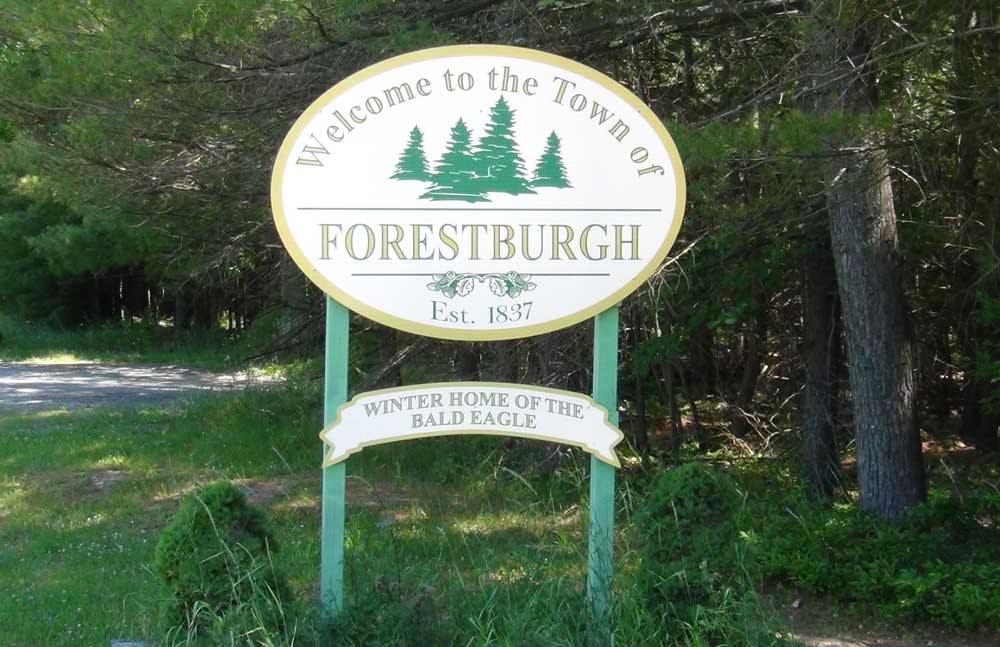
Agudath Israel of America has filed an amicus curiae, or “friend of the court,” brief in a federal appeals case alleging that the Town of Forestburgh engaged in discrimination to block an Orthodox Jewish housing development, citing concerns about antisemitism in local land-use decisions.
The case, Lost Lake Holdings, LLC v. Town of Forestburgh, is pending in the U.S. Court of Appeals following the dismissal of the lawsuit by the U.S. District Court for the Southern District of New York. The original suit was brought under the federal Fair Housing Act and accuses the town and several individual and municipal defendants of intentionally obstructing a housing project because it would attract Orthodox Jewish residents.
According to court filings, the dispute dates back to 2020, when an Orthodox Jewish developer acquired the rights to a previously approved, “shovel-ready” property in Forestburgh, Sullivan County. After the purchase, the town allegedly withdrew approvals and enacted new ordinances that effectively halted the development. The developer sued, arguing that the actions constituted unlawful religious discrimination.
The U.S. Department of Justice later filed a Statement of Interest in the case, raising concerns about allegations in the complaint and citing internal communications among town officials that, according to the filing, reflect explicit hostility toward Hasidic Orthodox Jews.
Among the communications cited is an email attributed to the chairman of the Forestburgh Town Planning Board referring to a “Hasidic threat” and stating that town officials were prepared to “fight and make their lives miserable.” In another instance referenced in the filings, a private citizen sent an email to the planning board chair containing derogatory characterizations of Hasidic Jews. Rather than rejecting the language, the chair forwarded the message to others while discussing strategies to prevent the Lost Lake project from moving forward, according to the complaint.
After the district court dismissed the lawsuit, the developer appealed. Agudath Israel’s brief focuses on the legal doctrine of “ripeness,” which generally requires plaintiffs to obtain a final decision from local authorities before bringing land-use claims in federal court. The organization argues that when a municipality demonstrates entrenched hostility and discriminatory intent, requiring further applications or approvals is unnecessary and unfair.
The brief contends that documented antisemitic animus and a clear pattern of obstruction should exempt plaintiffs from the final-decision requirement and that dismissing the case on ripeness grounds was inconsistent with federal law. It also warns that failing to account for bias in zoning and land-use processes poses particular risks to Jewish communities, citing prior examples of what it describes as institutionalized antisemitism through hostile zoning practices.
Agudath Israel was joined on the brief by the Jewish Coalition for Religious Liberty, the National Council of Young Israel, and the Jewish Community Council of Sullivan County. The brief was authored by attorneys affiliated with the Religious Liberty Clinic at the University of Notre Dame, with assistance from Agudath Israel’s general counsel.
The appeal remains pending, and no decision has yet been issued by the federal appellate court.
(YWN World Headquarters – NYC)
 Join the official YWN WhatsApp status


