
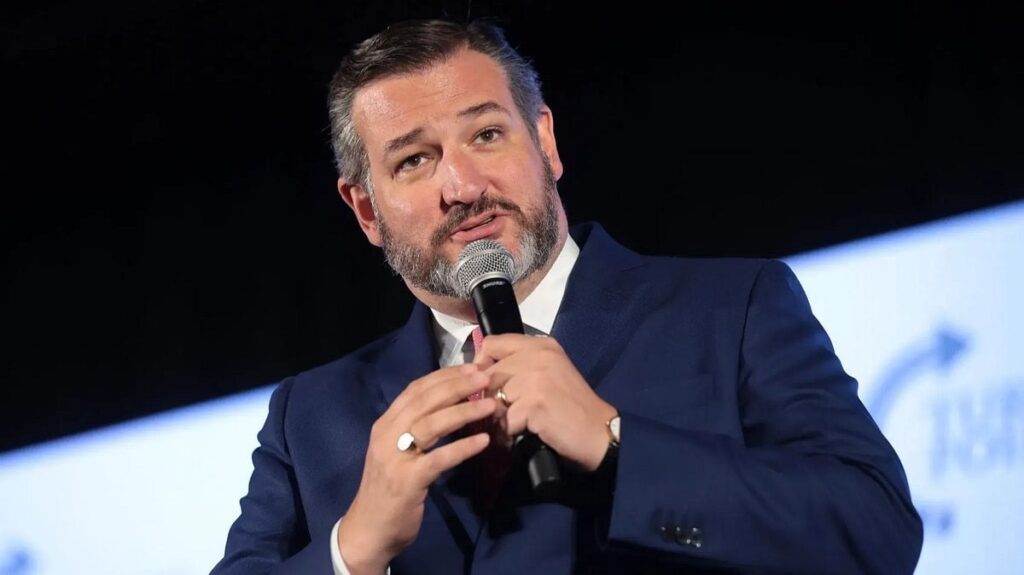
Sen. Ted Cruz is privately weighing a second run for the White House in 2028 as he positions himself as a leading voice against antisemitism and isolationism within the Republican Party, according to a report by The Washington Post.
The newspaper reported that Cruz discussed the possibility of a presidential bid during a November meeting near Washington’s Union Station with Morton Klein, president of the Zionist Organization for America and a longtime ally. Klein told the Post that he raised concerns about rising “Jew hatred and Israel bashing” on the political right. Cruz, who has recently delivered speeches condemning antisemitism within the GOP, told Klein that he had been receiving encouragement from others to consider a 2028 run and appeared to be taking the idea seriously.
With President Donald Trump not expected to be on the ballot in 2028, Cruz has increasingly sought to define himself as a champion of a more traditional Republican foreign policy. He has also urged the party to distance itself from conservative media figure Tucker Carlson, arguing that Carlson is injecting antisemitic rhetoric into the movement through his criticism of Israel and platforming of antisemites.
As part of that positioning, Cruz has begun to emerge as a potential rival to Vice President JD Vance, an early favorite for the 2028 nomination. The Post reported that Cruz has criticized Vance’s foreign policy views to donors, warning that the vice president’s skepticism of U.S. intervention abroad reflects a dangerous form of isolationism. Vance, a close ally of Tucker Carlson, has been one of the GOP’s most prominent critics of expansive U.S. military engagement overseas.
The developing tension highlights how the party has evolved since Cruz entered the Senate in 2013. Once known for his insurgent challenge to Republican leadership, Cruz is now defending positions long associated with GOP orthodoxy, including strong support for Israel and an assertive U.S. role abroad, as a newer generation of conservatives advances a different vision.
Some analysts told the Post that Cruz would face significant hurdles if he enters the race. His 2016 presidential campaign, which ended with a bruising fight against Trump, alienated some conservatives, and he no longer fits the mold of an outsider candidate. Still, Cruz has maintained national name recognition and cultivated relationships with activists and donors nationwide.
The Post noted that Cruz publicly escalated his criticism of Tucker Carlson a day after meeting with Klein, calling Carlson “a coward” during a speech to a group supporting Jewish conservatives in Las Vegas. In that address, Cruz praised Trump as a president who “loves the Jewish people” and posed a rhetorical question about the party’s future once Trump leaves office–prompting an audience member to shout his name.
Any 2028 contender would likely have to confront Vance, who leads early polling and retains strong support among Trump-aligned voters, even as Trump himself has not endorsed a successor. Rep. Marjorie Taylor Greene (R-Ga.), a close Carlson ally, told the Post that a primary fight would pit Cruz against Vance, adding bluntly that “all of us hate Ted Cruz.”
In recent months, Cruz has framed his break with Carlson as a matter of national security, arguing that anti-Israel positions ultimately undermine U.S. interests. He has warned that antisemitism is gaining ground on the right, particularly as figures such as white nationalist commentator Nick Fuentes gain attention. Vance has rejected the claim that antisemitism is widespread within the conservative movement, drawing a distinction between criticism of Israel and hatred of Jews.
The feud between Cruz and Carlson intensified after a contentious interview in June over Israel and U.S. foreign policy, followed by personal attacks from both sides. According to the Post, Cruz has since called on Republicans to repudiate Carlson, while Carlson has accused Cruz of acting out of presidential ambition.
Despite the escalating rhetoric, few Republican leaders have publicly aligned themselves with Cruz. Some lawmakers described the conflict as personal, while others declined to comment. Former supporters have also expressed skepticism about a Cruz bid, with at least one major GOP donor telling the Post that he would back Vance if the vice president enters the race.
(YWN World Headquarters – NYC)
 Join the official YWN WhatsApp status







One Response
It is likely that someone from the traditional (RINO, Reagan Republicans, etc.) wing will challenge Vance, and someone who has been working well with the MAGA wing during the two Trump administrations (Cruz and Rubio come to mind) would be good choices. They need to defeat Vance, who will be the preferred MAGA candidate in such a way that he doesn’t alienate the MAGA Republicans.