
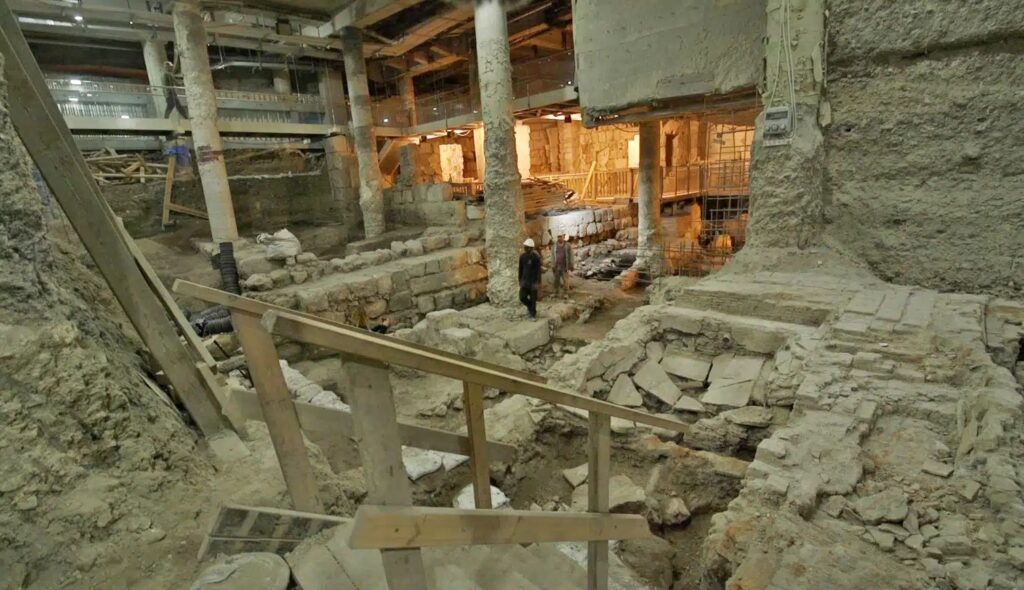
A rock-hewn mikveh dating to the late Bayis Sheini period was discovered in recent days during excavations under the Kosel plaza, it was announced in a joint statement by the Israel Antiquities Authority and the Western Wall Heritage Foundation on Monday, erev Asara B’Teves.
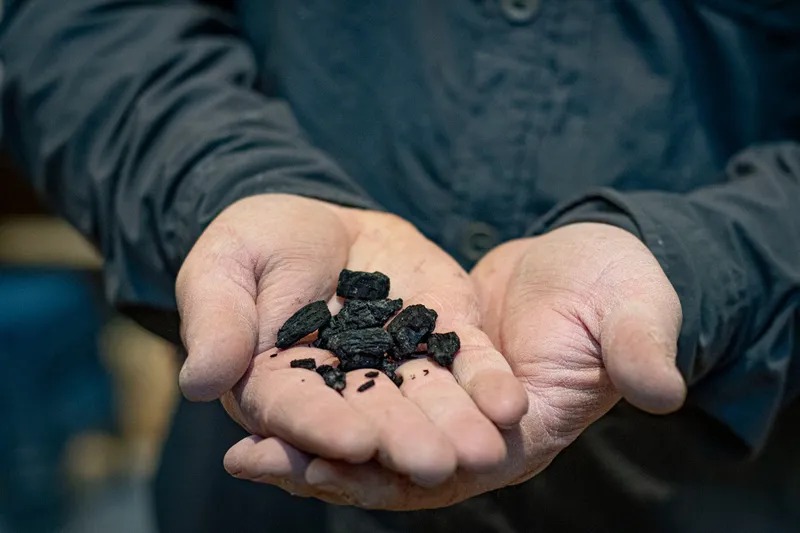
The mikveh, which was found with traces of ashes that serve as evidence of the destruction of the Second Bais Hamikdash, is rectangular in shape, measuring 3.05 meters in length, 1.35 meters in width, and 1.85 meters in height. The mikveh is hewn into the bedrock, with plastered walls. Four steps were exposed on its southern side, leading down into the bath area.
The mikveh was found under a destruction layer from the Bayis Sheini period, dated to the year 70 CE. The Israel Antiquities Authority said that numerous pottery and stone vessels characteristic of the Jewish population that lived in the city on the eve of the Bayis Sheini’s destruction were found within this layer, along with ash attesting to the destruction.
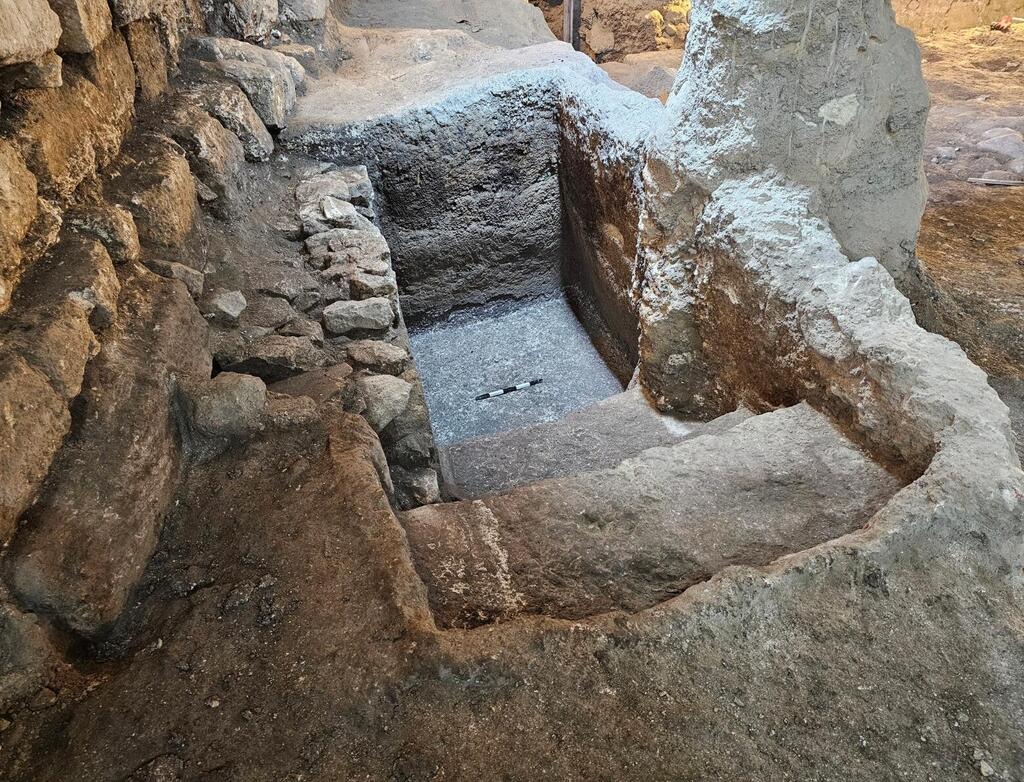
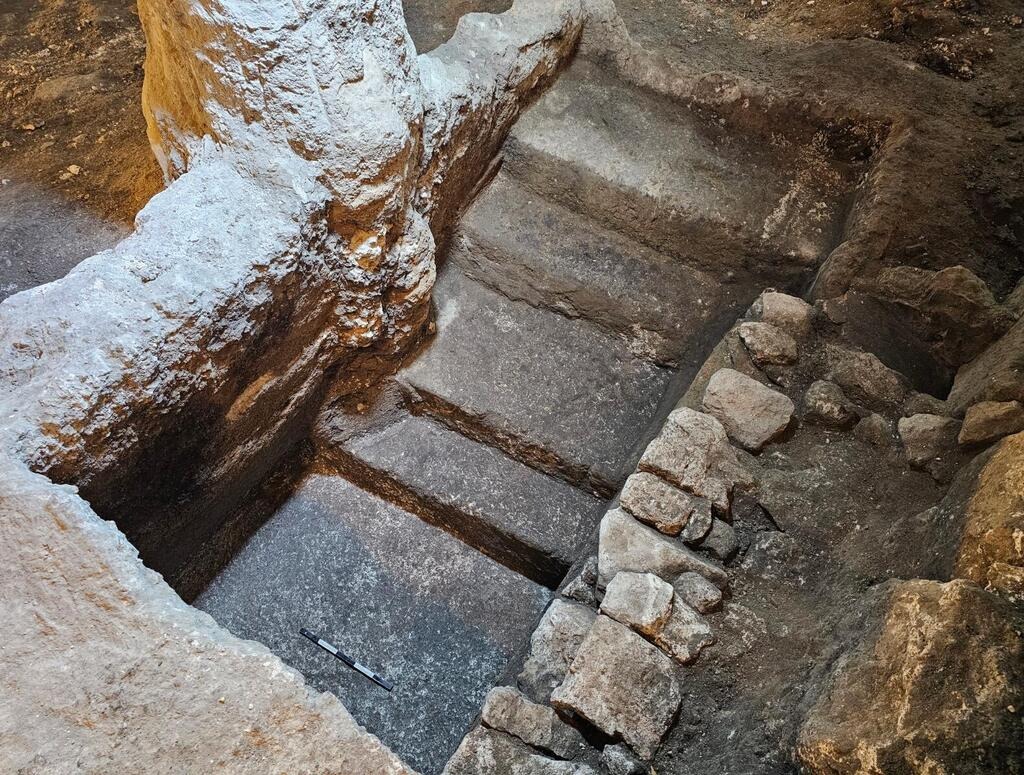
The mikveh was discovered near two of the Bayis Sheini’s main entrances that were in use about 2,000 years ago�the Great Bridge to the north and Robinson�s Arch to the south. In the surrounding area, additional evidence indicating activity related to taharah was uncovered, including other mikva�os and stone vessels.
Researchers from the Israel Antiquities Authority believe that the mikveh served the Jews who lived in the area as well as the many olei regel who visited the Beis Hamikdash.
�One must remember that Jerusalem was a Beit Hamikdash city,� explains Ari Levy, the excavation director �As such, many aspects of daily life were adapted to this reality, and this is reflected especially in the meticulous observance of dinei tumah v’taharah by the city�s residents and leaders. This is also the basis for the saying, �Purity spread throughout Israel� (‘???? ???? ??????’).�
�Among the most prominent archaeological finds representing this phenomenon are mikva’ot and stone vessels, many of which have been discovered in excavations throughout the city and its surroundings,� Levy said. �The reasons for using stone vessels are halachic, rooted in the halachic recognition that stone, unlike vessels made of pottery or metal, does not absorb tumah. Therefore, stone vessels could be used over long periods and repeatedly.�
(YWN Israel Desk�Jerusalem)
 Join the official YWN WhatsApp status





One Response
??? ????? ??? ?????? ???? ???? ???? ?????? ?????.
???? ?? “?? ????” ????. ??? ??? ???? ???? ???. ?????? ????? ?????? ???