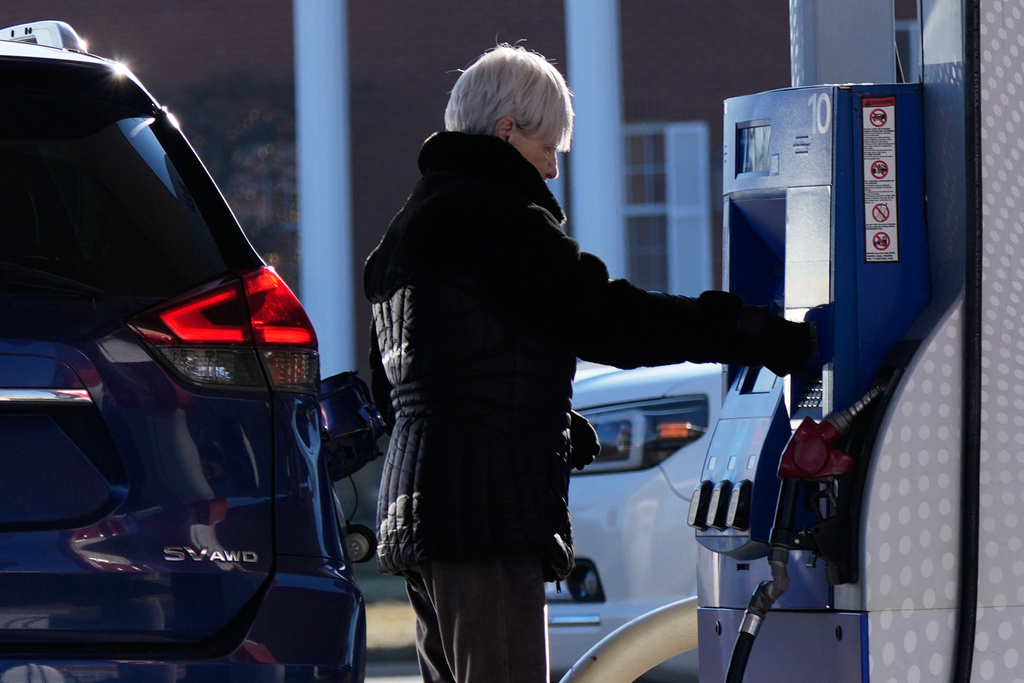
Inflation cooled a bit last month as prices for gas and used cars fell, a sign that stubbornly elevated cost pressures are slowly easing.
Consumer prices rose 0.3% in December from the prior month, the Labor Department said Tuesday, the same as in November. Excluding the volatile food and energy categories, core prices rose 0.2%, also matching November’s figure. Increases at that pace, over time, would bring inflation closer to the Federal Reserve’s target of 2%.
Many economists had expected inflation to jump last month as the government resumed normal data collection after the six-week shutdown last fall, so the modest increases that matched the November figures came as a relief. The price of manufactured goods was flat in December, a sign that the impact of tariffs may be starting to fade.
“Distortions caused by the government shutdown have made the inflation data harder to interpret, but the recent run of figures suggests inflation has peaked,” Michael Pearce, chief U.S. economist at Oxford Economics, wrote in a note to clients.
Signs that inflation is cooling could make it more likely that the Federal Reserve will reduce its key interest rate later this year, which could translate into lower borrowing costs for mortgages, auto loans, and credit cards.
Even so, the large price increases in recent years for necessities such as groceries, rent, and utilities have left many American households feeling squeezed, turning “affordability” issues into high-profile political concerns. Food prices have jumped about 25% since the pandemic.
President Donald Trump, stung by last year’s election results that suggested voters are souring on his handling of the economy, has responded with an array of initiatives intended to address rising costs, including a proposed ban on Wall Street firms buying homes, a 10% cap on credit card interest rates, and the suspension of many tariffs on imported foods, such as coffee and pasta.
Tuesday’s report is the first clear measure of inflation since September. The six-week government shutdown last fall suspended the collection of price data used to compile the inflation rate, and the government didn’t issue a report in October and November’s figures were partially distorted by the impact of the closure.
Most prices in November were collected in the second half of the month, after the government reopened, when holiday discounts kicked in, which may have biased November inflation lower. And since rental prices weren’t fully collected in October, the agency that prepares the inflation reports used placeholder estimates in November, that may have biased prices lower, economists said.
Still, Tuesday’s report suggested that inflation didn’t change even with newer, more comprehensive figures. Consumer prices rose 2.7% in December, compared with a year ago, the same figure as November, while core prices increased 2.6% from a year earlier, also unchanged.
Inflation has come down significantly from the four-decade peak of 9.1% that it reached in June 2022, but it has been stubbornly close to 3% since late 2023. The cost of necessities such as groceries is about 25% higher than it was before the pandemic, and other necessities such as rent and clothing have also gotten more expensive, fueling dissatisfaction with the economy that both President Donald Trump and former President Joe Biden have sought to address, though with limited success.
The Federal Reserve has struggled to balance its goal of fighting inflation by keeping borrowing costs high, while also supporting hiring by cutting interest rates when unemployment worsens. As long as inflation remains above its target of 2%, the Fed will likely be reluctant to cut rates much more.
The Fed reduced its key rate by a quarter-point in December, but Chair Jerome Powell, at a press conference explaining its decision, said the Fed would probably hold off on further cuts to see how the economy evolves.
Trump, meanwhile, has harshly criticized the Fed for not cutting its key short-term rate more sharply, a move he has said would reduce mortgage rates and the government’s borrowing costs for its huge debt pile. Yet the Fed doesn’t directly control mortgage rates, which are set by financial markets.
In a move that cast a shadow over the ability of the Fed to fight inflation in the future, the Department of Justice served the central bank last Friday with subpoenas related to Powell’s congressional testimony in June about a $2.5 billion renovation of two Fed office buildings. Trump administration officials have suggested that Powell either lied about changes to the building or altered plans in ways that are inconsistent with those approved by planning commissions.
In a blunt response, Powell said Sunday those claims were “pretexts” for an effort by the White House to assert more control over the Fed.
“The threat of criminal charges is a consequence of the Federal Reserve setting interest rates based on our best assessment of what will serve the public, rather than following the preferences of the President,” Powell said.
(AP)
 Join the official YWN WhatsApp status