
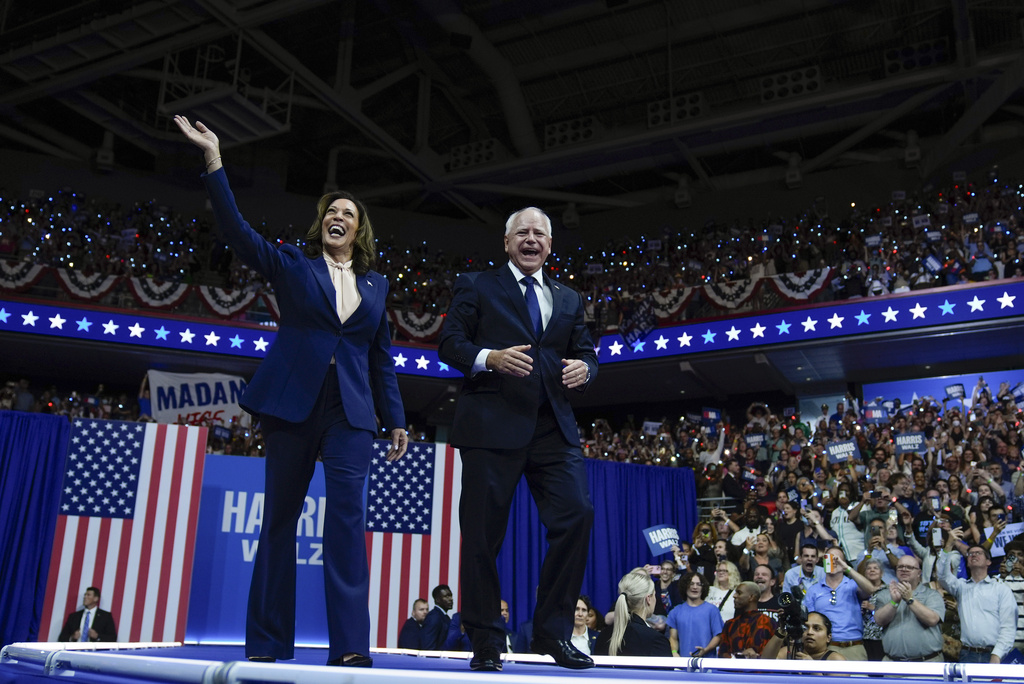
Campaign aides to former Vice President Kamala Harris questioned Minnesota Gov. Tim Walz about whether he had ever acted as an agent of the Chinese Communist Party during the vetting process before he was selected as her running mate, according to a new report.
The scrutiny of Walz, first reported by CNN, stemmed from his long-standing ties to China dating back to his years as a teacher, well before he entered politics. Harris aides reviewed Walz�s repeated trips to China and directly questioned whether he had ever acted on behalf of a foreign government � an allegation Walz denied.
Walz taught in China in the late 1980s, shortly after the Tiananmen Square crackdown, and later returned multiple times while leading student trips, according to accounts examined during the vetting process. Campaign officials concluded the ties reflected his background in education rather than political or intelligence activity.
The probing of Walz was part of a broader, at times fraught, vice presidential selection process that also ensnared Pennsylvania Gov. Josh Shapiro, who later detailed his own experience in an upcoming memoir.
According to Shapiro, Harris aides asked him whether he had ever been an �agent of the Israeli government.” The question was posed by Dana Remus, who served as White House counsel under Joe Biden and was assigned to Harris�s vetting team.
�Was she kidding?� Shapiro wrote in Where We Keep the Light: Stories From a Life of Service, an excerpt of which was obtained by CNN. �I told her how offensive the question was.�
Shapiro said Remus continued pressing, telling him the campaign �had to ask.� At one point, he wrote, she followed up by asking whether he had ever communicated with an undercover agent of Israel.
�If they were undercover,� Shapiro responded, �how the hell would I know?�
Shapiro said the questions echoed accusations of �dual loyalty,� an antisemitic trope. He noted that his background � including time spent on an Israeli kibbutz and volunteer work on an Israeli army base in his youth � appeared to have drawn particular scrutiny.
Deborah Lipstadt, who served as the Biden administration�s special envoy to combat antisemitism, called the questions directed at Shapiro �classic antisemitism.�
Harris also pressed Shapiro during vetting about his outspoken criticism of antisemitism on college campuses, including his public condemnation of the University of Pennsylvania over its handling of anti-Israel protests. According to people familiar with the process, aides questioned whether his forceful stance could become a national political liability amid growing tensions inside the Democratic coalition as the war in Gaza intensified.
Harris ultimately passed over Shapiro, a decision that followed a tense vetting process and lingering friction between the two camps. In her own post-election account of the campaign, Harris suggested she was concerned Shapiro might struggle to accept a supporting role as vice president, a characterization his aides later dismissed as �simply ridiculous.�
Instead, Harris chose Walz, highlighting his Midwestern roots, military service and appeal to working-class voters as strengths on the ticket.
The Harris-Walz pairing, however, failed to halt Donald Trump�s return to power. Harris lost the general election by a wide margin, a defeat that has prompted renewed scrutiny of the compressed vetting process and the decisions that shaped the Democratic ticket.
(YWN World Headquarters – NYC)
 Join the official YWN WhatsApp status


3 Responses
Wasn’t it that they were also concerned that Josh Shapiro was an Israeli agent??! Ok not a shocker…
The Clinton’s were Chinese agents, so it makes sense.
AND YET FOR FOUR THE MEDIA SAID TRUMP WAS A RUSSAIN AGENT